Whether you’re in your very first year of teaching IBDP Psychology or your thirtieth, in some ways it doesn’t matter. You’re standing in front of a new set of students. Fresh faces, fresh questions, and—if we’re honest—fresh challenges.
Same but different.
Maybe you’re teaching in the same school you once sat in as a student yourself, or maybe you’re on the other side of the globe—Morocco, Mauritius, Oman, Albania. Again, that’s not really the point. Because teaching, at its heart, is about guiding and supporting your students, wherever you happen to be.
Yes, I know… the year will kick off with a few staff meetings. Some will be useful. Others… well, let’s just say “less so.” If you find yourself in one of those, you could quietly plan a lesson or even play a quick game of chess from the back row. (Not that I’m encouraging mischief, of course.)
Your first lessons aren’t about ploughing through the syllabus—they’re about setting the tone. Letting students (and their parents) know they’re in safe, well-prepared hands.
You might kick off with an introduction to the experimental method—perhaps demonstrating the Stroop Effect to show how something as simple as reading a word can become surprisingly tricky when colour and meaning clash.
Or you might spark a discussion about human behaviour:
Why are some people passionately in favour of immigration to the UK, while others are equally passionately opposed?
Why do some students show up every single day, while others are unfazed by missing lessons?
Why are some people shy while others brim with confidence?
Or perhaps you want to open with ethical considerations—just a quick, engaging chat about Zimbardo’s prison study or Watson and Rayner’s famous “Little Albert” experiment. You could even take your students into the playground to observe younger children for prosocial behaviours—psychology in action from day one.
Whatever you choose, choose something that excites you. That enthusiasm is contagious.
And, you know, take very good care of yourself.
So here’s to the start of your year—new students, new questions, new discoveries. Wherever you are in the world, whatever your teaching style, we’re wishing you all the very best.
If you’re teaching the new IBDP Psychology syllabus (first exams in 2027, first lessons next week!!!), you already know how much planning, organising, and resourcing it takes to cover everything—concepts, content, contexts, the internal assessment, and exam preparation. That’s why this complete PowerPoint bundle has been created: to give you a ready-made, fully editable set of presentations that match the new Subject Guide and Tom Coster’s IB Diploma Psychology – The Textbook perfectly.
This isn’t just a slide deck or two—it’s the WHOLE COURSE in one place. Sixteen separate presentations walk you and your students through every key concept (Bias, Causality, Change, Measurement, Perspective, Responsibility), every content area (the biological, cognitive, and sociocultural approaches, plus research methodology), and every context (Health & well-being, Human development, Human relationships, Cognition & learning). You’ll also find dedicated presentations for the Internal Assessment and for exam strategies, so you can guide students from their first class right through to their final paper.
Don’t even try to do everything
Because they’re fully editable, you can add, remove, and adapt slides to fit your own teaching style or the particular needs of your students. Want more emphasis on a tricky theory? Less on a topic your class already knows? You’re in control. The presentations are ready to use straight away—but they can be as flexible as you need them to be.
To get a feel for the style and structure, there’s a free sample presentation you can download and try in your next lesson. And the full bundle? Just $50 for hundreds of hours of preparation already done for you—available as an instant download, no delivery time, no waiting.
In short, this is about saving your time, reducing your workload, and giving your students consistent, high-quality resources from day one.
A new course doesn’t mean you have to spend hundreds of hours of your own time preparing new teaching materials. Explore our whole site and read about all of the materials we have available.
As DP Coordinators and teachers pore over this year’s IB Diploma results, now is the time to think not just about content delivery, but on how your students are learning. The key to improving your school’s performance probably isn’t more revision sessions, tougher mock exam marking, greater intensity with internal assessments or even more teacher training…, the key to success in school is much more likely to be a shift in student mindset, habits, and engagement.
IB Diploma Psychology – Success at high school or college, written by a teacher with 30+ years of experience, offers exactly that: a practical, common-sense guide to helping students become more disciplined, proactive, and resilient—qualities that consistently lead to stronger academic outcomes in school and beyond.
Unlike quick-fix test strategies, this book provides a blueprint for long-term success: attending every class, managing time effectively, building positive relationships with teachers, and understanding how learning actually works. It’s simple, clear, and designed to be implemented now—not in theory, but in everyday student life. This book is practical – and it’s written for and to your students.
If you’re serious about lifting your students’ IB Diploma results in 2026 and beyond, make this book part of your school’s toolkit. It may be the most powerful change you make this year.
At this stage of the two-year IB Diploma course, many teachers are wondering about their students’ final grades, perhaps trying to reconcile what they considered a near-perfect mock exam result and a near-perfect Internal Assessment result with the middley grade that the student eventually received following the actual exam session. Some teachers question their ability to interpret the Subject Guide and the assessment criteria descriptors, but they shouldn’t, especially if they’ve put time and effort into reading and understanding the Guide, attending training workshops and engaging with their MyIB subject community.
During the exam session, the students’ exam scripts are sent to the markers via a scanning centre. The students’ answer papers are scanned and uploaded to the online marking database. Markers, who have received mark schemes and undergone training then access the database and read/mark the exam scripts. They do this quickly to meet deadlines and quotas.
About every 10th exam script is called a ‘seed’; it has already been marked, and the marker’s marks are compared with the existing marks. If the marker’s marks are within an acceptable tolerance range, the marker continues to access the database of exam scripts. If the marker’s marks are too different from the seed’s marks, the marker is diverted for more training, and may return to the database of scripts if/when their marking becomes more accurate/aligned with those of the chief marker (sounds Orwellian, right?)
Each marker is assigned to mark only Paper 1, 2 or 3.
Now the computer takes over. The marker’s marks are moderated to be consistent with the chief marker’s marks. This is an attempt to standardise the marker’s marks through the whole marking session.
A combination of people and computers confirm the mark boundaries. People will pull out papers on the boundaries, read answers and ask if this set of answers is consistent with the Grade 7, 6, 5, etc. descriptors. The computer then adjusts grades to ensure a certain percentage of students achieve a 7, 6, 5… This is called scaling. It can be controversial, especially when assessment is supposedly done with respect to assessment criteria descriptors which are objective and in theory are either achieved or not achieved. Scaling though protects against grade inflation, which can occur when teachers and students learn what is required to achieve a 7 as each set of results occurs, a greater % students achieving the higher grades.
The internal assessment is marked by teachers and the grades for each of the 4 criteria are entered into IBIS. IBIS then selects a sample of high, middle and low scoring IAs and the DPC uploads the digital copy of the selected sample which are then check marked by an experienced and trained/supported moderator. This moderator enters a grade for each criterion and the computer software then adjusts the teacher’s full set of results (not just the sample IAs’ results)… for exam Criterion A marks may be moderated up by a small percentage and Criterion C grades might be moderated downwards by a lot and Criteria B and D may not change. These moderations are applied to a school’s full cohort, pro rata, i.e. taking into account the unmoderated marks awarded by the teacher. It’s an odd procedure based on dubious logic. (It’s really odd when a moderator’s own students’ IA marks are moderated by a different moderator and the marks go down by a lot.)
These moderated marks are then scaled to match an expected % of grades. And yes, that’s also contrary to the philosophy of criteria-based assessment.
There’s a lot to like about this assessment system. Human markers’ grades are checked frequently to ensure they match the chief marker’s standard for each component (Papers 1, 2, 3, and the IA). The papers at the grade boundaries are checked against the grade descriptors. IA moderators’ marks are moderated by senior moderators…, and then the computer applies grade boundary checks and scales marks to meet grade distribution expectations.
And when grades are received students can submit an EUR – an enquiry upon results at several levels… check the component marks were correctly calculated, a re-mark of papers or even the IA which is problematic to understand because a student excluded from the sample may have to find and then submit their IA even if it was not one of the uploaded sample of IAs selected for moderation. That doesn’t bear thinking about for too long though. If the student’s grade (not mark) changes after an EUR the (hefty) fee is refunded, but if not, not, so… that doesn’t bear thinking about for too long either.
The big question that many teachers ask is, ‘Why are the actual grades not as good as the grades I think their students should get?’
We tend to mark our students higher than real examiners because we tend to give our students ‘benefit of the doubt’ marks.
Markers are less patient with difficult-to-read handwriting, while teachers come to learn the students’ handwriting.
Markschemes tend to be written with more detail than the subject guide’s assessment descriptors.
Teachers sometimes base marking on ‘knowledge’ gathered from unofficial, for-profit subscription-based sites and really unofficial sources such as Facebook groups. Psychology has one FB group that is well known for distributing incorrect information – and now you’ve now been warned!
Scaling. It’s quite likely that experienced teachers’ marks are similar to the actual marks, but after papers and IAs have been marked/moderated, the marks are scaled so that the grades are distributed as per IB’s grade distribution ‘formula’ for each subject. The difference (and the cause of so much angst) is likely due to the scaling factor.
In the end though, the grades are just one pillar of what students, teachers and schools achieve. In many ways, that final grade can be distorted, for example, which subjects were chosen to construct the student’s Diploma, which subjects were done at HL and SL, was Language B really a student’s second language or a second first language, how much support was given with the IAs, EE, TOK assessments, how much time went into CAS, etc. What we do know is that most IB Diploma students develop critical thinking skills, they develop an appreciation for internationalism and they appreciate the value of creativity, activity and service. And they all develop in alignment worth the Learner Profile to some extent – becoming better communicators, more open-minded, more thoughtful, more caring… and the IB doesn’t scale these (probably). So… don’t stress too much about the number on the results page. Our students and the teachers’ efforts will always be more than that Diploma score.
If you liked reading this, please subscribe to our blog.
Here is a brand-new worksheet for the Human Development Context based on an article published yesterday on the BBC website about the hidden brain changes in six-year-olds. This resource helps HL students discuss the role of culture in human development as well as the Concepts of Bias, Perspective, and Responsibility.
It’s ideal preparation for answering Paper 3, Question 4.
For decades, scientists debated whether adult human brains can generate new neurons, a process known as neurogenesis. While neurogenesis had been documented in animals, evidence in humans was inconsistent—until now. A July 2025 study (Dumitru et al., 2025) offers compelling proof that new neurons are produced in the adult human brain, with clear identification of the neural precursor cells responsible for this process.
Researchers at the Karolinska Institute examined postmortem brain tissue from individuals aged 13 to 78. Using advanced RNA sequencing techniques, they identified molecular markers of immature neurons and precursor cells in most brains. These findings confirm that neurogenesis occurs throughout life, particularly in the hippocampus, a brain structure central to memory and learning—and a key site of neurotransmission.
This discovery is relevant to the study of neurotransmission because new neurons contribute to brain plasticity, synaptic communication, and potentially the regulation of neurotransmitters. The hippocampus, rich in glutamate, GABA, and dopamine receptors, may rely on newly generated neurons for encoding new memories and emotional regulation.
Interestingly, two adult brains showed unusually high levels of neurogenesis; one belonged to a person with epilepsy, raising questions about how increased or disrupted neurogenesis might affect brain activity. In animal studies, altered neurogenesis has been linked to depression and Alzheimer’s disease, suggesting a role for new neurons in mental health and neurological disorders.
This study closes a major gap in our understanding of brain development and opens new avenues for researching how neurotransmission is influenced by ongoing neuron formation. It also raises key questions for psychology: How might neurogenesis affect behaviour? And can this process be enhanced to support mental health?
Reference:
Dumitru, I., Paterlini, M., Zamboni, M., Ziegenhain, C., Giatrellis, S., Saghaleyni, R., … Frisén, J. (2025, July 3). Identification of proliferating neural progenitors in the adult human hippocampus. Science, 389(6755), 58–63. https://doi.org/10.1126/science.adu9575
We’ve just created a new free worksheet designed to support DP Psychology (Higher Level) students exploring Motivation within the Cognition and Learning context. It’s particularly useful for developing responses to Paper 3, Question 4, which asks students to consider how the learning or cognitive process studied (in this case, motivation) relates to Learning and Cognition.
The worksheet draws on an article by The Hechinger Report, which follows a student’s shift from disengagement to renewed motivation after enrolling in an innovative, student-led high school. Using this real-world example, students are introduced to key concepts from Self-Determination Theory (Deci & Ryan), including intrinsic and extrinsic motivation, and the psychological needs of autonomy, competence, and relatedness.
The worksheet includes:
A clear 500-word text explaining Deci & Ryan’s Self-Determination Theory,
A vocabulary list (Psychology-specific terms)
Comprehension (AO1&2) and Critical thinking (AO3) questions
This is a valuable, ready-to-use resource for helping students develop deeper conceptual understanding of motivation while also preparing them for Paper 3 Question 4.
Download the worksheet [below], and don’t forget to Subscribe to the blog for updates.
We’ve just added a new free worksheet designed to support DP Psychology HL students as they prepare for Paper 3, particularly Question 4 on the role of technology in the health and wellbeing context.
Based on a recent Guardian article exploring how young people are taking control of their smartphone use to manage mental health, the worksheet guides students through a critical reading and reflection process. It encourages them to consider how media shapes public understanding of digital wellbeing.
A key feature of this activity is a close look at the reference to the Netflix series Adolescence—a dramatized portrayal of online misogyny. The worksheet prompts students to explore the Responsibility of including fictionalised content within an otherwise fact-based article. Is it appropriate? Does it blur the line between evidence and entertainment? What are the ethical considerations?
The aim is to help students build their own informed responses, drawing on both media literacy and psychological concepts relevant to wellbeing in the digital age.
In Psychology, culture means the values, beliefs, norms, behaviours, and practices shared by a group of people. Culture influences how we think, communicate, behave, and perceive the world around us.
The Carpentered World Hypothesis states that exposure to straight lines and right angles in architecture affects visual perception (a cognitive process).
The worksheet (below), summarises an article in The Guardian relating the role of Culture in Perception. The worksheet guides students to think about and discuss the role of Culture in the Learning and Cognition Context, linking to the Concept of Perspective.
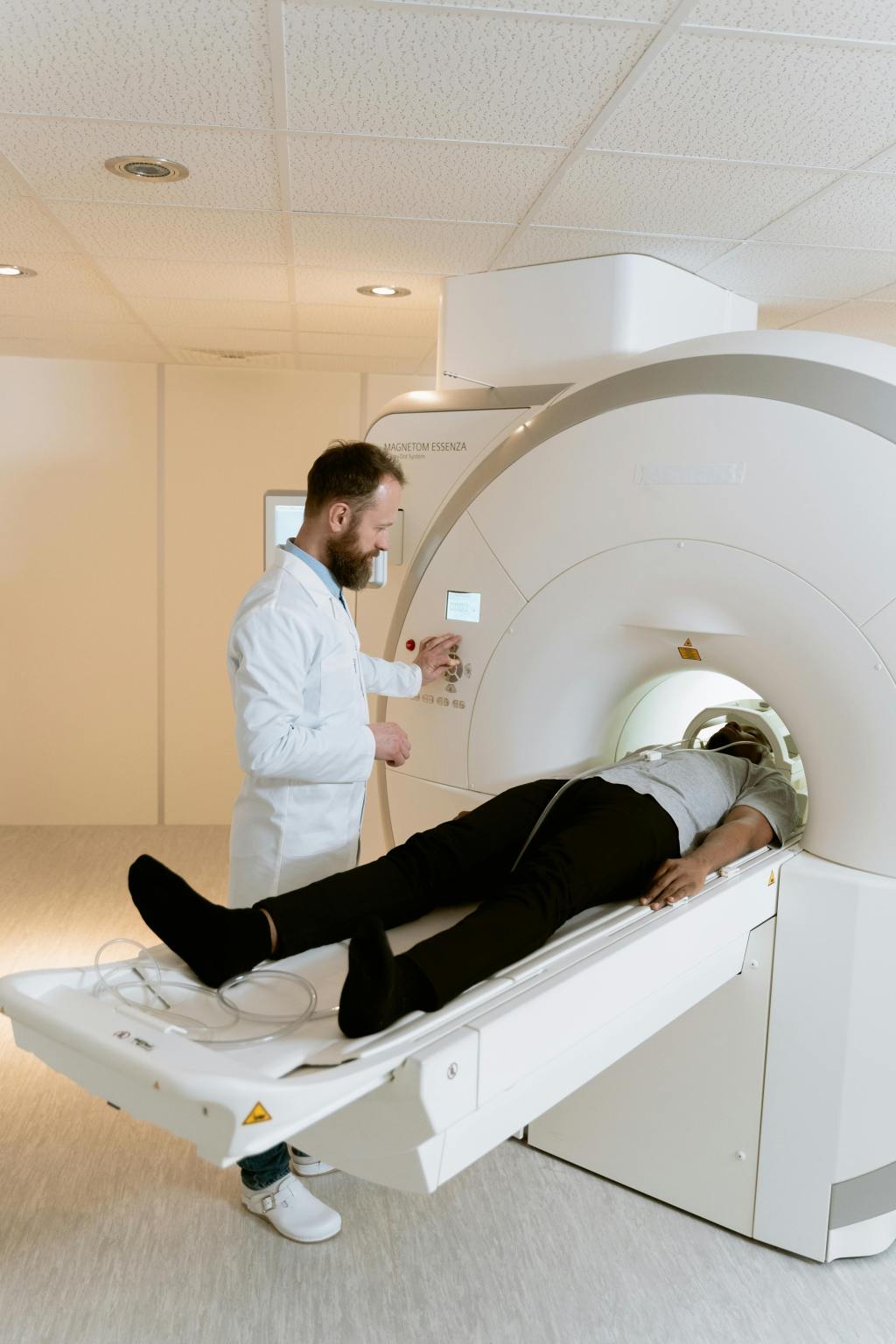
New Zealand scientists have helped develop an internationally groundbreaking tool that estimates a person’s risk of getting dementia and other age-related diseases.
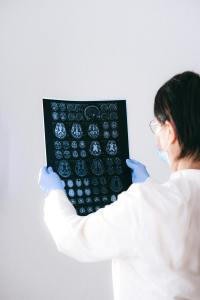
It uses a single MRI scan that can be done in mid-life and before someone is showing any signs of the conditions.
Otago University scientists worked with Duke and Harvard universities in the United States and have published their findings in the prestigious medical journal Nature Aging this week.
Data from Otago’s Dunedin Study – which has followed 1037 participants since they were born in 1972 and 1973 – has been critical in the work.
That study looked at changes in blood pressure, glucose and cholesterol levels, tooth and gum health and other body functions over 20 years to see how quickly people were ageing.
That data was then compared with an MRI taken when the study participants were 45 and a tool – an algorithm known as Dunedin PACNI – was developed that can look at anyone’s MRI and estimate how they might age.
Dunedin Study director Professor Moana Theodore said study members who had higher or faster PACNI scores were more likely to have poorer health.
“And also poorer physical functioning, things like walking and balance, and also poorer cognitive function, things like poorer memory even though they were, at that stage in their mid 40s,” she said.
The new tool was then tested out on 50,000 brain scans from data on people aged 50-89 in other parts of the world.
“In those studies of older people we were able to identify things like the development of chronic disease, so, an increased likelihood of heart attacks or strokes, an increased risk of being diagnosed with dementia over time and even an increased mortality,” she said.
The study found those who were ageing faster had more shrinkage in the hippocampus region of the brain and performed worse on cognitive tests.
Professor Theodore said the tool could help change outcomes for people.
“If we can predict ageing, especially in mid-life…. then what we are able to do is prevent, possibly intervene earlier on to stop or slow down age related diseases like dementia for which there is currently no clear treatment,” she said
She and her team were incredibly proud of the work – and she thanked the Dunedin Study members and their families for their 50 year contribution.
“It’s wonderful to have a New Zealand study that is at the forefront of international research on ageing and how to support people to age positively and well and how to reduce age related diseases that cause people to have poorer quality of life later in life,” she said.
DunedinPACNI will be freely available for scientists around the world to use to further their own work on ageing.













 Tom Coster - Psychology