Tag: school

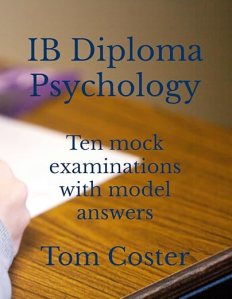
  • 10 Mock Examinations (with model answers)

    This is the book everyone is asking for – sample examinations – TEN of them. And model (high-scoring) answers.

    If you’re preparing for IB Psychology, Tom Coster’s Ten examinations with model answers is an ESSENTIAL resource.

    While the IB provides just one sample exam on the MyIB Programme Resource Centre, Tom Coster’s book goes much further – TEN full-length exams (Papers 1, 2 and 3), each with high-scoring student responses. These sample answers give students and teachers a very clear insight into what a top-level response looks like.

    Instead of guessing what earns a 7, readers can analyse near-perfect responses, identify successful strategies, and improve their own writing and exam technique. For teachers, it’s a time-saving tool for revision, assessment preparation, and modelling high standards. For students, it’s like having a roadmap to exam success.


  • A real-world issue for the in-class practicals

    The new IB Diploma Psychology course requires students to take part in four teacher-guided in-class practicals: an interview, an experiment, an observation, and a survey/questionnaire. We’re looking for issues that feel real and relevant to our students, and few topics are more urgent right now than the mental health crisis among young people.

    A recent UN-commissioned study by Jean Twenge and David Blanchflower has revealed a shocking reversal of the traditional “U-shaped” wellbeing curve. Happiness no longer dips in midlife—it now rises steadily with age, while young people are reporting record-low levels of life satisfaction. In six major English-speaking countries (UK, US, Ireland, Australia, Canada, and New Zealand), wellbeing among teenagers has plummeted—especially for young women.

    Teenager wellbeing

    One clear suspect? Smartphones and social media.

    This trend didn’t start with COVID-19. It dates back to around 2013 and has only worsened. Young people are reportedly more isolated, less socially engaged, and more exposed to cyberbullying and body shaming.

    This is exactly the kind of real-world phenomenon that DP Psychology students could—and should—investigate through in-class practicals. Imagine students designing ethical, small-scale studies examining screen time, social media use, and indicators of wellbeing among peers. It’s relevant, measurable, and personally meaningful to them.

    But maybe there are other possibilities, such as a shortage of good quality sleep. Diet? The mass media? The topsy-turvy economy and jobs market? Or maybe the teenage years were never really the greatest time of our life.

    We may not solve a global crisis in one classroom, but maybe we will start asking the right questions.

    Smartphones? Lack of sleep? Mass media? Music? Exams? Or maybe it’s ‘just a phase’

    Note that our Textbook includes a detailed section including examples of the In Class Practicals.


  • How good is the new internal assessment task for IBDP Psychology?

    As a teacher, I can’t say enough good things about the new Internal Assessment task for IBDP Psychology. Compared to the old model—where students had to work in groups to replicate an experiment, often on dry topics like Stroop effects or eyewitness testimony—the new research proposal format is a breath of fresh air.

    Now, students design a research proposal focused on a problem that actually matters to them and their target population. Whether it’s anxiety about climate change, peer pressure, bullying, or exam stress, students can explore real-world issues that resonate. They aren’t limited to running an experiment; they can propose interviews, surveys, or observations. This opens up creativity and allows for authentic engagement.

    Even better, the proposal can spark ideas for Extended Essays or even CAS projects. It’s so much simpler to teach and support—no logistical nightmares of groupwork or ethics approval for data collection. Students focus on designing ethical, methodologically sound research rather than scrambling to collect questionable data.

    In short, the new IA puts the emphasis on thinking like a psychologist, not just ticking boxes. It’s purposeful, meaningful, and a whole lot less stressful for everyone involved!

    If you’re looking for a guide to help you and your students navigate the new IA process with clarity and confidence, Tom Coster’s The Internal Assessment is essential reading. This comprehensive, step-by-step resource demystifies every stage of the IA, offers practical strategies for every research method, and includes twenty high-scoring sample proposals to inspire and guide. Say goodbye to IA stress—this book has you covered!


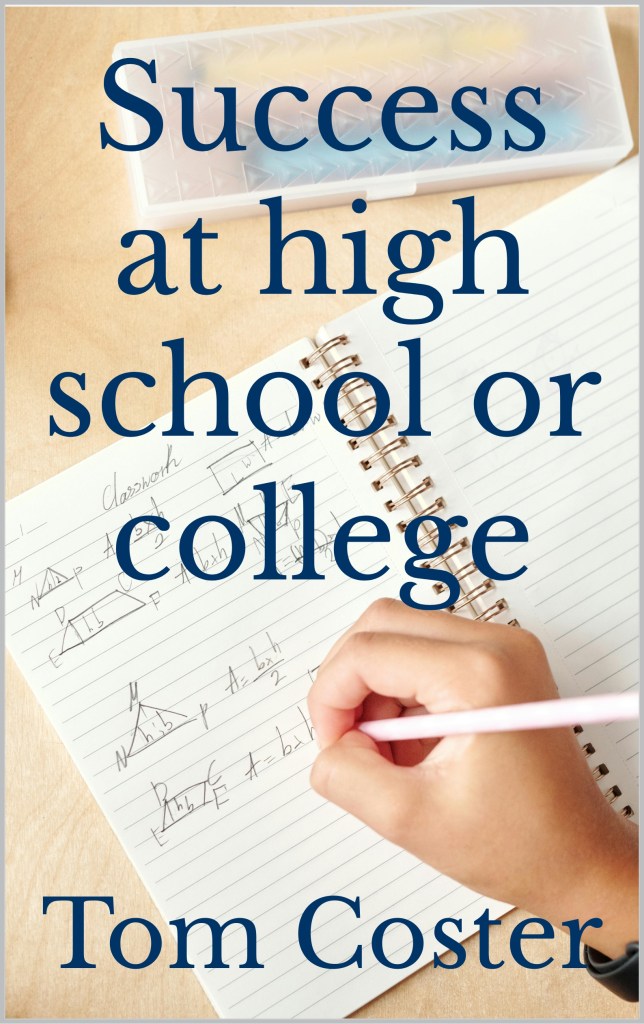
  • Success at high school or college – practical, ‘how to succeed’ advice

    Success in high school or college isn’t about being the smartest person in the room—it’s about using the right strategies to maximize your learning. Success at high school or college is your step-by-step guide to thriving in education, whether you’re aiming for top grades or simply want to get the most out of your studies.

    Packed with practical advice, this book covers everything from attending every class and participating actively to mastering time management and building strong relationships with teachers. Each chapter provides actionable tips to help you stay motivated, organized, and confident in your academic journey.

    Whether you’re struggling to keep up or looking to reach new heights, this book gives you the tools to take control of your education—and your future. Don’t leave success to chance—start building the habits that will set you apart today!


  • Sleep – the overlooked health treatment

    Sleep – the overlooked health treatment

    As psychology teachers, we’re often at the front and centre of mental health discussions – with students and also with colleagues. We teach our students about the biological, cognitive, and social explanations of disorders, the effectiveness of SSRIs, and the transformative power of CBT. And yet, one of the simplest and most effective interventions remains woefully underemphasized: adequate sleep.

    There is a mountain of credible, published research highlighting just how significant sleep is to emotional regulation. We have compelling evidence showing that poor sleep isn’t just a symptom of anxiety or depression, it is often the primary cause.

    The relationship between sleep and mental health is bidirectional, creating a vicious cycle: insufficient sleep heightens emotional reactivity, disrupts rational thought processes, and increases vulnerability to stress, making individuals more prone to anxiety and depression.

    One night of sleep deprivation leads to a significant spike in anxiety and low mood the following morning. Chronic, ie longer term, sleeplessness makes everyday events feel more negative, reinforcing a bleak outlook on life. Research shows that individuals suffering from insomnia are at twice the risk of developing anxiety or depression compared to those who sleep well.

    The evidence is compelling. Sleep deprivation impairs the prefrontal cortex, the brain’s emotional regulator, weakening its connection to the amygdala, which governs fear and emotional responses. This disruption makes individuals more emotionally volatile, prone to misperceiving neutral events as negative, and more likely to spiral into stress and mood disorders.

    As educators, we must recognize the immense potential of sleep education as a preventative mental health strategy. A CAS project that focuses on sleep awareness could help students (and colleagues) track their sleep, analyze its effects on mood and cognitive function, and share findings with peers.

    Getting sufficient sleep is not about school starting later or school providing quiet spaces for rest. It’s about teaching students, their parents, and colleagues that the simplest treatment (and prevention) strategy relating to the most common mental health issues of anxiety and depression is getting sufficient sleep. In general we all need 8-9 hours of sleep, so we must go to bed more than 8-9 hours before the required wake-up time because we need about half an hour to ‘fall asleep’. We all need to be in bed, light off and phone off around half an hour before the sleep time.

    Ultimately, if there is one piece of mental health advice we can give our students—and even our colleagues—it is this: Prioritize sleep because it is the foundation of emotional resilience, cognitive function, and overall well-being.

    I seldom see anxious cats.

  • Why choose the eBook versions?

    Why choose the eBook versions?

    The eBook versions of the Tom Coster Collection offer a smarter, lighter, and more affordable way to learn. Students don’t have to heave heavy textbooks—these eBooks live conveniently in the phone or tablet, devices they’ll never forget to bring to school. Priced at just 25-35% of their print counterparts, they’re also a budget-friendly option for students. Plus, no waiting for shipping! When you buy an eBook, it’s delivered instantly, ready to use right when you need it.

    The eBook collection includes everything you need for success: The Textbook, the Internal Assessment, Homework Revision Questions, the Extended Essay, the Essential Research Studies, the Glossary of Psychology Vocabulary and of course, How to succeed at high school or college.

    Convenience, affordability, and quality.


  • Affordability

    Affordability

    Before we even began this project, we were concerned about the high price of textbooks and teaching materials. Textbooks shouldn’t cost $70. Teachers and schools shouldn’t have to pay hundreds of dollars for subscriptions to ‘support websites’ that aren’t even official. Education should be accessible, not a financial burden.

    That’s why affordability has been at the heart of everything we’ve created. We’ve made The Textbook available as an eBook for less than $10 and the print version for under $30. In fact, none of our materials are priced higher than $30.

    To further support teachers and students, we’ve developed Course Outlines and a Scheme of Work/Scope and Sequence, all available for free download. On top of that, we’ve created almost 200 worksheets that align with every aspect of the course. These resources can be used for class activities or homework, making it easier for teachers to plan effective lessons without spending a fortune.

    By prioritizing affordability, we’re working to make quality education accessible to everyone.


  • How will I structure and teach this new course?

    As educators, we often wrestle with how to structure a course in a way that is engaging, meaningful, and manageable. After much consideration, I’m leaning toward focusing on the 4 Contexts approach for this course, integrating Concepts and Content within these contexts as opportunities naturally arise. This method, I hope, will give students a cohesive framework while still allowing flexibility to explore the curriculum in depth.

    To start, I’ll be diving into the Learning and Cognition Context, as it provides a strong foundation for discussing Experiments, which are central to both the course and research methodologies. The class practical will align with the learning objective: “The potential influence of one or more environmental factors on one cognitive process.” Specifically, we’ll investigate how background noise—perhaps students’ favorite music—affects learning and memory.

    This project will serve multiple purposes:

    1. Engage students by involving their interests and allowing them to design their own experiments.
    2. Teach research methods such as data collection, graphing, and sample selection techniques in a hands-on way.
    3. Explore cognition by connecting theory to real-life applications of learning and memory processes.

    I plan to spend time guiding students through experimental design and execution, emphasizing the importance of clear hypotheses, controls, and ethical considerations. As results come in, we’ll use the data to teach key skills like graphing and analyzing distributions, providing a practical introduction to statistical concepts.

    How long will this unit take? I’m estimating about a semester—maybe less—but as we all know, teaching rarely sticks rigidly to a timeline. I’ll keep detailed notes to refine this approach for future classes.

    Ultimately, this flexible, context-driven approach gives me room to adapt, ensuring the course stays relevant and engaging for my students. Let’s see how it plays out—after all, the best-laid plans often lead to unexpected discoveries.

    Please have a look at the Course Outlines page for some editable course outlines.


  • Worksheets – free to download and use

    There are 1-2 page worksheets available for every element of the course on the website, each designed to take approximately 40-50 minutes to complete. These worksheets are free to download and use, and teachers are encouraged to either edit them to suit their specific lesson needs or use them as they are.

    Worksheets are an effective tool for reinforcing and consolidating learning. After delivering content through PowerPoints, discussions, and Q&A sessions, worksheets provide students the opportunity to engage actively with the material, solidify their understanding, and apply what they’ve learned in a structured way.

    In my experience, worksheets work best when completed collaboratively in pairs or groups of three. This setup fosters discussion and peer teaching, as students explain concepts to one another and debate their answers. This process not only deepens their understanding but also builds critical thinking and communication skills. Collaborative work can make even challenging tasks more accessible, as students combine their strengths and perspectives.

    A practical tip: print the worksheets, but collect them at the end of the session. This way, you can reuse them in the future, saving both time and resources. Laminating frequently used worksheets is also a great idea for durability.


  • Illeism: The ancient trick to help you think more wisely

    This article is reposted from BBC.com

    https://www.bbc.com/worklife/article/20230411-illeism-the-ancient-trick-to-help-you-think-more-wisely

    It’s hard to reason through problems, but there are ways to be more objective and less biased in your thinking.

    As a writer specialising in psychology, I’ve come across hundreds of evidence-based tips for better thinking. Few have proven as useful to me as the ancient strategy of illeism.

    Put simply, illeism is the practice of talking about oneself in the third person, rather than the first person. The rhetorical device is often used by politicians to try to give their words an air of objectivity. In his account of the Gallic War, for example, the emperor Julius Caesar wrote “Caesar avenged the public” rather than “I avenged the public”. The small linguistic switch seems intended to make the statement feel a little more like historical fact, recorded by an impartial observer

    To the modern ear, illeism can sound a little silly or pompous – and we may even deride famous people who choose to talk in this way. Yet recent psychological research suggests that illeism can bring some real cognitive benefits. If we are trying to make a difficult decision, speaking about ourselves in the third person can help to neutralise the emotions that could lead our thinking astray, allowing us to find a wiser solution to our problem.

    Solomon’s paradox

    To understand these benefits of illeism, we must first examine the ways that scientists measure the wisdom of someone’s reasoning.

    The scientific study of wisdom has been spear-headed by Igor Grossmann at the University of Waterloo in Canada. Grossmann first drew on the work of numerous philosophers to decide on a series of “metacognitive components” – including intellectual humility, acknowledgement of others’ viewpoints and search for compromise – that are commonly considered to be essential for wise decision making. First used by Julius Ceaser, Illeism is a tool that will clear your mind from indecision

    In one of his first studies, Grossmann asked participants to think out loud about their responses to various dilemmas – such as personal problems posed to the Dear Abby “agony aunt” column – while independent psychologists rated their spoken responses according to these criteria. Grossmann found that these tests of wise reasoning were better than IQ tests at predicting people’s overall life satisfaction and the quality of their social relationships. This suggested the studies were capturing something unique about their reasoning skills.

    Grossmann’s later studies revealed that the wisdom of people’s reasoning can depend on the context. In particular, he found that their wise reasoning scores tended to be much higher when considering other people’s situations than their own personal dilemmas. Grossmann called this “Solomon’s Paradox” after the ancient Biblical king, who was famous for advising others wisely, while making a series of disastrous personal decisions that ultimately left his kingdom in chaos.

    The problem seems to be that when making personal choices, we become too immersed in our emotions, which cloud our thinking and prevent us from putting our issues in perspective. If I have received negative feedback from a colleague, for example, my feeling of embarrassment might lead me to become overly self-defensive. I might therefore dismiss their opinions without considering whether their advice could be helpful in the long-term. 

    How to be wise

    Could illeism resolve Solomon’s paradox? The idea makes intuitive sense: by switching to the third person, our descriptions of the situation will start to sound as if we are talking about someone else rather than ourselves. This sense of detachment would allow us to see the bigger picture, rather than getting caught up in our own feelings. 

    And that is exactly what Grossmann found in a study with Ethan Kross at the University of Michigan in Ann Arbor. They showed that people employing illeism to talk about their problems showed greater intellectual humility, capacity to recognise others’ perspectives, and willingness to reach compromise – increasing their overall wise reasoning scores. 

    The latest studies show that the regular use of illeism can bring about lasting benefits to our thinking.

    Working with Abigail Sholer, Anna Dorfman and colleagues, Grossmann asked participants to keep a daily diary for one month in which they described a situation they had just experienced. Half were told to write their entries in the third person, while the other half were told to write in the first person. At the start and end of the study, the team also tested the subjects’ general wise reasoning. As hoped, the researchers found that, over the course of the intervention, the participants who had been encouraged to use illeism in their diaries saw a rise in their wise-reasoning scores over the course of the month.

    By encouraging us to put our problems in perspective, the use of illeism may also help us to have a more balanced response to daily stresses. People who had completed the diary in the third person reported more positive emotions after challenging events, rather than dwelling solely on the sadness, frustration or disappointment.

    Based on these findings, I now apply illeism to all decisions, small and big. Whether I’m facing trials at work, conflict with my friends, or strife in the family, I find that a few moments contemplating my problems from a third-person perspective helps me to see the issue more clearly. 

    David Robson is a science writer and author of The Expectation Effect: How Your Mindset Can Transform Your Life, published by Canongate (UK) and Henry Holt (USA). He is @d_a_robson on Twitter.