Tag: IBDP Psychology

  • 10 Mock Examinations (with model answers)

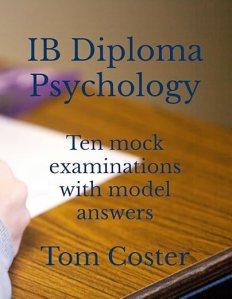
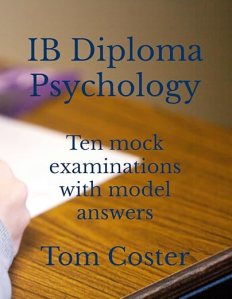
    This is the book everyone is asking for – sample examinations – TEN of them. And model (high-scoring) answers.

    If you’re preparing for IB Psychology, Tom Coster’s Ten examinations with model answers is an ESSENTIAL resource.

    While the IB provides just one sample exam on the MyIB Programme Resource Centre, Tom Coster’s book goes much further – TEN full-length exams (Papers 1, 2 and 3), each with high-scoring student responses. These sample answers give students and teachers a very clear insight into what a top-level response looks like.

    Instead of guessing what earns a 7, readers can analyse near-perfect responses, identify successful strategies, and improve their own writing and exam technique. For teachers, it’s a time-saving tool for revision, assessment preparation, and modelling high standards. For students, it’s like having a roadmap to exam success.


  • Class practicals in the new DP Psychology course – are…

    …a piece of cake!

    The new IBDP Psychology syllabus introduces “Class Practicals” — and understandably, many teachers are expressing some concern. But there’s good news: they’re not as big a deal as they might seem.

    First, students don’t need to each design and carry out four practicals independently. These are class activities, best done together during regular class time or in school, using the 4 research methods to prepare for Paper 1 Section B. The aim is to build understanding of experimental design, data collection, and critical thinking — not to create publishable research.

    Each of the four required Class Practicals aligns with a key method in the syllabus: experiment, observation, interview, and survey/questionnaire. Teachers are encouraged to guide the design and implementation, ensuring all students participate and reflect on the process.

    If you’re looking for support, Tom Coster’s IBDP Psychology: The Textbook is a must-have. It provides clear explanations, guidance, and a ready-to-use example for each practical. With good planning and a collaborative classroom approach, these activities can be both manageable and meaningful.


  • Trust Tom Coster with your DP Psychology teaching

    When it comes to teaching the IB Diploma Psychology course, experience and insight matter.

    With a Master’s degree in Psychology and years of hands-on teaching, Tom Coster brings strong subject knowledge and a deep understanding of how students learn. He’s worked extensively with the IB —as an exam marker, IA moderator, Extended Essay marker, and workshop leader. He knows how to read between the lines of a Subject Guide and translate it into real-world classroom success.

    What does this mean for Psychology teachers? A complete set of affordable, classroom-ready teaching materials designed to help your students succeed—whether in the IA, exams, or the new extended essay.

    The materials are:

    • Perfectly aligned with the new syllabus
    • Available in both print and eBook formats
    • Packed with simple strategies for success
    • Easy to use and built for real classroom conditions

    Tom’s mission is simple: to make high-quality Psychology teaching less stressful for teachers and their students and more effective. And judging by the response from teachers around the world, it’s working.

    Ready to simplify your planning and boost student achievement? See for yourself.


  • Teach the new IBDP Psychology course with total confidence

    The Tom Coster Collection – by a seasoned IB educator (and examiner/moderator and workshop leader), this comprehensive suite of books and teaching materials is purpose-built for the new syllabus. Whether you’re a veteran IB Psychology teacher or delivering it for the first time, this collection truly covers everything you need.

    What’s in the Tom Coster Collection?

    1. IB Diploma Psychology – The Textbook

    The flagship resource, available in print and eBook format from Amazon, this book:

    • Covers every aspect of the new syllabus
    • Includes sections on the examinations and the Internal Assessment
    • Fully aligns with the new concept-based and research-grounded approach

    2. The Complete Set of PowerPoint Presentations

    • Downloadable, editable .ppt files for all syllabus topics
    • Closely aligned with the textbook
    • Covers content and assessments, ready for classroom delivery

    3. Homework Revision Questions

    • A structured set of exam-style writing prompts
    • Can be used throughout the two-year course or as a revision pack
    • Ideal for independent learning or class-based assignments

    4. The Internal Assessment

    • A dedicated book (print/eBook) providing:
      • Detailed breakdown of IA requirements
      • Moderator-level advice
      • 16 high-quality examples of completed IAs

    5. Ten Mock Examinations with Model Answers

    • A full book with:
      • 10 complete practice exams (Papers 1, 2, and HL Paper 3)
      • Model/high-scoring answers for all questions
      • Ideal for assessment practice and benchmarking progress

    6. 70 Multiple Choice Tests

    • 30-question tests across all course topics
    • Designed for quick, comprehensive checks of student understanding
    • Great for determining readiness to move forward in your teaching sequence

    7. The Extended Essay

    • Updated to reflect the revised EE guidelines from September 2025
    • Includes:
      • Step-by-step guidance
      • 100 research question ideas with essay outlines
      • A complete, high-scoring sample EE

    8. Glossary of Psychology Vocabulary

    • Around 1,000 terms, grouped by approach and topic
    • Supports the syllabus’ emphasis on disciplinary literacy
    • A must-have for developing confident, fluent IB Psychology students

    9. 150 Essential Research Studies

    • Brief, focused outlines of 150 key research studies
    • Each outline includes:
      • Core details
      • A critical thinking mini-section
    • Perfect for building student reference banks and evidence-based writing

    10. Success at High School and College

    • A practical guide on how students can thrive academically
    • Covers note-taking, revision strategies, exam technique, and time management
    • Ideal for student onboarding or as a gift at the start of the Diploma

    What sets the Tom Coster Collection apart is that it was clearly created by a teacher (and examiner/moderator, and workshop leader), for teachers. These resources are:

    • 100% tailored to the new IB Psychology syllabus
    • Field-tested, classroom-ready, and immediately usable
    • Designed to make the complex clear, structured, and teachable

    How to Access the Collection

    • Books are available on Amazon in both print and eBook formats.
    • Downloadable materials (like PowerPoints and course outlines) are available from the official website.
    • No subscriptions. No locked platforms. Just tools that work.

    Teaching the new IB Psychology course doesn’t have to be overwhelming. With the Tom Coster Collection, you gain not just a set of materials—but a full teaching system designed to support you at every step. So if you’re looking to teach the new syllabus with clarity, confidence, and creativity—this is the collection to have on your shelf and screen.


  • Earlier bedtimes leads to better cognition

    Every year, I tell my students that sleep is just as important as revision and study habits when it comes to academic performance. And now, a compelling new study from the University of Cambridge and Fudan University gives us even more reason to double down on that message.

    In a study involving over 3,000 teenagers, researchers discovered that those who:

    • Went to bed earlier,
    • Slept longer,
    • And had lower sleeping heart rates,

    scored significantly higher on a range of cognitive tests, including reading, vocabulary, and problem solving.

    Even more striking? The actual difference in sleep duration between groups was minimal—just 15 minutes between the lowest and highest scoring groups—yet this small variation had a surprisingly large impact on brain performance and function.

    Brain scans revealed that teens with the best sleep habits not only performed better but also had larger brain volumes and more efficient brain function.

    Despite these findings, even the best-sleeping teens in the study didn’t reach the 8–10 hours per night recommended by the American Academy of Sleep Medicine. The healthiest group averaged just seven hours and 25 minutes of sleep.

    Why? Teenagers face a biological shift toward later bedtimes during adolescence. Add in screen use, homework, social media, and caffeine—and you’ve got a generation of students consistently underslept.

    We’re not powerless. In fact, this is where we shine. As Psychology teachers, we can…

    1. Teach the Science of Sleep

    Incorporate sleep research into your lessons on cognitive development, memory, and mental health. Use this new study to show how even small changes in sleep patterns make a real difference.

    2. Debunk Myths

    Help students understand that “catching up” on weekends (aka social jet lag) doesn’t undo the damage of sleep loss during the week. Emphasize consistency.

    3. Promote Simple, Practical Changes

    Share strategies backed by experts:

    • Encourage regular exercise to improve sleep quality.
    • Urge students to limit screens an hour before bedtime.
    • Support healthy bedtime routines, such as winding down with a book, journaling, or light stretching.

    4. Embed Sleep into Pastoral Care

    Work with your school’s wellbeing or pastoral team to create sleep hygiene workshops, or add sleep content into personal and social education. Oxford’s Teensleep project is a great resource for ideas and activities.

    5. Make Sleep “Cool”

    Reframe sleep as a performance enhancer. Better memory. Sharper thinking. Bigger brains. It’s the one lifestyle change that benefits everything from academics to mental health—and it doesn’t cost a thing.


    Professor Barbara Sahakian, who co-led the study, put it best: “It’s the sleep driving the better cognitive abilities… Small differences in sleep amounts accrue over time to make a big difference in outcomes.”

    Let’s empower our students to make those small changes—because every extra minute of quality sleep could mean a stronger brain, clearer thinking, and greater wellbeing.


  • How good is the new internal assessment task for IBDP Psychology?

    As a teacher, I can’t say enough good things about the new Internal Assessment task for IBDP Psychology. Compared to the old model—where students had to work in groups to replicate an experiment, often on dry topics like Stroop effects or eyewitness testimony—the new research proposal format is a breath of fresh air.

    Now, students design a research proposal focused on a problem that actually matters to them and their target population. Whether it’s anxiety about climate change, peer pressure, bullying, or exam stress, students can explore real-world issues that resonate. They aren’t limited to running an experiment; they can propose interviews, surveys, or observations. This opens up creativity and allows for authentic engagement.

    Even better, the proposal can spark ideas for Extended Essays or even CAS projects. It’s so much simpler to teach and support—no logistical nightmares of groupwork or ethics approval for data collection. Students focus on designing ethical, methodologically sound research rather than scrambling to collect questionable data.

    In short, the new IA puts the emphasis on thinking like a psychologist, not just ticking boxes. It’s purposeful, meaningful, and a whole lot less stressful for everyone involved!

    If you’re looking for a guide to help you and your students navigate the new IA process with clarity and confidence, Tom Coster’s The Internal Assessment is essential reading. This comprehensive, step-by-step resource demystifies every stage of the IA, offers practical strategies for every research method, and includes twenty high-scoring sample proposals to inspire and guide. Say goodbye to IA stress—this book has you covered!


  • Powerpoints for the whole IBDP Psychology course

    We’re receiving very positive feedback for our comprehensive PowerPoint slides, covering the entire course, including the internal assessment and examinations. Designed to be 100% editable, teachers can add, delete, or modify slides to fit their teaching style and students’ needs.

    At just $50 for the complete set, these slides are not only a huge time-saver but also exceptional value for money. Streamline your lesson planning and deliver engaging, structured lessons with ease.


  • IBDP Psychology and peace negotiations

    Understanding conflict is important for peace in Ukraine. Two elements of the IBDP Psychology course would help both Ukraine and Russia achieve peace – if that’s what they want.

    Peace tnrough IBDP Psychology

    If peace is the goal, Sherif et al. (1957)’s The Robbers Cave Study and Henri Tajfel’s Social Identity Theory offer hope.

    In the Robbers Cave Study, Sherif divided teenage boys at a summer camp into two competing groups. Initially, they bonded in their own groups. When competition was introduced, hostility erupted between the groups. Tbe conflict was resolved when the boys were given superordinate goals – to fix a leaking water tank. Working together, the mete act of required cooperation against a shared problem, turned the rival groups into allies.

    Henri Tajfel’s Social Identity Theory (SIT) explains how people categorize themselves into groups, leading to an “us vs. them” state – emphasis on the ‘versus’. The perceived difference triggers conflict. But SIT also shows that group identities can be reshaped. When people see themselves as part of a larger, inclusive group, intergroup conflict decreases, cooperation is possible and peace between previously warring groups can occur.

    Applying this knowledge about human behavior can lead to peace in Ukraine and Russia. It’s about creating shared goals and identities. The Orthodox church leaders in Russia and Ukraine could play a role here. Instead of reinforcing divisions, the church leaders could highlight common interests: we are more alike than different. Economic leaders such as the IMF could show that both countries, working together through a Free Trade Agreement could achieve economic growth and, more importantly, economic development.

    Of course, this presupposes that both Ukraine and Russia want peace.


  • Success at high school or college – practical, ‘how to succeed’ advice

    Success in high school or college isn’t about being the smartest person in the room—it’s about using the right strategies to maximize your learning. Success at high school or college is your step-by-step guide to thriving in education, whether you’re aiming for top grades or simply want to get the most out of your studies.

    Packed with practical advice, this book covers everything from attending every class and participating actively to mastering time management and building strong relationships with teachers. Each chapter provides actionable tips to help you stay motivated, organized, and confident in your academic journey.

    Whether you’re struggling to keep up or looking to reach new heights, this book gives you the tools to take control of your education—and your future. Don’t leave success to chance—start building the habits that will set you apart today!


  • The Textbook and the book of 10 Mock Examinations

    If you’re looking for a clear, concise, and affordable IB Psychology textbook, IBDP Psychology – The Textbook is the perfect choice. It features a plain and simple layout, straightforward language, and excellent value compared to big corporate publishers. Available in print and eBook formats, it’s an essential resource for both students and teachers.

    But that’s not all—there’s also a set of TEN mock exams (Papers 1, 2, and 3 for SL and HL), each with complete, high-scoring model answers to help students master exam technique.

    And have you seen the COMPLETE set of PowerPoint presentations? They cover the entire course and they’re fully editable, so you can customize them to suit your own preference.