Tag: education

  • How to answer the exam questions

    How to answer the exam questions

    We’re excited to share a new (and free) resource created to support teachers and students in the new IB Diploma Psychology course: “How to answer exam questions.”

    This document will demystify the exam requirements across Papers 1, 2, and 3. It provides clear, structured guidance on how to approach every question.

    • Step-by-step structures for each question
    • Tips for content selection and writing focus

    The document is provided in Word format so you can copy and edit it to suit your purposes or share it directly with your students. A suggested use: Give a copy to students when they are doing practice exams so they can see exactly how to structure their responses.

    We hope this document helps make exam preparation a little smoother for everyone. Feel free to share it with colleagues.


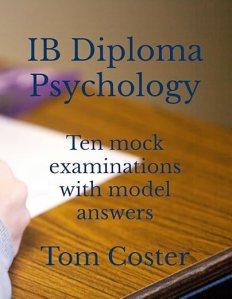
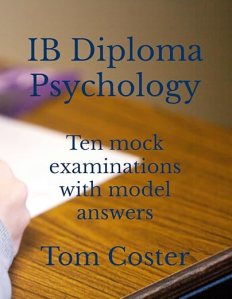
    If you’re looking for even more comprehensive support, check out our book IB Diploma Psychology – Ten Mock Examinations with Model Answers. It includes TEN full mock exams (Papers 1, 2, and 3) complete with high-scoring sample responses for every question. Use it to plan your mocks, guide student revision, and sharpen your understanding of exactly what to teach for exam success.


  • Birth order and behaviour: A worksheet to support the 6 Concepts


    This post is about a Worksheet (below) that teachers can use in the first week or two of the course to introduce students to the 6 big Concepts of the course and to allow a conversation about the significance of good research. The worksheet includes a very recent article from BBC News (June 20th, 2025) and a collection of activities for students to complete, perhaps in small groups, perhaps individually, perhaps for homework…

    The birth order theory

    Is the first-born always the responsible one and the last born always the fun-loving rebel?

    The birth order theory suggests that your position in the family (firstborn, middle child, youngest, or only child) shapes your personality in predictable ways:

    • Firstborns are said to be more responsible and achievement-focused.
    • Middle children are often described as peacemakers or attention-seekers.
    • Youngest siblings are thought to be fun-loving and rebellious.
    • Only children are sometimes stereotyped as selfish or overly mature.

    These ideas are fun to talk about at dinner tables — and even show up in TV shows and social media memes — but do they hold up to scientific scrutiny?


    The research says… no.

    Decades of research have tried to pin down whether birth order really causes differences in personality. While some studies have found small patterns — for example, that firstborns might score slightly higher on intelligence tests — larger and better-designed studies have found no consistent, universal effects of birth order on broad personality traits.

    That doesn’t mean birth order has zero impact. It may shape behaviour in specific family contexts or cultures, and people’s beliefs about birth order can shape their identities. But overall, there’s very little evidence to say that your position in the family determines your personality in any reliable or scientific way.

    This example gives us a good way to start understanding the six key Concepts of IBDP Psychology:

    1. Bias

    We tend to notice evidence that confirms our expectations and ignore what doesn’t — a classic example of confirmation bias. If your older sister is bossy, you might say “Well, obviously, she’s the eldest.” But what about all the bossy youngest children?

    2. Causality

    Is it really birth order that causes certain traits? Or could it be age, parenting style, socioeconomic status, or even gender expectations? Psychology often grapples with correlation vs. causation, and birth order is a great example of that complexity.

    3. Measurement

    How do we measure personality? Many studies rely on self-report questionnaires, which come with limitations. People might describe themselves based on how they think they’re supposed to behave as an oldest child, not how they actually behave.

    4. Perspective

    The impact of birth order may differ between cultures and families. In some societies, firstborns may carry traditional responsibilities, while in others, birth order is far less significant. Perspective reminds us that psychology is not one-size-fits-all.

    5. Change

    Your personality and family roles can shift over time. A younger sibling might become more responsible later in life. Psychology recognises that behaviour and identity are not fixed, but dynamic.

    6. Responsibility/Ethics

    If we assume someone’s behaviour is fixed by their birth order, that can be limiting — even harmful. Ethical psychology considers the social consequences of labelling, stereotyping, and drawing broad conclusions from incomplete evidence.


    In the first week of IB Psychology, we’ll use this birth order debate to practice:

    • Asking critical questions about theories and research
    • Exploring the six Concepts in real-world contexts
    • Discussing beliefs vs. evidence, and developing a scientific mindset

    You’ll be using the attached worksheet to guide your thinking and conversation. Don’t worry — you don’t need to be an expert in Psychology yet. The goal is to start asking smart questions and learning how to evaluate claims, whether they’re in a textbook, a TikTok post, or a family argument at dinner.


    Final Thought


    1. What is your birth order?
      (First-born, middle child, youngest, only child, twin, etc.)
    2. Do you think your birth order has influenced your personality or behaviour?
      If so, in what ways?
    3. Do people ever describe you using “birth order” traits?
      (e.g. “You’re such a responsible oldest child” or “Typical youngest!”)
      Do you agree or disagree with those descriptions?
    4. How are your siblings’ personalities different from yours?
      Do you think these differences are because of birth order, or something else?
    5. Do you think all first-borns are more responsible? All youngest siblings more fun or rebellious?
      Why or why not?
    6. Do you think people act a certain way because of their birth order — or because they believe birth order affects their behaviour?
      Can belief shape personality?
    7. Do cultural or family expectations influence how children behave based on their birth order?
      Can you think of an example?
    8. Have you ever changed your role in the family over time?
      For example, were you once the “quiet one” but became more assertive? What caused that change?
    9. Do you think only children are different from children with siblings?
      In what ways, and why?
    10. If someone knew nothing else about you except your birth order, what might they assume about your personality?
      Do you think they’d be right?

    These questions can lead to some rich and open discussion — and they provide a natural bridge into critical thinking, the importance of evidence-based research, and the limitations of generalisations in psychology.

    Final thought…

    Psychology is full of ideas that sound right — but part of becoming a psychologist is learning to dig deeper. The birth order theory may not be strongly supported by data, but it gives us the perfect launchpad into the skills, attitudes, and concepts that define this course.


  • Dr Phil Silva: The Visionary Behind the Dunedin Study

    The global Psychology community mourns the loss of a pioneer. Dr Phil Silva, founder of the world-renowned Dunedin Multidisciplinary Health and Development Study – better known simply as the Dunedin Study – passed away on Thursday at the age of 84.

    For IB Diploma students, the Dunedin Study on which the longitudinal study that Caspi et al. (2003) is based.

    Dr Silva’s legacy is nothing short of extraordinary. In 1972, he began following the lives of 1037 babies born at Queen Mary Maternity Hospital in Dunedin. Over 50 years later, the study continues, with a participation rate of around 90% – an unmatched achievement in longitudinal research worldwide.

    As psychology teachers, we often search for meaningful case studies that demonstrate the real-world impact of psychological research. The Dunedin Study is one of those rare, gold-standard examples. It has helped reshape our understanding of child development, health, education, and mental wellbeing – and much of its success is owed to Dr Silva’s vision, energy, and compassion.

    Before becoming a psychologist and researcher, Phil Silva was a primary school teacher. Teaching rural children in the 1960s deeply influenced his later work – a foundation built on empathy, curiosity, and a commitment to supporting young people and their families. That passion carried through into his academic career, where he completed a master’s and PhD under Otago University’s Dr Patricia Buckfield, who herself had a keen interest in neonatology.

    Together, their early work collecting data on babies born in Dunedin from 1967 to 1973 laid the groundwork for the creation of the Dunedin Study. But it was Silva’s leadership, drive, and charisma that propelled the project forward. Against the odds – with minimal funding and few formal resources – he rallied hundreds of volunteers who believed in his mission to improve children’s lives.

    Silva’s research didn’t just stay in academic journals. It influenced public health policy, helped normalise routine check-ups for preschoolers, and highlighted the impact of conditions like glue ear on child development. He spoke passionately about the need for society to prioritise children’s wellbeing. In one memorable critique, he noted that New Zealanders were more likely to service their cars than check on the health of their children – a powerful call for compassion and systemic care.

    His work was internationally recognised. In 1993, the Dunedin Study made the cover of Time magazine under the headline: “All You Need is Love”. A year later, Silva was awarded an OBE for services to health and education.

    Dr Silva’s influence extended far beyond data collection. He was a mentor to the late Professor Richie Poulton, who succeeded him as study director, and to the current director, Professor Moana Theodore, who first joined the team as an interviewer during the age-26 assessment phase.

    Theodore describes him as “an energetic mentor” with a unique ability to bring people together in service of a bigger purpose: improving lives. That ability is reflected in the enduring loyalty of study participants – many of whom have stayed involved for over five decades.

    She beautifully summed up his contribution:

    “Dr Phil has left this legacy and a taonga [prized treasure] for New Zealand… the best childhood foundation guarder in the world – and the most studied group of people anywhere in the world.”

    For those of us teaching psychology, the Dunedin Study is a model of longitudinal research excellence. It’s a case study we can use not only to explain developmental psychology, biopsychosocial models, or research methods—but also to inspire our students to see how psychological science can serve real people, communities, and policy.

    Dr Phil Silva didn’t just collect data—he created change. He showed us what psychology could be at its best: compassionate, evidence-based, and relentlessly committed to human wellbeing.

    Let us honour his legacy by continuing to teach with the same curiosity, purpose, and care.


    Rest in peace, Dr Silva. Your work lives on—in policy, in classrooms, and in the lives of 1037 individuals who helped the world better understand what it means to grow, change, and thrive.

  • Estonia, mobile phones and students.

    Newsflash: Estonia’s Minister of Education and Research, Kristina Kallas, emphasized Estonia’s proactive and open approach to digital tools in education during a speech at the Education World Forum in London. Unlike many European countries that are cautious about screen time and mobile phone use in schools, Estonia encourages the use of smartphones for learning. Schools set their own rules, and students—particularly those aged 16 and up who are eligible to vote online—are expected to use their phones as tools for both civic participation and education. Kallas notes the absence of problems related to mobile use, crediting Estonia’s digitally fluent society and schools’ autonomy.

    Kallas highlighted Estonia’s long-standing digital investment, starting with the 1997 Tiigrihüpe (Tiger Leap) programme, which brought internet access to all schools. Now, the country is embracing AI and smartphone technology as the next evolution in education. Kallas predicts the decline of traditional homework essays and rote learning, pushing instead for a focus on oral assessment and the development of high-level cognitive skills. She frames this shift as essential in keeping pace with the capabilities of AI, warning that if humans don’t evolve cognitively, technology may overtake them.

    Yes. The most powerful learning tool ever, so let’s teach students how to make the best use of them. Teaching… it’s what we do.

    As teachers, we’ve all been part of the debate: are mobile phones a distraction or a tool in the classroom? Estonia’s Minister of Education, Kristina Kallas, offered a refreshing perspective this week that challenges many of our assumptions. In Estonia, mobile phones are not banned in schools—they’re embraced. Why? Because they reflect the real world students are living in, and Estonia sees them as integral to learning and civic life. Sixteen-year-olds vote online using their phones. It would be illogical, Kallas argues, to deny them the same access in a classroom setting.

    This approach got me thinking. In IB Psychology, we ask students to critically evaluate, think metacognitively, and link psychological theory to the real world. What better way to model that than by integrating the very tools students already use to explore and interact with that world? Estonia isn’t ignoring the risks—phones aren’t used during breaks, and younger students face tighter limits—but they are trusting teachers and schools to manage these decisions locally.

    The most provocative idea Kallas raised is that AI may render essays and rote learning obsolete. That’s a bold claim. But if AI can generate knowledge quickly and accurately, then the role of education must shift towards helping students think better—to question, synthesise, communicate, and reflect. Isn’t that what we’re already trying to do in the IB?

    Rather than fight the tide, maybe we should, like Estonia, ride it. But there’s no maybe about it. We should. We must!Our job, our responsibility, is to help students use them correctly, with integrity and responsibilty and respect.


  • 10 Mock Examinations (with model answers)

    This is the book everyone is asking for – sample examinations – TEN of them. And model (high-scoring) answers.

    If you’re preparing for IB Psychology, Tom Coster’s Ten examinations with model answers is an ESSENTIAL resource.

    While the IB provides just one sample exam on the MyIB Programme Resource Centre, Tom Coster’s book goes much further – TEN full-length exams (Papers 1, 2 and 3), each with high-scoring student responses. These sample answers give students and teachers a very clear insight into what a top-level response looks like.

    Instead of guessing what earns a 7, readers can analyse near-perfect responses, identify successful strategies, and improve their own writing and exam technique. For teachers, it’s a time-saving tool for revision, assessment preparation, and modelling high standards. For students, it’s like having a roadmap to exam success.


  • The In Class Practicals

    One of the most exciting features of the new IB Diploma Psychology course is the emphasis on class practicals, which give both Standard Level (SL) and Higher Level (HL) students a chance to engage directly with psychological research methods. These activities are more than just experiments, they are designed to support critical discussion of each research approach, helping students build practical understanding while making connections to real-world contexts.

    Class practicals are embedded into each of the course’s four contexts: Health and Well-being, Learning and Cognition, Human Development, and Human Relationships. Each context is linked with a specific research method:

    • In Health and Well-being: Interview.
    • In Learning and Cognition: Experiment.
    • In Human Development: Observation.
    • In Human Relationships: Survey/Questionnaire.
    Interview

    Each Context in the Subject Guide includes a list of suggested class practicals, but these are examples only and teachers are encouraged to tailor the activities to their own students and their local setting. For instance, under the Health and Well-being context, students could conduct focus group interviews on how peers manage stress, or investigate student perceptions of mindfulness practices after a class activity. Other examples include semi-structured interviews with professionals such as school counsellors or fitness coaches, or interviews exploring links between social media use and self-esteem, or exercise habits and mood.

    Importantly, Tom Coster’s Textbook includes dedicated guidance for the In Class Practicals in each context, helping both teachers and students make the most of these learning opportunities.

    The In Class Practical is not just a learning activity — it is also formally assessed in Paper 2, Section A, where students respond to four structured questions related to one of the 4 Practicals they completed. These questions test students’ understanding of methodology, concepts like bias or ethics, and the ability to design or compare research approaches.

    In short, In Class Practicals bring psychology to life, giving students the opportunity to be researchers themselves and fostering deeper, more critical engagement with the subject.

    Here is a free downloadable document describing how to complete the In-Class Practical for an interview. It includes summary notes that students would use to prepare for Paper 2 Section A.


  • Teach the new IBDP Psychology course with total confidence

    The Tom Coster Collection – by a seasoned IB educator (and examiner/moderator and workshop leader), this comprehensive suite of books and teaching materials is purpose-built for the new syllabus. Whether you’re a veteran IB Psychology teacher or delivering it for the first time, this collection truly covers everything you need.

    What’s in the Tom Coster Collection?

    1. IB Diploma Psychology – The Textbook

    The flagship resource, available in print and eBook format from Amazon, this book:

    • Covers every aspect of the new syllabus
    • Includes sections on the examinations and the Internal Assessment
    • Fully aligns with the new concept-based and research-grounded approach

    2. The Complete Set of PowerPoint Presentations

    • Downloadable, editable .ppt files for all syllabus topics
    • Closely aligned with the textbook
    • Covers content and assessments, ready for classroom delivery

    3. Homework Revision Questions

    • A structured set of exam-style writing prompts
    • Can be used throughout the two-year course or as a revision pack
    • Ideal for independent learning or class-based assignments

    4. The Internal Assessment

    • A dedicated book (print/eBook) providing:
      • Detailed breakdown of IA requirements
      • Moderator-level advice
      • 16 high-quality examples of completed IAs

    5. Ten Mock Examinations with Model Answers

    • A full book with:
      • 10 complete practice exams (Papers 1, 2, and HL Paper 3)
      • Model/high-scoring answers for all questions
      • Ideal for assessment practice and benchmarking progress

    6. 70 Multiple Choice Tests

    • 30-question tests across all course topics
    • Designed for quick, comprehensive checks of student understanding
    • Great for determining readiness to move forward in your teaching sequence

    7. The Extended Essay

    • Updated to reflect the revised EE guidelines from September 2025
    • Includes:
      • Step-by-step guidance
      • 100 research question ideas with essay outlines
      • A complete, high-scoring sample EE

    8. Glossary of Psychology Vocabulary

    • Around 1,000 terms, grouped by approach and topic
    • Supports the syllabus’ emphasis on disciplinary literacy
    • A must-have for developing confident, fluent IB Psychology students

    9. 150 Essential Research Studies

    • Brief, focused outlines of 150 key research studies
    • Each outline includes:
      • Core details
      • A critical thinking mini-section
    • Perfect for building student reference banks and evidence-based writing

    10. Success at High School and College

    • A practical guide on how students can thrive academically
    • Covers note-taking, revision strategies, exam technique, and time management
    • Ideal for student onboarding or as a gift at the start of the Diploma

    What sets the Tom Coster Collection apart is that it was clearly created by a teacher (and examiner/moderator, and workshop leader), for teachers. These resources are:

    • 100% tailored to the new IB Psychology syllabus
    • Field-tested, classroom-ready, and immediately usable
    • Designed to make the complex clear, structured, and teachable

    How to Access the Collection

    • Books are available on Amazon in both print and eBook formats.
    • Downloadable materials (like PowerPoints and course outlines) are available from the official website.
    • No subscriptions. No locked platforms. Just tools that work.

    Teaching the new IB Psychology course doesn’t have to be overwhelming. With the Tom Coster Collection, you gain not just a set of materials—but a full teaching system designed to support you at every step. So if you’re looking to teach the new syllabus with clarity, confidence, and creativity—this is the collection to have on your shelf and screen.


  • A real-world issue for the in-class practicals

    The new IB Diploma Psychology course requires students to take part in four teacher-guided in-class practicals: an interview, an experiment, an observation, and a survey/questionnaire. We’re looking for issues that feel real and relevant to our students, and few topics are more urgent right now than the mental health crisis among young people.

    A recent UN-commissioned study by Jean Twenge and David Blanchflower has revealed a shocking reversal of the traditional “U-shaped” wellbeing curve. Happiness no longer dips in midlife—it now rises steadily with age, while young people are reporting record-low levels of life satisfaction. In six major English-speaking countries (UK, US, Ireland, Australia, Canada, and New Zealand), wellbeing among teenagers has plummeted—especially for young women.

    Teenager wellbeing

    One clear suspect? Smartphones and social media.

    This trend didn’t start with COVID-19. It dates back to around 2013 and has only worsened. Young people are reportedly more isolated, less socially engaged, and more exposed to cyberbullying and body shaming.

    This is exactly the kind of real-world phenomenon that DP Psychology students could—and should—investigate through in-class practicals. Imagine students designing ethical, small-scale studies examining screen time, social media use, and indicators of wellbeing among peers. It’s relevant, measurable, and personally meaningful to them.

    But maybe there are other possibilities, such as a shortage of good quality sleep. Diet? The mass media? The topsy-turvy economy and jobs market? Or maybe the teenage years were never really the greatest time of our life.

    We may not solve a global crisis in one classroom, but maybe we will start asking the right questions.

    Smartphones? Lack of sleep? Mass media? Music? Exams? Or maybe it’s ‘just a phase’

    Note that our Textbook includes a detailed section including examples of the In Class Practicals.


  • How good is the new internal assessment task for IBDP Psychology?

    As a teacher, I can’t say enough good things about the new Internal Assessment task for IBDP Psychology. Compared to the old model—where students had to work in groups to replicate an experiment, often on dry topics like Stroop effects or eyewitness testimony—the new research proposal format is a breath of fresh air.

    Now, students design a research proposal focused on a problem that actually matters to them and their target population. Whether it’s anxiety about climate change, peer pressure, bullying, or exam stress, students can explore real-world issues that resonate. They aren’t limited to running an experiment; they can propose interviews, surveys, or observations. This opens up creativity and allows for authentic engagement.

    Even better, the proposal can spark ideas for Extended Essays or even CAS projects. It’s so much simpler to teach and support—no logistical nightmares of groupwork or ethics approval for data collection. Students focus on designing ethical, methodologically sound research rather than scrambling to collect questionable data.

    In short, the new IA puts the emphasis on thinking like a psychologist, not just ticking boxes. It’s purposeful, meaningful, and a whole lot less stressful for everyone involved!

    If you’re looking for a guide to help you and your students navigate the new IA process with clarity and confidence, Tom Coster’s The Internal Assessment is essential reading. This comprehensive, step-by-step resource demystifies every stage of the IA, offers practical strategies for every research method, and includes twenty high-scoring sample proposals to inspire and guide. Say goodbye to IA stress—this book has you covered!


  • IBDP Psychology and peace negotiations

    Understanding conflict is important for peace in Ukraine. Two elements of the IBDP Psychology course would help both Ukraine and Russia achieve peace – if that’s what they want.

    Peace tnrough IBDP Psychology

    If peace is the goal, Sherif et al. (1957)’s The Robbers Cave Study and Henri Tajfel’s Social Identity Theory offer hope.

    In the Robbers Cave Study, Sherif divided teenage boys at a summer camp into two competing groups. Initially, they bonded in their own groups. When competition was introduced, hostility erupted between the groups. Tbe conflict was resolved when the boys were given superordinate goals – to fix a leaking water tank. Working together, the mete act of required cooperation against a shared problem, turned the rival groups into allies.

    Henri Tajfel’s Social Identity Theory (SIT) explains how people categorize themselves into groups, leading to an “us vs. them” state – emphasis on the ‘versus’. The perceived difference triggers conflict. But SIT also shows that group identities can be reshaped. When people see themselves as part of a larger, inclusive group, intergroup conflict decreases, cooperation is possible and peace between previously warring groups can occur.

    Applying this knowledge about human behavior can lead to peace in Ukraine and Russia. It’s about creating shared goals and identities. The Orthodox church leaders in Russia and Ukraine could play a role here. Instead of reinforcing divisions, the church leaders could highlight common interests: we are more alike than different. Economic leaders such as the IMF could show that both countries, working together through a Free Trade Agreement could achieve economic growth and, more importantly, economic development.

    Of course, this presupposes that both Ukraine and Russia want peace.