Author: Tom

  • The Tom Coster Collection

    If you’re a teacher of IB Diploma Psychology, the Tom Coster collection is a must-have—especially with the arrival of the new course launching later this year. Written by an experienced educator and assessment expert, these books offer crystal-clear, practical support tailored specifically to the new IB syllabus, and all at exceptional value for money.

    Undoubtedly, the textbook is the star of the collection – available in print or eBook format. Another highlight of the collection is a compact, straightforward guide filled with practical advice for succeeding in high school (and university). It’s perfect for students who want actionable tips without the fluff—teachers love recommending it as a quick, effective read for learners at all levels. It’s the prefect resource for students starting out in the IBDP.

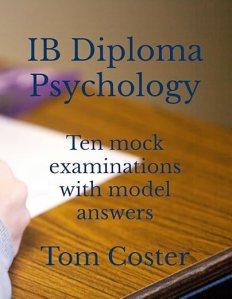
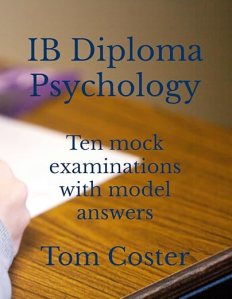
    Among the most talked-about-by-teachers resources is the book of Ten Mock Examinations with High-Scoring Sample Answers—designed explicitly for the new IB Psychology assessment model. Teachers have praised this as a game-changing classroom tool, giving students authentic exam practice and concrete examples of what high performance looks like under exam conditions.

    Also included in the collection is a book completely focused on the Internal Assessment. It walks students through every stage of the process according to the updated IA criteria and includes a real, high-scoring sample IA with clear, insightful commentary. It’s ideal for demystifying the process and building student confidence.

    Whether you’re a teacher looking for reliable classroom resources or a student aiming for top grades in the new IB Psychology course, the Tom Coster collection delivers expert guidance, assessment-aligned structure, and unbeatable practical value.


  • Trust Tom Coster with your DP Psychology teaching

    When it comes to teaching the IB Diploma Psychology course, experience and insight matter.

    With a Master’s degree in Psychology and years of hands-on teaching, Tom Coster brings strong subject knowledge and a deep understanding of how students learn. He’s worked extensively with the IB —as an exam marker, IA moderator, Extended Essay marker, and workshop leader. He knows how to read between the lines of a Subject Guide and translate it into real-world classroom success.

    What does this mean for Psychology teachers? A complete set of affordable, classroom-ready teaching materials designed to help your students succeed—whether in the IA, exams, or the new extended essay.

    The materials are:

    • Perfectly aligned with the new syllabus
    • Available in both print and eBook formats
    • Packed with simple strategies for success
    • Easy to use and built for real classroom conditions

    Tom’s mission is simple: to make high-quality Psychology teaching less stressful for teachers and their students and more effective. And judging by the response from teachers around the world, it’s working.

    Ready to simplify your planning and boost student achievement? See for yourself.


  • Teach the new IBDP Psychology course with total confidence

    The Tom Coster Collection – by a seasoned IB educator (and examiner/moderator and workshop leader), this comprehensive suite of books and teaching materials is purpose-built for the new syllabus. Whether you’re a veteran IB Psychology teacher or delivering it for the first time, this collection truly covers everything you need.

    What’s in the Tom Coster Collection?

    1. IB Diploma Psychology – The Textbook

    The flagship resource, available in print and eBook format from Amazon, this book:

    • Covers every aspect of the new syllabus
    • Includes sections on the examinations and the Internal Assessment
    • Fully aligns with the new concept-based and research-grounded approach

    2. The Complete Set of PowerPoint Presentations

    • Downloadable, editable .ppt files for all syllabus topics
    • Closely aligned with the textbook
    • Covers content and assessments, ready for classroom delivery

    3. Homework Revision Questions

    • A structured set of exam-style writing prompts
    • Can be used throughout the two-year course or as a revision pack
    • Ideal for independent learning or class-based assignments

    4. The Internal Assessment

    • A dedicated book (print/eBook) providing:
      • Detailed breakdown of IA requirements
      • Moderator-level advice
      • 16 high-quality examples of completed IAs

    5. Ten Mock Examinations with Model Answers

    • A full book with:
      • 10 complete practice exams (Papers 1, 2, and HL Paper 3)
      • Model/high-scoring answers for all questions
      • Ideal for assessment practice and benchmarking progress

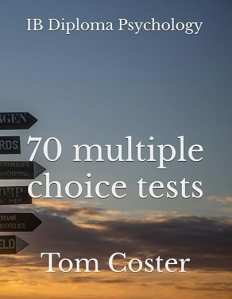
    6. 70 Multiple Choice Tests

    • 30-question tests across all course topics
    • Designed for quick, comprehensive checks of student understanding
    • Great for determining readiness to move forward in your teaching sequence

    7. The Extended Essay

    • Updated to reflect the revised EE guidelines from September 2025
    • Includes:
      • Step-by-step guidance
      • 100 research question ideas with essay outlines
      • A complete, high-scoring sample EE

    8. Glossary of Psychology Vocabulary

    • Around 1,000 terms, grouped by approach and topic
    • Supports the syllabus’ emphasis on disciplinary literacy
    • A must-have for developing confident, fluent IB Psychology students

    9. 150 Essential Research Studies

    • Brief, focused outlines of 150 key research studies
    • Each outline includes:
      • Core details
      • A critical thinking mini-section
    • Perfect for building student reference banks and evidence-based writing

    10. Success at High School and College

    • A practical guide on how students can thrive academically
    • Covers note-taking, revision strategies, exam technique, and time management
    • Ideal for student onboarding or as a gift at the start of the Diploma

    What sets the Tom Coster Collection apart is that it was clearly created by a teacher (and examiner/moderator, and workshop leader), for teachers. These resources are:

    • 100% tailored to the new IB Psychology syllabus
    • Field-tested, classroom-ready, and immediately usable
    • Designed to make the complex clear, structured, and teachable

    How to Access the Collection

    • Books are available on Amazon in both print and eBook formats.
    • Downloadable materials (like PowerPoints and course outlines) are available from the official website.
    • No subscriptions. No locked platforms. Just tools that work.

    Teaching the new IB Psychology course doesn’t have to be overwhelming. With the Tom Coster Collection, you gain not just a set of materials—but a full teaching system designed to support you at every step. So if you’re looking to teach the new syllabus with clarity, confidence, and creativity—this is the collection to have on your shelf and screen.


  • Earlier bedtimes leads to better cognition

    Every year, I tell my students that sleep is just as important as revision and study habits when it comes to academic performance. And now, a compelling new study from the University of Cambridge and Fudan University gives us even more reason to double down on that message.

    In a study involving over 3,000 teenagers, researchers discovered that those who:

    • Went to bed earlier,
    • Slept longer,
    • And had lower sleeping heart rates,

    scored significantly higher on a range of cognitive tests, including reading, vocabulary, and problem solving.

    Even more striking? The actual difference in sleep duration between groups was minimal—just 15 minutes between the lowest and highest scoring groups—yet this small variation had a surprisingly large impact on brain performance and function.

    Brain scans revealed that teens with the best sleep habits not only performed better but also had larger brain volumes and more efficient brain function.

    Despite these findings, even the best-sleeping teens in the study didn’t reach the 8–10 hours per night recommended by the American Academy of Sleep Medicine. The healthiest group averaged just seven hours and 25 minutes of sleep.

    Why? Teenagers face a biological shift toward later bedtimes during adolescence. Add in screen use, homework, social media, and caffeine—and you’ve got a generation of students consistently underslept.

    We’re not powerless. In fact, this is where we shine. As Psychology teachers, we can…

    1. Teach the Science of Sleep

    Incorporate sleep research into your lessons on cognitive development, memory, and mental health. Use this new study to show how even small changes in sleep patterns make a real difference.

    2. Debunk Myths

    Help students understand that “catching up” on weekends (aka social jet lag) doesn’t undo the damage of sleep loss during the week. Emphasize consistency.

    3. Promote Simple, Practical Changes

    Share strategies backed by experts:

    • Encourage regular exercise to improve sleep quality.
    • Urge students to limit screens an hour before bedtime.
    • Support healthy bedtime routines, such as winding down with a book, journaling, or light stretching.

    4. Embed Sleep into Pastoral Care

    Work with your school’s wellbeing or pastoral team to create sleep hygiene workshops, or add sleep content into personal and social education. Oxford’s Teensleep project is a great resource for ideas and activities.

    5. Make Sleep “Cool”

    Reframe sleep as a performance enhancer. Better memory. Sharper thinking. Bigger brains. It’s the one lifestyle change that benefits everything from academics to mental health—and it doesn’t cost a thing.


    Professor Barbara Sahakian, who co-led the study, put it best: “It’s the sleep driving the better cognitive abilities… Small differences in sleep amounts accrue over time to make a big difference in outcomes.”

    Let’s empower our students to make those small changes—because every extra minute of quality sleep could mean a stronger brain, clearer thinking, and greater wellbeing.


  • You are 100% ready to start teaching the new course!


    Whether you’re new to teaching IBDP Psychology or a seasoned pro, our complete set of fully editable PowerPoint presentations will make your life easier and your lessons simpler – which is exactly what students are asking for.

    Perfectly aligned with Tom Coster’s IB Diploma Psychology – The Textbook and the brand-new syllabus (first assessments in 2027), this comprehensive bundle is your ready-to-go teaching solution. The Powerpoints include every concept, every content area, and every context, plus there is detailed guidance on the Internal Assessment and exam success. These slides are immediately downloadable, beautifully designed, and 100% customizable.

    With 16 clear, engaging, and logically structured presentations, this bundle does the planning for you—so you can focus on what really matters: inspiring your students.

    ✔️ Complete coverage of the syllabus
    ✔️ Instant access – just download and teach
    ✔️ Editable slides to suit your unique teaching style
    ✔️ Support for every part of the course – from critical thinking to exam prep

    Let your students thrive—and take the stress out of syllabus change.

    Download your bundle today and start the year strong!


  • A real-world issue for the in-class practicals

    The new IB Diploma Psychology course requires students to take part in four teacher-guided in-class practicals: an interview, an experiment, an observation, and a survey/questionnaire. We’re looking for issues that feel real and relevant to our students, and few topics are more urgent right now than the mental health crisis among young people.

    A recent UN-commissioned study by Jean Twenge and David Blanchflower has revealed a shocking reversal of the traditional “U-shaped” wellbeing curve. Happiness no longer dips in midlife—it now rises steadily with age, while young people are reporting record-low levels of life satisfaction. In six major English-speaking countries (UK, US, Ireland, Australia, Canada, and New Zealand), wellbeing among teenagers has plummeted—especially for young women.

    Teenager wellbeing

    One clear suspect? Smartphones and social media.

    This trend didn’t start with COVID-19. It dates back to around 2013 and has only worsened. Young people are reportedly more isolated, less socially engaged, and more exposed to cyberbullying and body shaming.

    This is exactly the kind of real-world phenomenon that DP Psychology students could—and should—investigate through in-class practicals. Imagine students designing ethical, small-scale studies examining screen time, social media use, and indicators of wellbeing among peers. It’s relevant, measurable, and personally meaningful to them.

    But maybe there are other possibilities, such as a shortage of good quality sleep. Diet? The mass media? The topsy-turvy economy and jobs market? Or maybe the teenage years were never really the greatest time of our life.

    We may not solve a global crisis in one classroom, but maybe we will start asking the right questions.

    Smartphones? Lack of sleep? Mass media? Music? Exams? Or maybe it’s ‘just a phase’

    Note that our Textbook includes a detailed section including examples of the In Class Practicals.


  • A new Extended Essay Subject Guide too

    A new Extended Essay Subject Guide too

    While most of our recent attention has been on the updated DP Psychology Subject Guide, it’s important to be aware that the Extended Essay Subject Guide has also been revised and of course that’s big news for Psychology teachers.

    Psychology is one of the most popular EE subjects, and with the first assessment under the new guide set for May 2027, we all need to be up to date. The new EE Guide brings important changes to expectations, assessment criteria, and subject-specific guidance. Teachers supporting Psychology EE students will need a clear understanding of the updated descriptors: Focus and Method, Knowledge and Understanding, Critical Thinking, Presentation, and Engagement.

    One helpful new resource is IB Diploma Psychology: The Extended Essay, a resource book tailored to the new requirements. It includes 100 sample research questions with essay outlines, a full-length exemplar essay with commentary, and practical tips for time management, research strategy, and supervisor collaboration.

    In short, if you’re supervising EEs in Psychology, now is the time to refresh your knowledge and ensure your students are aligned with the new standards.


  • How good is the new internal assessment task for IBDP Psychology?

    As a teacher, I can’t say enough good things about the new Internal Assessment task for IBDP Psychology. Compared to the old model—where students had to work in groups to replicate an experiment, often on dry topics like Stroop effects or eyewitness testimony—the new research proposal format is a breath of fresh air.

    Now, students design a research proposal focused on a problem that actually matters to them and their target population. Whether it’s anxiety about climate change, peer pressure, bullying, or exam stress, students can explore real-world issues that resonate. They aren’t limited to running an experiment; they can propose interviews, surveys, or observations. This opens up creativity and allows for authentic engagement.

    Even better, the proposal can spark ideas for Extended Essays or even CAS projects. It’s so much simpler to teach and support—no logistical nightmares of groupwork or ethics approval for data collection. Students focus on designing ethical, methodologically sound research rather than scrambling to collect questionable data.

    In short, the new IA puts the emphasis on thinking like a psychologist, not just ticking boxes. It’s purposeful, meaningful, and a whole lot less stressful for everyone involved!

    If you’re looking for a guide to help you and your students navigate the new IA process with clarity and confidence, Tom Coster’s The Internal Assessment is essential reading. This comprehensive, step-by-step resource demystifies every stage of the IA, offers practical strategies for every research method, and includes twenty high-scoring sample proposals to inspire and guide. Say goodbye to IA stress—this book has you covered!


  • Powerpoints for the whole IBDP Psychology course

    We’re receiving very positive feedback for our comprehensive PowerPoint slides, covering the entire course, including the internal assessment and examinations. Designed to be 100% editable, teachers can add, delete, or modify slides to fit their teaching style and students’ needs.

    At just $50 for the complete set, these slides are not only a huge time-saver but also exceptional value for money. Streamline your lesson planning and deliver engaging, structured lessons with ease.


  • Peace via Hofstede’s cultural dimensions

    Hofstede’s Cultural Dimensions are interesting when we consider the Russia-Ukraine-USA situation.

    Can IBDP help achieve a more peaceful world, as the mission statement says?

    Both Russia and Ukraine share high power distance (acceptance of strong leadership) and high uncertainty avoidance (a preference for stability and control). But Russia is more long-term oriented, which means it emphasizes strategic dominance, while Ukraine is more collectivist, meaning it values community and national identity.


    The U.S., by contrast, is highly individualistic, low in uncertainty avoidance, and indulgent. These traits influence its foreign policy toward promoting democracy, personal freedoms, and economic growth.

    This fundamental cultural difference means the U.S. often supports Ukraine’s sovereignty while rejecting Russia’s authoritarian, power-driven approach.

    Hofstede’s framework helps explain the cultural differences between Ukraine and Russia that are driving the conflict and the challenges in finding a resolution. Russia’s high power distance and long-term strategic thinking make it resistant to compromise. Russia views control over Ukraine as essential to its geopolitical security. Meanwhile, Ukraine’s collectivist and high uncertainty avoidance culture fuels its strong national identity and resistance to external control and its desire to join Europe and NATO.

    The U.S.’s individualism and low uncertainty avoidance drive its support for Ukraine’s sovereignty, which fuels the tension between Ukraine and Russia.

    A path toward peace requires acknowledging these cultural differences—balancing Ukraine’s desire for independence with Russia’s security concerns while leveraging the U.S.’s preference for diplomacy and pragmatic solutions. 

    Peace can be achieved by addressing the core cultural and geopolitical needs of each side. For Russia, security guarantees, such as Ukraine’s neutrality (no NATO membership) or regional autonomy agreements, could reduce its strategic fears. For Ukraine, sovereignty and economic stability must be protected, possibly through international security assurances and reconstruction aid. For the U.S. and allies, diplomacy should focus on pragmatic solutions rather than ideological confrontations, ensuring Ukraine’s independence without escalating Russia’s insecurity.

    Hofstede’s cultural dimensions framework is lacking an important dimension. To what extent can each if these parties to the conflict be trusted to stick to any peace agreement?