Most people assume there’s a universal way humans experience identity, i.e. their sense of self. Research has shown that culture fundamentally shapes how people construct their sense of self, i.e. their identity; and this plays a role in our behaviour including our emotions and motivations.
In 1991, Hazel Markus and Shinobu Kitayama published ‘Culture and the Self: Implications for Cognition, Emotion, and Motivation’, a paper that challenged the prevailing understanding of culture’s role in behaviour. The paper proposed that culture fosters one of two ways of experiencing identity and called these independent and interdependent self-construal.
The theory proposes that in cultures emphasising independent self-construal, i.e. ‘Western’ societies such as the US, people consider themselves as autonomous individuals so that the sense of self is defined by internal attributes such personality traits, abilities, and personal achievements. Success means to stand out, to be unique, and to pursue and achieve individual goals. ‘Being true to yourself’ is a core value in these cultures.
In cultures that emphasise interdependent self-construal, common in ‘the East’, many collectivist societies consider the self as one of many, i.e. connected to others rather than independent and autonomous. A person considers their identity through social relationships, roles, and group memberships. Succeeding in this culture means maintaining harmony, fulfilling obligations, and fitting harmoniously into social contexts. The question is not ‘who am I?’, rather it is ‘who are we, who am I in relation to others?’

Self-Construal Theory is compelling because of empirical evidence supporting it. For example, in 1989, psychologist Susan Cousins used the Twenty Statements Test, asking American and Japanese participants to complete sentences beginning with ‘I am…’ Americans predominantly used abstract personal traits, such as ‘I am creative’, ‘I am independent’, but Japanese participants offered context-dependent descriptions tied to relationships and situations, such as ‘I am a daughter who helps her mother’.
Self-Construal Theory’s predictions extend beyond self-description to behaviour. Heine et al. (1999) demonstrated striking motivational differences. After receiving failure feedback on a task, Canadian students persisted less on subsequent attempts, protecting their self-esteem, but Japanese students persisted, motivated by opportunities for self-improvement rather than self-protection.
Self-construal can shape everyday behaviours. For example, in consumer behaviour, Americans are more likely to purchase products that emphasise uniqueness and self-expression: ‘Be yourself’ or ‘Stand out from the crowd’ and East Asian advertising emphasises belonging and harmony such as ‘Share happiness with those you love’. Westerners typically prefer items that differ from what others have chosen, demonstrating uniqueness. East Asians tend to prefer popular choices that others have validated, reducing social disharmony.

Communication patterns often reflect different self-construals. Americans tend toward direct, explicit communication; saying ‘no’ is valued as honest and authentic, but in Japanese communication indirect expressions and contextual cues are used to avoid upsetting group harmony, saying ‘that might be difficult’ rather than ‘no’. These aren’t politeness conventions; they reflect different perceptions of appropriate self-expression.
Even emotional expression follows self-construal patterns. Tsai et al. (2006) found that European Americans valued high-arousal positive emotions like excitement and enthusiasm, which signal individual achievement and expression, but Hong Kong Chinese valued low-arousal positive emotions like calm and peacefulness, which facilitate harmonious social functioning. Facebook profile pictures reflect this: Americans smile more broadly with teeth showing (expressing individual happiness). East Asians smile more subtly with closed mouths (maintaining social appropriateness).
American students typically feel comfortable speaking up in class, asking questions, and debating with teachers. These behaviours demonstrate critical thinking and individual voice. East Asian students typically remain quiet, not from lack of engagement but from respect for the teacher’s authority, believing that speaking out might disrupt the collective learning environment or risk making others feel uncomfortable.
Kitayama’s own research showed that Americans consistently rate themselves above average on various attributes (sometimes referred to as the self-enhancement bias; Japanese participants showed self-criticism, honestly acknowledging weaknesses as areas for personal growth. These aren’t just cultural politeness norms. They reflect different motivational systems shaped by self-construal.
Perhaps most fascinating, self-construal seems to affect people’s perception and attention. Masuda and Nisbett (2001) showed participants animated underwater scenes. American participants fixated on prominent focal objects like large fish, but Japanese participants focused more on more global/background elements and the relationships between the objects in the scene. This didn’t seem to be about visual acuity; it indicated culturally-shaped patterns of attention and focus.
Even memory seems to be culturally constructed. Wang (2001) found that Chinese children’s autobiographical memories emphasised collective activities and social interactions and American children’s memories focused on individual experiences and individual attributes indicating that we remember our lives through cultural filters.

Many parenting practices show self-construal in action. American parents often ask children ‘What do YOU want?’ and ‘How do YOU feel?’ emphasising individual preferences and internal states. East Asian parents more commonly ask ‘What should we do?’ or reference social obligations, for example ‘What would grandmother think?’ These small linguistic differences shape how children learn to think about themselves in relation to others.
Workplace behaviour can demonstrate self-construal differences. In Western organisations, employees are encouraged to promote their achievements, with annual reviews asking, ‘What are YOUR accomplishments?’ and ‘What makes YOU stand out?’ In Eastern companies, employees often deflect individual credit, attributing success to team effort or organisational support. When Americans receive praise, they typically accept it directly, for example. ‘Thank you, I worked hard on that’. Asian recipients more commonly deflect or minimise: ‘No, it was nothing special’ or ‘I was fortunate to have good colleagues’.

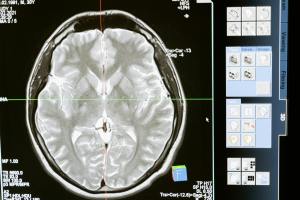
Zhu et al (2007) used brain imaging to show that Chinese participants demonstrated similar neural activation patterns when thinking about themselves and their mothers, but Western participants distinguished clearly between thinking about themselves and thinking about their mothers, showing different neural activation for each. Culture doesn’t seem to just affect our self-perception and memory; it also seems to shape the neural architecture underlying self-representation.
Self-Construal Theory helps explain why shame is more significant in some cultures and guilt is significant in other cultures, and why self-help movements flourish more in individualist than collectivist societies, and why collaborative decision-making processes are more effective in some cultures and less effective in other cultures.
Critics of Self-Construal Theory argue that it creates a false dichotomy, overlooking within-culture variations and individual differences. For example, not all Westerners are independent and not all Asians are interdependent. Modern research suggests that many people develop bicultural competence, meaning they can shift between self-construals depending on the cultural context.
Markus and Kitayama’s Self-Construal Theory remains important for understanding the role of culture in behaviour by demonstrating that culture is not merely superficial customs and traditions. It can shape behaviour from perception and memory to emotion and motivation. People’s sense of self is not universal; it is profoundly cultural and understanding this helps us appreciate human diversity while recognising the mechanisms underlying cultural differences.


















 Tom Coster - Psychology