Tag: psychology

  • Psychology vocabulary

    An often-neglected aspect of teaching IBDP Psychology helping students develop fluency with subject-specific terminology. Words like validity, reliability, etiology, synaptic gap, neurotransmitter, and operant conditioning aren’t just vocabulary, they’re the precise tools we use to communicate complex ideas about behavior.

    The assessment criteria make this explicit: ‘There is accurate and precise use of psychological terminology’ and ‘Psychological terminology relevant to the research methods is used effectively’. These aren’t minor criteria, they directly affect student grades in all assessment components. When students write about ‘proof’ instead of evidence, or ‘sadness’ instead of depression, they’re not just being imprecise; they’re failing to demonstrate the precise and accurate vocabulary that examiners expect.

    Teaching terminology effectively means more than providing definitions. Students must understand when and how to use these terms. Does this theory apply to all cultures or is it ‘culture-bound’? Is this a hormone or a neurotransmitter? Understanding these distinctions demonstrates genuine psychological literacy, not just memorization.

    The payoff extends beyond exam scores. Students who master the subject’s vocabulary think more precisely about behavior, communicate more effectively in their internal assessment and extended essays, and develop the academic foundation necessary for university level psychology study.

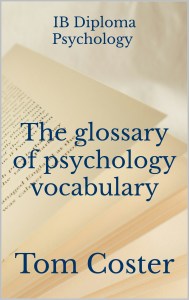
    IB Diploma Psychology – The Glossary of Psychology Vocabulary (by Tom Coster) is an essential companion for every IB Diploma Psychology student, providing a clear and concise collection of key terms and concepts tailored to the IB Psychology syllabus.

    Designed to support your journey into the field, this glossary will enhance your understanding of human thought, emotion, and behavior, while helping you master the specialized vocabulary required for academic success and real-world application.


  • Causality and the experimental method

    At the heart of psychology lies a beautifully simple question: What causes what? The experimental method gives us the clearest path to answering this question, and its elegance lies in its straightforward logic.

    Causality is the relationship between cause and effect. When we say “X causes Y,” we mean that changes in X directly produce changes in Y. In psychology, establishing causality allows us to move beyond mere correlation and understand the mechanisms behind behavior.

    The key requirement for causality is that we must demonstrate that one variable directly produces a change in another variable.

    The experimental method is powerful precisely because of its simple logic. The basic formula involves three steps. First, change one thing, which is the Independent Variable or IV. Second, keep everything else the same by controlling all other variables. Third, measure what happens by observing changes in the Dependent Variable or DV.

    The beautiful conclusion follows naturally. If the DV changes, and we’ve controlled everything else, then the change in the IV must have caused the change in the DV. That’s it. That’s the entire logic.

    Teaching Tip 1: Start with the Logic: Before diving into terminology, help students grasp the fundamental reasoning. If I want to know whether caffeine improves memory, I need to change only the caffeine and see what happens to memory. If I change multiple things at once, I can’t know which one caused the effect.

    Teaching Tip 2: Emphasize Control: The power of the experimental method isn’t in what we change, it’s in what we don’t change. Every variable we control strengthens our claim of causality.

    Teaching Tip 3: Connect to Real Research: When teaching studies like Loftus and Palmer on leading questions and memory, or Bandura’s Bobo doll experiment on observational learning and aggression, highlight the beautiful simplicity. Identify the IV, which is the variable the researcher manipulated. Identify the DV, which is what they measured. Note the controls, which is everything they kept the same. Then draw the conclusion: because everything else was controlled, the IV caused the change in the DV.

    The Three Essential Components: Help students remember these three pillars. First is manipulation, where the researcher deliberately changes the IV. Second is control, where all other variables are kept constant. Third is measurement, where the DV is carefully observed and recorded.

    When all three are present, we can claim causality. When any are missing, we cannot.

    Some students believe that correlation shows causation. This is incorrect. Only the experimental method establishes causality because only experiments control for alternative explanations.

    Others think that any study with numbers shows causation. This is also incorrect. Surveys and correlational studies provide valuable data but cannot establish cause and effect.

    Some confuse control with control group. This is partially correct. Control means keeping variables constant and may include a control group for comparison.

    Making It Stick: Use this simple framework when analyzing any study. (i) What did they change? That’s the IV. (ii) What did they measure? That’s the DV. (iii) What did they control? Those are the other variables. (iv.) Can we claim causation? Only if it’s a true experiment.

    The experimental method’s beauty lies in its logical simplicity. Change one variable, control all others, measure the outcome. If the outcome changes, you’ve found your cause. This simple logic is psychology’s most powerful tool for understanding the mechanisms of human behavior.

    Here’s a powerpoint presentation that you can use for teaching a lesson on the true and quasi experiment.


  • The Ultimate PowerPoint Bundle

    We’ve created the complete PowerPoint teaching bundle to perfectly complement Tom Coster’s IB Diploma Psychology – The Textbook. Whether you’re a new teacher navigating the updated syllabus (first exams in 2027) or an experienced educator looking to save precious prep time, this resource is built with you in mind.

    Our DP Psychology Powerpoint bundle will save teachers HOURS of time

    What’s in the box? This all-in-one package includes 16 fully editable .pptx files (Apple’s Keynote will open and read them), carefully designed to align with every part of the IB Psychology syllabus:

    • Critical Thinking & Core Concepts
      Bias, Causality, Change, Measurement, Perspective, Responsibility
    • The Three Approaches
      Biological, Cognitive, Sociocultural
    • Research Methodology
    • Real-World Contexts
      Health & Well-being, Human Development, Human Relationships, Cognition & Learning
    • Student Success Tools
      Internal Assessment, The Examination, How to do well in IBDP Psychology

    Why teachers love the package: Complete coverage – Every aspect of the syllabus is ready to teach.
    Engaging visuals – Slides are clean, appealing, and logically structured.
    Time-saving – Spend less time preparing and more time teaching.
    Fully customizable – Tailor each presentation to your own teaching style and your students’ needs.
    Exam-ready focus – Dedicated materials for IA and exam prep ensure your students are set up for success.

    Ready to use from day one: Open, display, teach—it’s that simple. Or, if you prefer, edit and adapt the slides to make them your own. Either way, you’ll have a professional, syllabus-aligned resource library at your fingertips.

    Give your students the best chance to succeed in IB Psychology. With this bundle, you’re not just getting PowerPoints—you’re getting confidence, clarity, and consistency in your teaching.


  • Moving from research studies to real-world examples

    One of the most noticeable shifts in the new course is the emphasis in assessment on examples rather than memorised research studies. In Paper 1, Section A, those short 10-minute questions are marked against just two descriptors:

    1. The response demonstrates detailed knowledge relevant to the question.
    2. The example is relevant and explained.

    Note that word — example — not research study. In fact, the only time assessment criteria explicitly require reference to a research study is when it’s mentioned in the question itself (Paper 2, Section B).

    Over the years, I’ve enjoyed teaching the finer details of Henri Molaison (Scoville & Milner), Baby Albert (Watson & Rayner), Milgram, Odden & Rochat, Caspi et al… These classic studies are fascinating and still worth knowing, but the new Guide is clear: it’s example, not studies.

    Research will always be a valid and robust part of a Psychology course.

    Students often memorise outlines of these studies and then regurgitate them in the exam. That’s not the same as demonstrating real knowledge and understanding.

    This isn’t to say we should stop teaching research studies — I certainly won’t. I’ll continue to speak lovingly of the Dunedin Study, the HM case, and several others. But students and I won’t be getting anxious about memorising the number of participants in the HM case study (eh hem, that’s a little psychology research joke there), or the nationality of Dunedin Study participants, or the socioeconomic status of Kahneman and Tversky’s samples. We can still use research studies — and we should — but students won’t have to memorise the details.

    The real focus is transfer of knowledge. Taking Social Identity Theory and applying it to a bullying case in a school or an international conflict. Using Social Learning Theory to describe how a public health campaign could reduce teenage alcohol consumption. Even if the example is fictional, applying the theory to a fresh, unseen situation shows depth of understanding far better than rattling off participant numbers and procedure details.

    This shift isn’t about discarding research — it’s about using it. The research is the foundation. But in assessment, it’s the bridge from theory to application that earns top marks. And that’s a far better reflection of what it means to understand psychology.

    Discuss the role of Social Identity Theory in explaining a conflict.

  • Save time: A complete powerpoint collection for the new IBDP Psychology course

    If you’re teaching the new IBDP Psychology syllabus (first exams in 2027, first lessons next week!!!), you already know how much planning, organising, and resourcing it takes to cover everything—concepts, content, contexts, the internal assessment, and exam preparation. That’s why this complete PowerPoint bundle has been created: to give you a ready-made, fully editable set of presentations that match the new Subject Guide and Tom Coster’s IB Diploma Psychology – The Textbook perfectly.

    Visit this page to read more.

    This isn’t just a slide deck or two—it’s the WHOLE COURSE in one place. Sixteen separate presentations walk you and your students through every key concept (Bias, Causality, Change, Measurement, Perspective, Responsibility), every content area (the biological, cognitive, and sociocultural approaches, plus research methodology), and every context (Health & well-being, Human development, Human relationships, Cognition & learning). You’ll also find dedicated presentations for the Internal Assessment and for exam strategies, so you can guide students from their first class right through to their final paper.

    Don’t even try to do everything

    Because they’re fully editable, you can add, remove, and adapt slides to fit your own teaching style or the particular needs of your students. Want more emphasis on a tricky theory? Less on a topic your class already knows? You’re in control. The presentations are ready to use straight away—but they can be as flexible as you need them to be.

    To get a feel for the style and structure, there’s a free sample presentation you can download and try in your next lesson. And the full bundle? Just $50 for hundreds of hours of preparation already done for you—available as an instant download, no delivery time, no waiting.

    In short, this is about saving your time, reducing your workload, and giving your students consistent, high-quality resources from day one.

    Visit this page to read more.

    A new course doesn’t mean you have to spend hundreds of hours of your own time preparing new teaching materials. Explore our whole site and read about all of the materials we have available.

  • The Role of Culture in the Context of Human Development

    Here is a brand-new worksheet for the Human Development Context based on an article published yesterday on the BBC website about the hidden brain changes in six-year-olds. This resource helps HL students discuss the role of culture in human development as well as the Concepts of Bias, Perspective, and Responsibility.

    It’s ideal preparation for answering Paper 3, Question 4.


  • Adult neurogenesis: New evidence and its relevance to neurotransmission

    For decades, scientists debated whether adult human brains can generate new neurons, a process known as neurogenesis. While neurogenesis had been documented in animals, evidence in humans was inconsistent—until now. A July 2025 study (Dumitru et al., 2025) offers compelling proof that new neurons are produced in the adult human brain, with clear identification of the neural precursor cells responsible for this process.

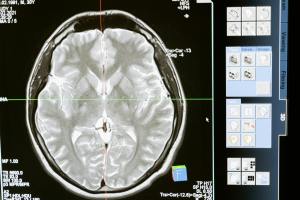
    Researchers at the Karolinska Institute examined postmortem brain tissue from individuals aged 13 to 78. Using advanced RNA sequencing techniques, they identified molecular markers of immature neurons and precursor cells in most brains. These findings confirm that neurogenesis occurs throughout life, particularly in the hippocampus, a brain structure central to memory and learning—and a key site of neurotransmission.

    This discovery is relevant to the study of neurotransmission because new neurons contribute to brain plasticity, synaptic communication, and potentially the regulation of neurotransmitters. The hippocampus, rich in glutamate, GABA, and dopamine receptors, may rely on newly generated neurons for encoding new memories and emotional regulation.

    Interestingly, two adult brains showed unusually high levels of neurogenesis; one belonged to a person with epilepsy, raising questions about how increased or disrupted neurogenesis might affect brain activity. In animal studies, altered neurogenesis has been linked to depression and Alzheimer’s disease, suggesting a role for new neurons in mental health and neurological disorders.

    This study closes a major gap in our understanding of brain development and opens new avenues for researching how neurotransmission is influenced by ongoing neuron formation. It also raises key questions for psychology: How might neurogenesis affect behaviour? And can this process be enhanced to support mental health?

    Reference:

    Dumitru, I., Paterlini, M., Zamboni, M., Ziegenhain, C., Giatrellis, S., Saghaleyni, R., … Frisén, J. (2025, July 3). Identification of proliferating neural progenitors in the adult human hippocampus. Science, 389(6755), 58–63. https://doi.org/10.1126/science.adu9575


  • New: Motivation and Self-Determination Theory in the Learning and Cognition Context

    We’ve just created a new free worksheet designed to support DP Psychology (Higher Level) students exploring Motivation within the Cognition and Learning context. It’s particularly useful for developing responses to Paper 3, Question 4, which asks students to consider how the learning or cognitive process studied (in this case, motivation) relates to Learning and Cognition.

    The worksheet draws on an article by The Hechinger Report, which follows a student’s shift from disengagement to renewed motivation after enrolling in an innovative, student-led high school. Using this real-world example, students are introduced to key concepts from Self-Determination Theory (Deci & Ryan), including intrinsic and extrinsic motivation, and the psychological needs of autonomy, competence, and relatedness.

    The worksheet includes:

    • A clear 500-word text explaining Deci & Ryan’s Self-Determination Theory,
    • A vocabulary list (Psychology-specific terms)
    • Comprehension (AO1&2) and Critical thinking (AO3) questions

    This is a valuable, ready-to-use resource for helping students develop deeper conceptual understanding of motivation while also preparing them for Paper 3 Question 4.

    Download the worksheet [below], and don’t forget to Subscribe to the blog for updates.


  • New worksheet: The role of technology in health and wellbeing (HL)

    We’ve just added a new free worksheet designed to support DP Psychology HL students as they prepare for Paper 3, particularly Question 4 on the role of technology in the health and wellbeing context.

    Based on a recent Guardian article exploring how young people are taking control of their smartphone use to manage mental health, the worksheet guides students through a critical reading and reflection process. It encourages them to consider how media shapes public understanding of digital wellbeing.

    A key feature of this activity is a close look at the reference to the Netflix series Adolescence—a dramatized portrayal of online misogyny. The worksheet prompts students to explore the Responsibility of including fictionalised content within an otherwise fact-based article. Is it appropriate? Does it blur the line between evidence and entertainment? What are the ethical considerations?

    The aim is to help students build their own informed responses, drawing on both media literacy and psychological concepts relevant to wellbeing in the digital age.

    You can download the worksheet below.


  • Discuss the role of Culture in human behaviour (HL)

    In Psychology, culture means the values, beliefs, norms, behaviours, and practices shared by a group of people. Culture influences how we think, communicate, behave, and perceive the world around us.

    The Carpentered World Hypothesis states that exposure to straight lines and right angles in architecture affects visual perception (a cognitive process).

    The worksheet (below), summarises an article in The Guardian relating the role of Culture in Perception. The worksheet guides students to think about and discuss the role of Culture in the Learning and Cognition Context, linking to the Concept of Perspective.