Looking for ready-to-use resources that will save you hours of preparation time? Our extensive collection of FREE worksheets covers every Content, Context, and Concept in the course and we’ve even included the Research Methods and Data Analysis and Interpretation topics.
What makes these worksheets special?
Each worksheet is written to provide complete coverage of its topic. Students will find clear definitions, detailed explanations, and thoughtful discussions that build genuine understanding. But we don’t stop at theory, every worksheet includes engaging questions that reinforce learning and encourage critical thinking.
Flexibility for your teaching
Here’s the game-changer: these worksheets are provided as Word documents, not PDFs. This means you can download them and customize them to perfectly suit your teaching style, your students’ needs, and your specific classroom situations. Edit questions, add examples relevant to your students’ experiences, or adjust the difficulty level: the choice is yours. But they’re ready to use without any edits.
Comprehensive coverage
With one (and often two) worksheets available for every topic, you’ll have everything you need to support student learning throughout the course. From Biological to Sociocultural, from Research Design to Statistical Analysis… it’s all here.
Download your FREE worksheets today and spend less time creating materials and more time enjoying yourteaching.
Here’s a question that’s been bouncing around: ‘What do we mean when we say psychology is conceptual?’
It sounds like academic jargon, I know. But stick with me, because this idea gets right to the heart of what makes psychology such a fascinating and essentially human field.
What ‘conceptual’ means
When we say psychology is conceptual, we’re pointing to something fundamental: the things psychologists study aren’t sitting out there in nature waiting to be discovered, like gold deposits or new species of beetle.
Think about it. ‘Memory’, ‘aggression’, ‘intelligence’, ‘attachment’, ‘depression’… these are all human-created concepts. We invented them. We drew the boundaries. We decided what counts as ‘aggression’ versus ‘assertiveness’, where ‘normal anxiety’ ends and ‘anxiety disorder’ begins, and what behaviors signal ‘secure attachment’.
These aren’t discoveries of pre-existing, naturally occuring things. They’re useful ways we’ve carved up the messy, continuous reality of human behavior.
Concepts change with time and culture
Here’s where it gets interesting. If psychological concepts were natural features, fixed features of reality, they’d be universal and unchanging. And of course, they’re not.
The concept of ADHD didn’t exist 100 years ago. ‘Hysteria’ was once a major diagnostic category; now it’s vanished from our textbooks. Different cultures conceptualize mental states in different ways. Some languages don’t even have a word that maps onto our concept of ‘depression’.
Our psychological concepts are also theory-laden. When we talk about ‘working memory’, we’re not just describing something neutral, we’re buying into a particular model of how cognition works. When Freudians spoke of ‘ego defence mechanisms’, they were smuggling in a whole theoretical framework.
So what’s the alternative?
If psychology is conceptual, what would it look like if it weren’t?
The alternative would be studying human behavior and experience as purely physical or biological phenomena. We’d focus only on directly measurable, observer-independent entities: neurons firing, neurotransmitter concentrations, brain structures, hormone levels, reaction times, genetic markers…
This would be neuroscience or physiology: concrete, physical, and measurable.
The problem is…
The problem is that most of what makes us human: love, identity, grief, creativity, the search for meaning…, these can’t be fully captured by purely physical descriptions.
You could give me a complete neural map of everything happening in someone’s brain during grief. Every synapse, every chemical cascade, every pattern of activation. And yet that description wouldn’t capture what grief is as a human experience. It wouldn’t tell you what it means to lose someone you love.
Living in the tension
This is why psychology occupies such uncomfortable territory. It sits between the natural sciences, which study observer-independent physical phenomena, and the human sciences, which study meaning-laden, conceptual phenomena.
Psychology is both at once. It studies real biological processes and culturally-situated concepts. It measures objective behaviors and interprets subjective meanings. It discovers and constructs.
This creates unique methodological and philosophical challenges. But it’s also what makes psychology interesting. We’re not just measuring things; we’re constantly negotiating what those things even are.
And that’s not a weakness. It’s the nature of studying something as complex, dynamic, and meaning-soaked as human experience.
What do you think? Does recognizing psychology as conceptual make it less scientific or does it make it more honest about what science of the human mind can actually be?
One of the quiet revolutions in teaching IB Psychology is this: our students no longer need to memorise outlines of 200 or more studies, each with two strengths and two limitations. That’s worth celebrating. It makes our subject lighter, more engaging, and far more relevant. Students can now focus on developing critical thinking, connecting concepts, and applying their knowledge rather than playing flashcard games with endless lists of studies.
But let’s not forget: research is the scientific foundation of psychology.
Would you teach ethics in psychology without telling your students about Little Albert and the white rat, Zimbardo’s appalling Stanford Prison Study, or Milgram’s not-so-appalling obedience experiments? Of course not. These are the stories that not only illustrate concepts but also bring to life the ethical debates that shape our subject.
Would we introduce social identity theory without Sherif’s Robbers Cave study? Could we possibly explain observational learning without Albert Bandura’s endlessly punched Bobo doll? And when we turn to methods, what better way to anchor quasi-experiments and neuroplasticity than Eleanor Maguire’s London taxi drivers, or to illuminate the case study method than Henri Molaison, whose memory loss is legendary?
The point is simple: research gives psychology its credibility.
Yes, assessment criteria don’t explicitly require studies by name. Students aren’t graded on whether they remember that it was 22 boys in Sherif’s camp or 72 children in Bandura’s playroom. But to teach any of the IB Psychology concepts with integrity, we must draw upon the research that produced them. Without robust studies and their conclusions, our discipline risks floating away into abstraction, detached from the science that grounds it.
So let’s celebrate freedom from rote memorisation, but let’s also celebrate the research itself. Studies are not an add-on; they are the very evidence that makes psychology worth studying.
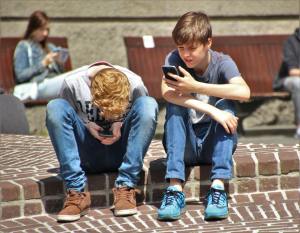
We’ve just added a new free worksheet designed to support DP Psychology HL students as they prepare for Paper 3, particularly Question 4 on the role of technology in the health and wellbeing context.
Based on a recent Guardian article exploring how young people are taking control of their smartphone use to manage mental health, the worksheet guides students through a critical reading and reflection process. It encourages them to consider how media shapes public understanding of digital wellbeing.
A key feature of this activity is a close look at the reference to the Netflix series Adolescence—a dramatized portrayal of online misogyny. The worksheet prompts students to explore the Responsibility of including fictionalised content within an otherwise fact-based article. Is it appropriate? Does it blur the line between evidence and entertainment? What are the ethical considerations?
The aim is to help students build their own informed responses, drawing on both media literacy and psychological concepts relevant to wellbeing in the digital age.
Newsflash: Estonia’s Minister of Education and Research, Kristina Kallas, emphasized Estonia’s proactive and open approach to digital tools in education during a speech at the Education World Forum in London. Unlike many European countries that are cautious about screen time and mobile phone use in schools, Estonia encourages the use of smartphones for learning. Schools set their own rules, and students—particularly those aged 16 and up who are eligible to vote online—are expected to use their phones as tools for both civic participation and education. Kallas notes the absence of problems related to mobile use, crediting Estonia’s digitally fluent society and schools’ autonomy.
Kallas highlighted Estonia’s long-standing digital investment, starting with the 1997 Tiigrihüpe (Tiger Leap) programme, which brought internet access to all schools. Now, the country is embracing AI and smartphone technology as the next evolution in education. Kallas predicts the decline of traditional homework essays and rote learning, pushing instead for a focus on oral assessment and the development of high-level cognitive skills. She frames this shift as essential in keeping pace with the capabilities of AI, warning that if humans don’t evolve cognitively, technology may overtake them.
Yes. The most powerful learning tool ever, so let’s teach students how to make the best use of them. Teaching… it’s what we do.
As teachers, we’ve all been part of the debate: are mobile phones a distraction or a tool in the classroom? Estonia’s Minister of Education, Kristina Kallas, offered a refreshing perspective this week that challenges many of our assumptions. In Estonia, mobile phones are not banned in schools—they’re embraced. Why? Because they reflect the real world students are living in, and Estonia sees them as integral to learning and civic life. Sixteen-year-olds vote online using their phones. It would be illogical, Kallas argues, to deny them the same access in a classroom setting.
This approach got me thinking. In IB Psychology, we ask students to critically evaluate, think metacognitively, and link psychological theory to the real world. What better way to model that than by integrating the very tools students already use to explore and interact with that world? Estonia isn’t ignoring the risks—phones aren’t used during breaks, and younger students face tighter limits—but they are trusting teachers and schools to manage these decisions locally.
The most provocative idea Kallas raised is that AI may render essays and rote learning obsolete. That’s a bold claim. But if AI can generate knowledge quickly and accurately, then the role of education must shift towards helping students think better—to question, synthesise, communicate, and reflect. Isn’t that what we’re already trying to do in the IB?
Rather than fight the tide, maybe we should, like Estonia, ride it. But there’s no maybe about it. We should. We must!Our job, our responsibility, is to help students use them correctly, with integrity and responsibilty and respect.
The new IBDP Psychology syllabus introduces “Class Practicals” — and understandably, many teachers are expressing some concern. But there’s good news: they’re not as big a deal as they might seem.
First, students don’t need to each design and carry out four practicals independently. These are class activities, best done together during regular class time or in school, using the 4 research methods to prepare for Paper 1 Section B. The aim is to build understanding of experimental design, data collection, and critical thinking — not to create publishable research.
Each of the four required Class Practicals aligns with a key method in the syllabus: experiment, observation, interview, and survey/questionnaire. Teachers are encouraged to guide the design and implementation, ensuring all students participate and reflect on the process.
If you’re looking for support, Tom Coster’s IBDP Psychology: The Textbook is a must-have. It provides clear explanations, guidance, and a ready-to-use example for each practical. With good planning and a collaborative classroom approach, these activities can be both manageable and meaningful.
Hofstede’s Cultural Dimensions are interesting when we consider the Russia-Ukraine-USA situation.
Can IBDP help achieve a more peaceful world, as the mission statement says?
Both Russia and Ukraine share high power distance (acceptance of strong leadership) and high uncertainty avoidance (a preference for stability and control). But Russia is more long-term oriented, which means it emphasizes strategic dominance, while Ukraine is more collectivist, meaning it values community and national identity.
The U.S., by contrast, is highly individualistic, low in uncertainty avoidance, and indulgent. These traits influence its foreign policy toward promoting democracy, personal freedoms, and economic growth.
This fundamental cultural difference means the U.S. often supports Ukraine’s sovereignty while rejecting Russia’s authoritarian, power-driven approach.
Hofstede’s framework helps explain the cultural differences between Ukraine and Russia that are driving the conflict and the challenges in finding a resolution. Russia’s high power distance and long-term strategic thinking make it resistant to compromise. Russia views control over Ukraine as essential to its geopolitical security. Meanwhile, Ukraine’s collectivist and high uncertainty avoidance culture fuels its strong national identity and resistance to external control and its desire to join Europe and NATO.
The U.S.’s individualism and low uncertainty avoidance drive its support for Ukraine’s sovereignty, which fuels the tension between Ukraine and Russia.
A path toward peace requires acknowledging these cultural differences—balancing Ukraine’s desire for independence with Russia’s security concerns while leveraging the U.S.’s preference for diplomacy and pragmatic solutions.
Peace can be achieved by addressing the core cultural and geopolitical needs of each side. For Russia, security guarantees, such as Ukraine’s neutrality (no NATO membership) or regional autonomy agreements, could reduce its strategic fears. For Ukraine, sovereignty and economic stability must be protected, possibly through international security assurances and reconstruction aid. For the U.S. and allies, diplomacy should focus on pragmatic solutions rather than ideological confrontations, ensuring Ukraine’s independence without escalating Russia’s insecurity.
Hofstede’s cultural dimensions framework is lacking an important dimension. To what extent can each if these parties to the conflict be trusted to stick to any peace agreement?
Understanding conflict is important for peace in Ukraine. Two elements of the IBDP Psychology course would help both Ukraine and Russia achieve peace – if that’s what they want.
Peace tnrough IBDP Psychology
If peace is the goal, Sherif et al. (1957)’s The Robbers Cave Study and Henri Tajfel’s Social Identity Theory offer hope.
In the Robbers Cave Study, Sherif divided teenage boys at a summer camp into two competing groups. Initially, they bonded in their own groups. When competition was introduced, hostility erupted between the groups. Tbe conflict was resolved when the boys were given superordinate goals – to fix a leaking water tank. Working together, the mete act of required cooperation against a shared problem, turned the rival groups into allies.
Henri Tajfel’s Social Identity Theory (SIT) explains how people categorize themselves into groups, leading to an “us vs. them” state – emphasis on the ‘versus’. The perceived difference triggers conflict. But SIT also shows that group identities can be reshaped. When people see themselves as part of a larger, inclusive group, intergroup conflict decreases, cooperation is possible and peace between previously warring groups can occur.
Applying this knowledge about human behavior can lead to peace in Ukraine and Russia. It’s about creating shared goals and identities. The Orthodox church leaders in Russia and Ukraine could play a role here. Instead of reinforcing divisions, the church leaders could highlight common interests: we are more alike than different. Economic leaders such as the IMF could show that both countries, working together through a Free Trade Agreement could achieve economic growth and, more importantly, economic development.
Of course, this presupposes that both Ukraine and Russia want peace.
New Teaching Resource Available: Complete PowerPoint Bundle for Tom Coster’s IB Diploma Psychology – The Textbook
Great news!!!
We’re thrilled to announce the arrival of a comprehensive set of 18 fully editable PowerPoint presentations designed to complement Tom Coster’s IB Diploma Psychology – The Textbook! Whether you’re an experienced IB Psychology teacher or new to the curriculum, this resource is your ultimate companion for delivering engaging and effective lessons.
Why You’ll Love This Bundle
This set of presentations aligns seamlessly with the updated IB syllabus (first examinations in 2027), covering the Concepts, Content, and Contexts required for student success. Each PowerPoint is structured for clarity and engagement, making complex psychological theories and research accessible to learners.
What’s Included?
This all-in-one teaching bundle consists of 16 separate PowerPoint (.pptx) files, covering:
Critical thinking in Psychology
Bias
Causality
Change
Measurement
Perspective
Responsibility
The biological approach
The cognitive approach
The sociocultural approach
Research methodology
Health & well-being
Human development
Human relationships
Cognition and learning
The Internal Assessment
The Examination
How to do well in IBFP Psychology
Fully Customizable and Ready to Use
Each presentation is visually appealing, logically structured, and ready for immediate use in your classroom. However, all slides remain fully editable, allowing you to adapt them to your own teaching style and student needs.
Prepare Your Students for Success
Beyond delivering content, these presentations provide exam preparation guidance and support for the Internal Assessment, ensuring students are confident and well-prepared for every aspect of the IB Psychology course.
We’re excited to announce that free worksheets are now available for every learning objective in the new IBDP Psychology course! These worksheets are structured in the same order as the Subject Guide, ensuring seamless integration into your lesson plans—although you’re free to use them in whatever order best suits your teaching style.
Each worksheet is designed to take 40-50 minutes to complete and works well when 2-3 students collaborate, fostering discussion and deeper understanding. They can also serve as homework assignments or substitute lesson activities when teachers are away. The worksheets are fully editable, allowing you to adapt them to your specific classroom needs, or you can simply use them as they are.
These resources are completely free to download and use, but if you find them helpful, I have a small request—please consider purchasing a copy of Succeeding at High School or College, or even better, recommending it to your students. Your support helps make the creation of high-quality resources like these possible!
Click here to access the worksheets and start using them in your IBDP Psychology classes today!












 Tom Coster - Psychology