Tag: adolescence

  • New worksheet: The role of technology in health and wellbeing (HL)

    We’ve just added a new free worksheet designed to support DP Psychology HL students as they prepare for Paper 3, particularly Question 4 on the role of technology in the health and wellbeing context.
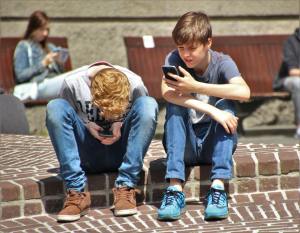
    Based on a recent Guardian article exploring how young people are taking control of their smartphone use to manage mental health, the worksheet guides students through a critical reading and reflection process. It encourages them to consider how media shapes public understanding of digital wellbeing.

    A key feature of this activity is a close look at the reference to the Netflix series Adolescence—a dramatized portrayal of online misogyny. The worksheet prompts students to explore the Responsibility of including fictionalised content within an otherwise fact-based article. Is it appropriate? Does it blur the line between evidence and entertainment? What are the ethical considerations?

    The aim is to help students build their own informed responses, drawing on both media literacy and psychological concepts relevant to wellbeing in the digital age.

    You can download the worksheet below.


  • A real-world issue for the in-class practicals

    The new IB Diploma Psychology course requires students to take part in four teacher-guided in-class practicals: an interview, an experiment, an observation, and a survey/questionnaire. We’re looking for issues that feel real and relevant to our students, and few topics are more urgent right now than the mental health crisis among young people.

    A recent UN-commissioned study by Jean Twenge and David Blanchflower has revealed a shocking reversal of the traditional “U-shaped” wellbeing curve. Happiness no longer dips in midlife—it now rises steadily with age, while young people are reporting record-low levels of life satisfaction. In six major English-speaking countries (UK, US, Ireland, Australia, Canada, and New Zealand), wellbeing among teenagers has plummeted—especially for young women.

    Teenager wellbeing

    One clear suspect? Smartphones and social media.

    This trend didn’t start with COVID-19. It dates back to around 2013 and has only worsened. Young people are reportedly more isolated, less socially engaged, and more exposed to cyberbullying and body shaming.

    This is exactly the kind of real-world phenomenon that DP Psychology students could—and should—investigate through in-class practicals. Imagine students designing ethical, small-scale studies examining screen time, social media use, and indicators of wellbeing among peers. It’s relevant, measurable, and personally meaningful to them.

    But maybe there are other possibilities, such as a shortage of good quality sleep. Diet? The mass media? The topsy-turvy economy and jobs market? Or maybe the teenage years were never really the greatest time of our life.

    We may not solve a global crisis in one classroom, but maybe we will start asking the right questions.

    Smartphones? Lack of sleep? Mass media? Music? Exams? Or maybe it’s ‘just a phase’

    Note that our Textbook includes a detailed section including examples of the In Class Practicals.