Category: psychology

  • How do we teach Psychology conceptually?

    Here’s a question that’s been bouncing around: ‘What do we mean when we say psychology is conceptual?’

    It sounds like academic jargon, I know. But stick with me, because this idea gets right to the heart of what makes psychology such a fascinating and essentially human field.

    What ‘conceptual’ means

    When we say psychology is conceptual, we’re pointing to something fundamental: the things psychologists study aren’t sitting out there in nature waiting to be discovered, like gold deposits or new species of beetle.

    Think about it. ‘Memory’, ‘aggression’, ‘intelligence’, ‘attachment’, ‘depression’… these are all human-created concepts. We invented them. We drew the boundaries. We decided what counts as ‘aggression’ versus ‘assertiveness’, where ‘normal anxiety’ ends and ‘anxiety disorder’ begins, and what behaviors signal ‘secure attachment’.

    These aren’t discoveries of pre-existing, naturally occuring things. They’re useful ways we’ve carved up the messy, continuous reality of human behavior.

    Concepts change with time and culture

    Here’s where it gets interesting. If psychological concepts were natural features, fixed features of reality, they’d be universal and unchanging. And of course, they’re not.

    The concept of ADHD didn’t exist 100 years ago. ‘Hysteria’ was once a major diagnostic category; now it’s vanished from our textbooks. Different cultures conceptualize mental states in different ways. Some languages don’t even have a word that maps onto our concept of ‘depression’.

    Our psychological concepts are also theory-laden. When we talk about ‘working memory’, we’re not just describing something neutral, we’re buying into a particular model of how cognition works. When Freudians spoke of ‘ego defence mechanisms’, they were smuggling in a whole theoretical framework.

    So what’s the alternative?

    If psychology is conceptual, what would it look like if it weren’t?

    The alternative would be studying human behavior and experience as purely physical or biological phenomena. We’d focus only on directly measurable, observer-independent entities: neurons firing, neurotransmitter concentrations, brain structures, hormone levels, reaction times, genetic markers…

    This would be neuroscience or physiology: concrete, physical, and measurable.

    The problem is…

    The problem is that most of what makes us human: love, identity, grief, creativity, the search for meaning…, these can’t be fully captured by purely physical descriptions.

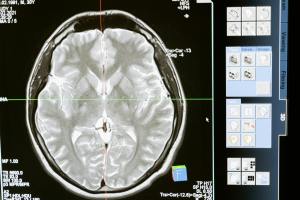
    You could give me a complete neural map of everything happening in someone’s brain during grief. Every synapse, every chemical cascade, every pattern of activation. And yet that description wouldn’t capture what grief is as a human experience. It wouldn’t tell you what it means to lose someone you love.

    Living in the tension

    This is why psychology occupies such uncomfortable territory. It sits between the natural sciences, which study observer-independent physical phenomena, and the human sciences, which study meaning-laden, conceptual phenomena.

    Psychology is both at once. It studies real biological processes and culturally-situated concepts. It measures objective behaviors and interprets subjective meanings. It discovers and constructs.

    This creates unique methodological and philosophical challenges. But it’s also what makes psychology  interesting. We’re not just measuring things; we’re constantly negotiating what those things even are.

    And that’s not a weakness. It’s the nature of studying something as complex, dynamic, and meaning-soaked as human experience.

    What do you think? Does recognizing psychology as conceptual make it less scientific or does it make it more honest about what science of the human mind can actually be?


  • How to conduct a thematic analysis

    Thematic analysis is a method for identifying, analysing, and reporting patterns (or themes) within qualitative data, often interview transcripts or text-based data.

    Braun and Clarke’s widely used six-phase approach includes: (1) familiarising yourself with the data, (2) generating initial codes, (3) searching for themes, (4) reviewing themes, (5) defining and naming themes, and (6) producing the final report.

    Braun and Clarke’s approach encourages reflexivity, transparency, and detailed interpretation of meaning. Virginia Braun and Victoria Clarke are psychologists and qualitative research experts who developed this structured approach to thematic analysis. Braun is a professor at the University of Auckland in New Zealand, and Clarke is based at the University of the West of England, Bristol. Their paper, Using thematic analysis in psychology (2006) helped establish thematic analysis as a distinct and rigorous method. Since then, they have continued to publish widely on qualitative methods, advocating for reflexive and transparent practices in thematic analysis.

    To read more about how to conduct a thematic analysis, and to see a worked example, download the FREE document below.


  • Causality and the experimental method

    At the heart of psychology lies a beautifully simple question: What causes what? The experimental method gives us the clearest path to answering this question, and its elegance lies in its straightforward logic.

    Causality is the relationship between cause and effect. When we say “X causes Y,” we mean that changes in X directly produce changes in Y. In psychology, establishing causality allows us to move beyond mere correlation and understand the mechanisms behind behavior.

    The key requirement for causality is that we must demonstrate that one variable directly produces a change in another variable.

    The experimental method is powerful precisely because of its simple logic. The basic formula involves three steps. First, change one thing, which is the Independent Variable or IV. Second, keep everything else the same by controlling all other variables. Third, measure what happens by observing changes in the Dependent Variable or DV.

    The beautiful conclusion follows naturally. If the DV changes, and we’ve controlled everything else, then the change in the IV must have caused the change in the DV. That’s it. That’s the entire logic.

    Teaching Tip 1: Start with the Logic: Before diving into terminology, help students grasp the fundamental reasoning. If I want to know whether caffeine improves memory, I need to change only the caffeine and see what happens to memory. If I change multiple things at once, I can’t know which one caused the effect.

    Teaching Tip 2: Emphasize Control: The power of the experimental method isn’t in what we change, it’s in what we don’t change. Every variable we control strengthens our claim of causality.

    Teaching Tip 3: Connect to Real Research: When teaching studies like Loftus and Palmer on leading questions and memory, or Bandura’s Bobo doll experiment on observational learning and aggression, highlight the beautiful simplicity. Identify the IV, which is the variable the researcher manipulated. Identify the DV, which is what they measured. Note the controls, which is everything they kept the same. Then draw the conclusion: because everything else was controlled, the IV caused the change in the DV.

    The Three Essential Components: Help students remember these three pillars. First is manipulation, where the researcher deliberately changes the IV. Second is control, where all other variables are kept constant. Third is measurement, where the DV is carefully observed and recorded.

    When all three are present, we can claim causality. When any are missing, we cannot.

    Some students believe that correlation shows causation. This is incorrect. Only the experimental method establishes causality because only experiments control for alternative explanations.

    Others think that any study with numbers shows causation. This is also incorrect. Surveys and correlational studies provide valuable data but cannot establish cause and effect.

    Some confuse control with control group. This is partially correct. Control means keeping variables constant and may include a control group for comparison.

    Making It Stick: Use this simple framework when analyzing any study. (i) What did they change? That’s the IV. (ii) What did they measure? That’s the DV. (iii) What did they control? Those are the other variables. (iv.) Can we claim causation? Only if it’s a true experiment.

    The experimental method’s beauty lies in its logical simplicity. Change one variable, control all others, measure the outcome. If the outcome changes, you’ve found your cause. This simple logic is psychology’s most powerful tool for understanding the mechanisms of human behavior.

    Here’s a powerpoint presentation that you can use for teaching a lesson on the true and quasi experiment.


  • The Ultimate PowerPoint Bundle

    We’ve created the complete PowerPoint teaching bundle to perfectly complement Tom Coster’s IB Diploma Psychology – The Textbook. Whether you’re a new teacher navigating the updated syllabus (first exams in 2027) or an experienced educator looking to save precious prep time, this resource is built with you in mind.

    Our DP Psychology Powerpoint bundle will save teachers HOURS of time

    What’s in the box? This all-in-one package includes 16 fully editable .pptx files (Apple’s Keynote will open and read them), carefully designed to align with every part of the IB Psychology syllabus:

    • Critical Thinking & Core Concepts
      Bias, Causality, Change, Measurement, Perspective, Responsibility
    • The Three Approaches
      Biological, Cognitive, Sociocultural
    • Research Methodology
    • Real-World Contexts
      Health & Well-being, Human Development, Human Relationships, Cognition & Learning
    • Student Success Tools
      Internal Assessment, The Examination, How to do well in IBDP Psychology

    Why teachers love the package: Complete coverage – Every aspect of the syllabus is ready to teach.
    Engaging visuals – Slides are clean, appealing, and logically structured.
    Time-saving – Spend less time preparing and more time teaching.
    Fully customizable – Tailor each presentation to your own teaching style and your students’ needs.
    Exam-ready focus – Dedicated materials for IA and exam prep ensure your students are set up for success.

    Ready to use from day one: Open, display, teach—it’s that simple. Or, if you prefer, edit and adapt the slides to make them your own. Either way, you’ll have a professional, syllabus-aligned resource library at your fingertips.

    Give your students the best chance to succeed in IB Psychology. With this bundle, you’re not just getting PowerPoints—you’re getting confidence, clarity, and consistency in your teaching.


  • Why Research Studies Still Matter in Teaching Psychology


    One of the quiet revolutions in teaching IB Psychology is this: our students no longer need to memorise outlines of 200 or more studies, each with two strengths and two limitations. That’s worth celebrating. It makes our subject lighter, more engaging, and far more relevant. Students can now focus on developing critical thinking, connecting concepts, and applying their knowledge rather than playing flashcard games with endless lists of studies.

    But let’s not forget: research is the scientific foundation of psychology.

    Would you teach ethics in psychology without telling your students about Little Albert and the white rat, Zimbardo’s appalling Stanford Prison Study, or Milgram’s not-so-appalling obedience experiments? Of course not. These are the stories that not only illustrate concepts but also bring to life the ethical debates that shape our subject.

    Would we introduce social identity theory without Sherif’s Robbers Cave study? Could we possibly explain observational learning without Albert Bandura’s endlessly punched Bobo doll? And when we turn to methods, what better way to anchor quasi-experiments and neuroplasticity than Eleanor Maguire’s London taxi drivers, or to illuminate the case study method than Henri Molaison, whose memory loss is legendary?

    The point is simple: research gives psychology its credibility.

    Yes, assessment criteria don’t explicitly require studies by name. Students aren’t graded on whether they remember that it was 22 boys in Sherif’s camp or 72 children in Bandura’s playroom. But to teach any of the IB Psychology concepts with integrity, we must draw upon the research that produced them. Without robust studies and their conclusions, our discipline risks floating away into abstraction, detached from the science that grounds it.

    So let’s celebrate freedom from rote memorisation, but let’s also celebrate the research itself. Studies are not an add-on; they are the very evidence that makes psychology worth studying.


  • Moving from research studies to real-world examples

    One of the most noticeable shifts in the new course is the emphasis in assessment on examples rather than memorised research studies. In Paper 1, Section A, those short 10-minute questions are marked against just two descriptors:

    1. The response demonstrates detailed knowledge relevant to the question.
    2. The example is relevant and explained.

    Note that word — example — not research study. In fact, the only time assessment criteria explicitly require reference to a research study is when it’s mentioned in the question itself (Paper 2, Section B).

    Over the years, I’ve enjoyed teaching the finer details of Henri Molaison (Scoville & Milner), Baby Albert (Watson & Rayner), Milgram, Odden & Rochat, Caspi et al… These classic studies are fascinating and still worth knowing, but the new Guide is clear: it’s example, not studies.

    Research will always be a valid and robust part of a Psychology course.

    Students often memorise outlines of these studies and then regurgitate them in the exam. That’s not the same as demonstrating real knowledge and understanding.

    This isn’t to say we should stop teaching research studies — I certainly won’t. I’ll continue to speak lovingly of the Dunedin Study, the HM case, and several others. But students and I won’t be getting anxious about memorising the number of participants in the HM case study (eh hem, that’s a little psychology research joke there), or the nationality of Dunedin Study participants, or the socioeconomic status of Kahneman and Tversky’s samples. We can still use research studies — and we should — but students won’t have to memorise the details.

    The real focus is transfer of knowledge. Taking Social Identity Theory and applying it to a bullying case in a school or an international conflict. Using Social Learning Theory to describe how a public health campaign could reduce teenage alcohol consumption. Even if the example is fictional, applying the theory to a fresh, unseen situation shows depth of understanding far better than rattling off participant numbers and procedure details.

    This shift isn’t about discarding research — it’s about using it. The research is the foundation. But in assessment, it’s the bridge from theory to application that earns top marks. And that’s a far better reflection of what it means to understand psychology.

    Discuss the role of Social Identity Theory in explaining a conflict.

  • Save time: A complete powerpoint collection for the new IBDP Psychology course

    If you’re teaching the new IBDP Psychology syllabus (first exams in 2027, first lessons next week!!!), you already know how much planning, organising, and resourcing it takes to cover everything—concepts, content, contexts, the internal assessment, and exam preparation. That’s why this complete PowerPoint bundle has been created: to give you a ready-made, fully editable set of presentations that match the new Subject Guide and Tom Coster’s IB Diploma Psychology – The Textbook perfectly.

    Visit this page to read more.

    This isn’t just a slide deck or two—it’s the WHOLE COURSE in one place. Sixteen separate presentations walk you and your students through every key concept (Bias, Causality, Change, Measurement, Perspective, Responsibility), every content area (the biological, cognitive, and sociocultural approaches, plus research methodology), and every context (Health & well-being, Human development, Human relationships, Cognition & learning). You’ll also find dedicated presentations for the Internal Assessment and for exam strategies, so you can guide students from their first class right through to their final paper.

    Don’t even try to do everything

    Because they’re fully editable, you can add, remove, and adapt slides to fit your own teaching style or the particular needs of your students. Want more emphasis on a tricky theory? Less on a topic your class already knows? You’re in control. The presentations are ready to use straight away—but they can be as flexible as you need them to be.

    To get a feel for the style and structure, there’s a free sample presentation you can download and try in your next lesson. And the full bundle? Just $50 for hundreds of hours of preparation already done for you—available as an instant download, no delivery time, no waiting.

    In short, this is about saving your time, reducing your workload, and giving your students consistent, high-quality resources from day one.

    Visit this page to read more.

    A new course doesn’t mean you have to spend hundreds of hours of your own time preparing new teaching materials. Explore our whole site and read about all of the materials we have available.