If you’re teaching the new IBDP Psychology syllabus (first exams in 2027, first lessons next week!!!), you already know how much planning, organising, and resourcing it takes to cover everything—concepts, content, contexts, the internal assessment, and exam preparation. That’s why this complete PowerPoint bundle has been created: to give you a ready-made, fully editable set of presentations that match the new Subject Guide and Tom Coster’s IB Diploma Psychology – The Textbook perfectly.
This isn’t just a slide deck or two—it’s the WHOLE COURSE in one place. Sixteen separate presentations walk you and your students through every key concept (Bias, Causality, Change, Measurement, Perspective, Responsibility), every content area (the biological, cognitive, and sociocultural approaches, plus research methodology), and every context (Health & well-being, Human development, Human relationships, Cognition & learning). You’ll also find dedicated presentations for the Internal Assessment and for exam strategies, so you can guide students from their first class right through to their final paper.
Don’t even try to do everything
Because they’re fully editable, you can add, remove, and adapt slides to fit your own teaching style or the particular needs of your students. Want more emphasis on a tricky theory? Less on a topic your class already knows? You’re in control. The presentations are ready to use straight away—but they can be as flexible as you need them to be.
To get a feel for the style and structure, there’s a free sample presentation you can download and try in your next lesson. And the full bundle? Just $50 for hundreds of hours of preparation already done for you—available as an instant download, no delivery time, no waiting.
In short, this is about saving your time, reducing your workload, and giving your students consistent, high-quality resources from day one.
A new course doesn’t mean you have to spend hundreds of hours of your own time preparing new teaching materials. Explore our whole site and read about all of the materials we have available.
I’ve never been very satisfied with my lessons describing neurotransmission and the role of one neurotransmitter in one behaviour, perhaps because the focus has been on serotonin, SSRIs and Major Depressive Disorder which aren’t very relevant to most students (and me).
Recently I investigated histamine and its role in wakefulness and alertness which is more relevant to my students.
Here’s a one-page description/explanation of the role of histamine in one behaviour which also describes the neurotransmission process.
I’ve left this as a Word document so you can download and edit it to suit your own situation, perhaps add some questions/activities or add a vocabulary/glossary of the key terms…
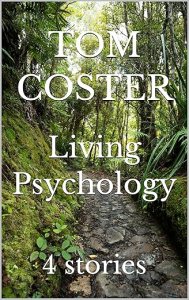
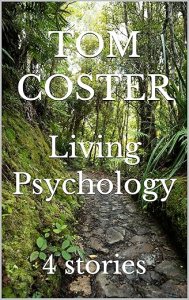
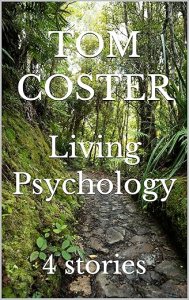
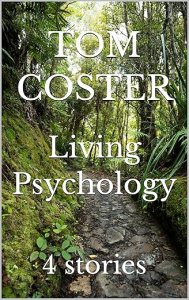
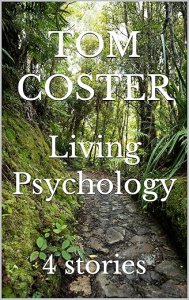
Click on the image to see this book on Amazon (available as an eBook or as a paperback)
One of the persistent challenges when teaching DP Psychology is finding homework that genuinely reinforces classroom learning without becoming mere ‘busywork’. Students need materials that engage them, connect directly to the syllabus, and support independent learning. Living Psychology offers exactly that.
The perfect homework/revision solution
The eBook format is designed specifically for modern student learning habits. Students can read the compelling stories on their phones during commutes, at the cafeteria…, whenever they have time, making psychology homework feel less like work and more like reading they enjoy. No bulky textbooks, no excuses about leaving materials at school. The stories are accessible anytime, anywhere.
Get the eBook version and read Living Psychology anywhere, anytime.
But here’s where Living Psychology transforms from engaging fiction into powerful pedagogical support: every chapter links directly to comprehensive learning materials on www.TomCoster.com. Students simply click through from their reading to find chapter summaries, explicit connections between the narrative and syllabus content, vocabulary lists, the HL topics, and detailed explanations of how each story element illustrates specific psychological concepts.
When Leo struggles with PTSD symptoms in the Remutaka forest, students click through to find explanations of neuroplasticity, the biological approach, and research methods used to study trauma recovery. When the Haddad family navigates acculturation in Germany, the website explicitly maps their experiences to Berry’s acculturation strategies, Social Identity Theory, and the Higher Level topic of culture’s role in behavior. When Gen0 researchers document attachment formation, students access materials explaining Bowlby’s theory, research methodology, ethical considerations, and human development as a Context.
This seamless integration between story and syllabus means homework becomes genuinely productive. Students aren’t just reading, they’re actively connecting narrative experiences to Concepts (like identity, relationships, and well-being), Contexts (including all three HL topics), and Content (approaches, research methods, and data analysis). The website materials make these connections explicit and accessible, supporting students who need more scaffolding while allowing independent learners to explore deeply.
For teachers, this means assigning homework with confidence that students have the support they need to succeed independently. Read a chapter, explore the corresponding materials, complete the reflection questions; it’s straightforward, self-directed, and directly aligned with what you’re teaching in class.
Living Psychology turns homework from something students avoid into something they enjoy and engage with, building psychology literacy one compelling story at a time.
Teaching IB Diploma Psychology properly requires an enormous range of resources: textbook, practice questions, formative assessment material, research study summaries, and so much more. Rather than piecing together materials from multiple sources of varying quality, the Tom Coster collection provides everything in one coherent and coordinated syllabus-aligned package.
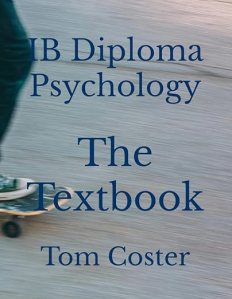
The Textbook covers the entire IB Psychology syllabus with clear explanations of concepts, contexts, and content, written specifically for the new Subject Guide. It’s complemented by The Homework Questions book, providing structured practice that reinforces classroom learning and builds examination skills progressively throughout the course.
Even more valuable for exam preparation: The Book of TEN Mock Exams includes complete practice papers with high-scoring suggested answers, showing students and teachers exactly what excellent responses look like. The 70 Multiple Choice Tests provide comprehensive practice for Paper 1, covering every topic systematically. These aren’t generic psychology questions: they’re written specifically for IB Psychology assessment objectives and command terms.
The 150 Essential Research Studies book is an invaluable reference, summarising the key studies students want to know about as evidence of psychology theories and models, across all content and contexts. There are dedicated ‘how to’ guides for both the Internal Assessment (with complete guidance from research question to final report, with an example) and Extended Essays, including curated topics, refined research questions, complete essay outlines, and suggested bibliographies that will save students and supervisors countless hours.
The Glossary of Psychology Vocabulary ensures students master the precise terminology examiners expect, while the Complete Set of PowerPoints provides ready-to-use classroom presentations covering the entire syllabus, saving teachers hundreds or hours of preparation time.
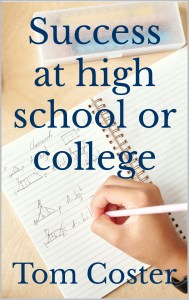
The collection includes Success at High School or College, a comprehensive study skills guide that helps students develop the time management, note-taking, and examination techniques essential for DP success across all subjects, representing exceptional value far beyond DP Psychology .
Every resource within the Collection is written by an experienced IB Psychology teacher and examiner who understands exactly what students need to succeed. The materials are syllabus-aligned, internally consistent, and designed to work together as a complete learning ecosystem.
Living Psychology presents four fictional but realistic stories that bring psychological theory to life, enabling students to develop psychology literacy by exploring concepts not as dry textbook definitions but as experiences within complex, emotional human stories where characters navigate trauma, displacement, cultural adaptation, development, and the universal challenges of understanding ourselves and others.
Textbooks often present psychology as fragmented lists: Here’s a definition. Here’s an explanation. Here’s an example. Students memorise Social Identity Theory without feeling the visceral anxiety of being one of an outgroup. They learn about acculturation strategies without experiencing the identity conflicts that refugees face. They understand PTSD conceptually but don’t witness a traumatized brain rebuilding itself through CBT.
Living Psychology changes this. Four Stories, One Comprehensive Course
Leo’s Journey: Lost and Found
Leo’s journey through the Remutaka forest in ‘Lost and Found’ explores post-traumatic stress disorder, substance use, and recovery through the lens of a teenager who becomes lost during a CAS fieldtrip and must confront both external wilderness and internal struggles with family trauma and alcohol dependence. Students encounter neuroplasticity not as a vocabulary term but as Leo’s brain gradually rewires itself through therapeutic intervention and environmental challenge.
Anya and Nikita: Moscow Mind Games
‘Moscow Mind Games’ follows Dr Anya Pavlova and Dr Nikita Vygotsky as they solve intricate psychological puzzles around Moscow to rescue kidnapped PhD students, teaching the cognitive approach to psychology through their investigation of perception, memory, problem-solving, decision-making, and cognitive biases in high-stakes situations. The story demonstrates how Schema Theory, System 1 and System 2 thinking, confirmation bias, and heuristics operate in real-time decision-making under pressure.
The Haddad Family: Rosa damascena
The Haddad family’s harrowing escape from war-torn Damascus in ‘Rosa damascena’ traces their transformation from Syrian rose cultivators to German refugees, examining acculturation strategies, social identity, cultural adaptation, and the psychological costs of displacement as they navigate dangerous border crossings, adopt orphaned twins, and ultimately face impossible choices about belonging and home. Students witness Berry’s acculturation framework not as a 2×2 grid but as agonising decisions between maintaining heritage and adopting new cultural practices.
Generation Zero: The Tipping Point
‘The Tipping Point’ addresses Europe’s demographic crisis through genetically optimised Gen0 children raised in specialised institutes, comprehensively covering research methodology and human development as researchers document attachment formation, brain maturation, enculturation, and identity development from infancy through early adulthood using experiments, observations, case studies, and multiple analytical approaches. This story integrates research methods naturally. Students see why longitudinal studies are necessary, understand ethical considerations viscerally, and recognise how different methodologies reveal different aspects of development.
Because students learn differently
Each story in Living Psychologymirrors how the examination expects students to think: recognizing that understanding behaviour requires synthesising biological, cognitive, and sociocultural explanations; applying multiple Concepts simultaneously; considering how Contexts like development, culture, and relationships shape outcomes; and evaluating how research methods and their limitations affect our psychological knowledge.
Successful DP Psychology students need psychological literacy, recognising that human behaviour is complex, multicausal, and context-dependent. Living Psychology builds this literacy through narrative immersion, then supports it with comprehensive study materials available free on the Tom Coster website, creating a complete learning ecosystem that prepares students not just to pass examinations but to genuinely understand human behaviour.
Extensive supporting materials, including vocabulary lists, chapter outlines, applications of concepts/contexts/content and engaging questions are freely available here
Most people assume there’s a universal way humans experience identity, i.e. their sense of self. Research has shown that culture fundamentally shapes how people construct their sense of self, i.e. their identity; and this plays a role in our behaviour including our emotions and motivations.
In 1991, Hazel Markus and Shinobu Kitayama published ‘Culture and the Self: Implications for Cognition, Emotion, and Motivation’, a paper that challenged the prevailing understanding of culture’s role in behaviour. The paper proposed that culture fosters one of two ways of experiencing identity and called these independent and interdependent self-construal.
The theory proposes that in cultures emphasising independent self-construal, i.e. ‘Western’ societies such as the US, people consider themselves as autonomous individuals so that the sense of self is defined by internal attributes such personality traits, abilities, and personal achievements. Success means to stand out, to be unique, and to pursue and achieve individual goals. ‘Being true to yourself’ is a core value in these cultures.
In cultures that emphasise interdependent self-construal, common in ‘the East’, many collectivist societies consider the self as one of many, i.e. connected to others rather than independent and autonomous. A person considers their identity through social relationships, roles, and group memberships. Succeeding in this culture means maintaining harmony, fulfilling obligations, and fitting harmoniously into social contexts. The question is not ‘who am I?’, rather it is ‘who are we, who am I in relation to others?’
Self-Construal Theory is compelling because of empirical evidence supporting it. For example, in 1989, psychologist Susan Cousins used the Twenty Statements Test, asking American and Japanese participants to complete sentences beginning with ‘I am…’ Americans predominantly used abstract personal traits, such as ‘I am creative’, ‘I am independent’, but Japanese participants offered context-dependent descriptions tied to relationships and situations, such as ‘I am a daughter who helps her mother’.
Self-Construal Theory’s predictions extend beyond self-description to behaviour. Heine et al. (1999) demonstrated striking motivational differences. After receiving failure feedback on a task, Canadian students persisted less on subsequent attempts, protecting their self-esteem, but Japanese students persisted, motivated by opportunities for self-improvement rather than self-protection.
Self-construal can shape everyday behaviours. For example, in consumer behaviour, Americans are more likely to purchase products that emphasise uniqueness and self-expression: ‘Be yourself’ or ‘Stand out from the crowd’ and East Asian advertising emphasises belonging and harmony such as ‘Share happiness with those you love’. Westerners typically prefer items that differ from what others have chosen, demonstrating uniqueness. East Asians tend to prefer popular choices that others have validated, reducing social disharmony.
Communication patterns often reflect different self-construals. Americans tend toward direct, explicit communication; saying ‘no’ is valued as honest and authentic, but in Japanese communication indirect expressions and contextual cues are used to avoid upsetting group harmony, saying ‘that might be difficult’ rather than ‘no’. These aren’t politeness conventions; they reflect different perceptions of appropriate self-expression.
Even emotional expression follows self-construal patterns. Tsai et al. (2006) found that European Americans valued high-arousal positive emotions like excitement and enthusiasm, which signal individual achievement and expression, but Hong Kong Chinese valued low-arousal positive emotions like calm and peacefulness, which facilitate harmonious social functioning. Facebook profile pictures reflect this: Americans smile more broadly with teeth showing (expressing individual happiness). East Asians smile more subtly with closed mouths (maintaining social appropriateness).
American students typically feel comfortable speaking up in class, asking questions, and debating with teachers. These behaviours demonstrate critical thinking and individual voice. East Asian students typically remain quiet, not from lack of engagement but from respect for the teacher’s authority, believing that speaking out might disrupt the collective learning environment or risk making others feel uncomfortable.
Kitayama’s own research showed that Americans consistently rate themselves above average on various attributes (sometimes referred to as the self-enhancement bias; Japanese participants showed self-criticism, honestly acknowledging weaknesses as areas for personal growth. These aren’t just cultural politeness norms. They reflect different motivational systems shaped by self-construal.
Perhaps most fascinating, self-construal seems to affect people’s perception and attention. Masuda and Nisbett (2001) showed participants animated underwater scenes. American participants fixated on prominent focal objects like large fish, but Japanese participants focused more on more global/background elements and the relationships between the objects in the scene. This didn’t seem to be about visual acuity; it indicated culturally-shaped patterns of attention and focus.
Even memory seems to be culturally constructed. Wang (2001) found that Chinese children’s autobiographical memories emphasised collective activities and social interactions and American children’s memories focused on individual experiences and individual attributes indicating that we remember our lives through cultural filters.
Many parenting practices show self-construal in action. American parents often ask children ‘What do YOU want?’ and ‘How do YOU feel?’ emphasising individual preferences and internal states. East Asian parents more commonly ask ‘What should we do?’ or reference social obligations, for example ‘What would grandmother think?’ These small linguistic differences shape how children learn to think about themselves in relation to others.
Workplace behaviour can demonstrate self-construal differences. In Western organisations, employees are encouraged to promote their achievements, with annual reviews asking, ‘What are YOUR accomplishments?’ and ‘What makes YOU stand out?’ In Eastern companies, employees often deflect individual credit, attributing success to team effort or organisational support. When Americans receive praise, they typically accept it directly, for example. ‘Thank you, I worked hard on that’. Asian recipients more commonly deflect or minimise: ‘No, it was nothing special’ or ‘I was fortunate to have good colleagues’.
Zhu et al (2007) used brain imaging to show that Chinese participants demonstrated similar neural activation patterns when thinking about themselves and their mothers, but Western participants distinguished clearly between thinking about themselves and thinking about their mothers, showing different neural activation for each. Culture doesn’t seem to just affect our self-perception and memory; it also seems to shape the neural architecture underlying self-representation.
Self-Construal Theory helps explain why shame is more significant in some cultures and guilt is significant in other cultures, and why self-help movements flourish more in individualist than collectivist societies, and why collaborative decision-making processes are more effective in some cultures and less effective in other cultures.
Critics of Self-Construal Theory argue that it creates a false dichotomy, overlooking within-culture variations and individual differences. For example, not all Westerners are independent and not all Asians are interdependent. Modern research suggests that many people develop bicultural competence, meaning they can shift between self-construals depending on the cultural context.
Markus and Kitayama’s Self-Construal Theory remains important for understanding the role of culture in behaviour by demonstrating that culture is not merely superficial customs and traditions. It can shape behaviour from perception and memory to emotion and motivation. People’s sense of self is not universal; it is profoundly cultural and understanding this helps us appreciate human diversity while recognising the mechanisms underlying cultural differences.
Self-Determination Theory (SDT) is a simple solution to the questions of how we help students understand motivation across all four Contexts.
What is motivation? That hidden drive to behave.
Deci and Ryan’s SDT: Motivation stems from three needs: (i) autonomy (feeling in control), (ii) competence (feeling capable), and (iii) relatedness (feeling connected). When these needs are met, intrinsic motivation flourishes. When they’re not met, motivation is hindered. It’s a simple but powerful framework that can be applied to all 4 Contexts:
Human Development
Consider adolescent identity formation. Teenagers need autonomy to explore who they are, competence through experiences that build self-efficacy, and relatedness through secure attachments that provide a safe base for exploration. Identity achievement requires all three needs being met, while identity foreclosure might reflect relatedness without autonomy. Most students can grasp why overcontrolling parenting or peer rejection derails healthy development.
Teenagers need autonomy, competence and relatedness to develop an identity.
Human Relationships
Relationship satisfaction directly correlates with SDT’s three needs. Partners who support each other’s autonomy (rather than being controlling), acknowledge each other’s competence (rather than being critical), and maintain emotional connection report higher relationship quality. This explains why co-dependency fails; it sacrifices autonomy for relatedness. Students can analyse their own friendships/relationships through this lens, making the theory personally relevant.
Learning and Cognition
This is SDT’s home territory. Intrinsic motivation predicts deeper learning, better retention, and greater creativity than extrinsic motivation. When students experience autonomy (choice in assignments), competence (appropriately challenging tasks with constructive feedback), and relatedness (collaborative learning, supportive classroom climate), academic motivation soars. It also explains why rewards sometimes backfire: because they degrade autonomy. It also explains why mastery-oriented feedback works better than performance-oriented feedback: because it builds competence without degrading autonomy.
Self-determination theory: It’s ALL about autonomy, competence and relatedness.
Health and Wellbeing
Why do people stick with exercise programmes? SDT provides answers. Autonomous motivation (‘I exercise because I value health’) predicts adherence better than controlled motivation (‘I exercise because my doctor said so’). Competence comes from progressive improvement and achievable goals. Relatedness emerges from workout partners or group classes. Students can apply this to understanding treatment compliance, addiction recovery, or their own wellness behaviours.
Motivation is what keeps us going.
Smart teaching: Self-Determination Theory
Here’s the beauty: teach SDT once, thoroughly, then reference it across contexts throughout the year. Students build a cognitive schema that helps them predict and explain motivational phenomena wherever they encounter them. When the HL exam question asks about motivation in any context, they have a robust theoretical framework ready to write about.
When the IB Psychology guide lists “the role of technology in behaviour” as a Higher Level topic, many teachers immediately think smartphones and social media. And yes, Instagram’s impact on attention spans is relevant. But this topic offers so much more depth and variety than we might initially assume.
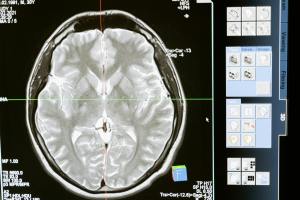
Coupling AI to brain scanning techniques to predict behaviour… but is AI sufficiently accurate to replace human expertise and experience?
Start with the basics: brain scanning technology itself. fMRI and PET scans aren’t just research tools—they’re technologies that have fundamentally changed how we understand behaviour. Now add AI software interpreting those scans, potentially diagnosing conditions before human experts spot the patterns. Suddenly we’re discussing how technology doesn’t just study behaviour; it actively shapes our understanding of what behaviour even is.
Then there’s the everyday technology students actually use. Does relying on smartphones for navigation atrophy our spatial memory? When we outsource our recall to Google, are we fundamentally changing how memory consolidation works? Language learning apps like Duolingo use gamification and spaced repetition algorithms—technologies that directly target learning behaviour. Meanwhile, YouTube’s recommendation algorithm creates confirmation bias echo chambers, reinforcing existing beliefs and shaping political behaviour worldwide.
Is social media changing the way people behave in relationships?
But let’s go broader. Does television count as technology? Absolutely—and its effects on attention, aggression, and prosocial behaviour are well-researched. eBooks versus physical books might seem trivial until you examine reading comprehension and retention studies. Online courses use adaptive learning technologies that personalize content delivery in ways a human teacher never could.
Here’s the historical perspective students need: When Gutenberg invented the printing press, scholars worried it would destroy memory and critical thinking because ‘why remember anything if it’s written down?’ When Edison’s light bulb extended waking hours, social critics feared it would disrupt natural human rhythms and family cohesion. Sound familiar?
A note to teachers: You don’t need to cover every technological innovation from the abacus to ChatGPT. The goal is helping students think critically about how any technology might influence behaviour—through cognitive load, social interaction patterns, information access, or behavioural conditioning. Give them a framework for analysis and a few solid examples. When exam day comes, they’ll be equipped to write intelligently about whatever technological scenario appears in the question, whether it’s covered in your lessons or not.
The Class Practicals are students’ opportunity to engage directly with research methods while developing ethical awareness. The Practicals can also be scaffolding activities for the Internal Assessment. Whatever you do, you MUST link the Class Practical experience with Paper 2 Section A’s 4 questions.
The primary purpose of Class Practicals is for students to be directly involved in planning, preparing and conducting research studies, in particular an experiment, an interview, a survey, and an observation. The Subject Guide describes in detail what variations of these studies can be conducted, for example a true experiment and a quasi-experiment are OK, a natural and a field experiment are not OK. The Subject Guide also details the ethical requirements to be considered.
Students should complete 4 Practicals and their experience should inform their answers to Paper 2, Section A’s 4 questions, but this doesn’t mean the students must each plan, prepare and conduct 4 studies. Students must be involved to some extent. They may be involved in a study that’s ultimately an in-class demonstration. Perhaps the students are involved in planning and preparations, or maybe they’re members of an ethics committee or perhaps they’re involved as participants or assistant researchers or data collectors. And perhaps they change roles over the 4 different Practicals.
The December 2025 curriculum update, any research method can now be applied to any context. In my opinion though, thinking through the logistics and ethical considerations of each method, the original suggestions are probably best: an experiment in the Learning and Cognition context, a questionnaire in the Human Relationships context, an observation in the Human Development context and an interview in the Health and wellbeing context.
Practicals can be teacher-led or student-led, conducted in-school or out-of-school. Under the Keep It Simple ‘rule’, I strongly recommend strong teacher guidance and in school (in class). The key requirement is meaningful student participation. Students who are participants in a practical gain invaluable perspective to research. ‘How did you feel during the debriefing that your were lied to during the study? The researchers called it reasonable deception – is that how you feel about it?’
The Class Practicals are good preparation for the Internal Assessment, which requires students to write a research proposal rather than conduct actual research. It’s very difficult to propose an experiment, for example, if you’ve never conducted one. After experiencing a Class Practical experiment firsthand, describing a quasi-experiment’s aim, the participant recruitment process, managing variables, addressing ethical concerns… become more achievable. Through the Class Practicals, students will develop better understanding of research design. If they were involved as participants in the Class Practical, students will be better prepared to write about ethical considerations.
Whatever practical you conduct, ensure explicit connections to Paper 2 Section A’s four questions. The Practicals aren’t isolated exercises; they’re preparation for exam questions. The experience should strengthen students’ understanding of ethical considerations, research design, methodological strengths and limitations, and data interpretation.
Looking for ready-to-use resources that will save you hours of preparation time? Our extensive collection of FREE worksheets covers every Content, Context, and Concept in the course and we’ve even included the Research Methods and Data Analysis and Interpretation topics.
What makes these worksheets special?
Each worksheet is written to provide complete coverage of its topic. Students will find clear definitions, detailed explanations, and thoughtful discussions that build genuine understanding. But we don’t stop at theory, every worksheet includes engaging questions that reinforce learning and encourage critical thinking.
Flexibility for your teaching
Here’s the game-changer: these worksheets are provided as Word documents, not PDFs. This means you can download them and customize them to perfectly suit your teaching style, your students’ needs, and your specific classroom situations. Edit questions, add examples relevant to your students’ experiences, or adjust the difficulty level: the choice is yours. But they’re ready to use without any edits.
Comprehensive coverage
With one (and often two) worksheets available for every topic, you’ll have everything you need to support student learning throughout the course. From Biological to Sociocultural, from Research Design to Statistical Analysis… it’s all here.
Download your FREE worksheets today and spend less time creating materials and more time enjoying yourteaching.



























 Tom Coster - Psychology