Tag: writing

  • Save time: A complete powerpoint collection for the new IBDP Psychology course

    If you’re teaching the new IBDP Psychology syllabus (first exams in 2027, first lessons next week!!!), you already know how much planning, organising, and resourcing it takes to cover everything—concepts, content, contexts, the internal assessment, and exam preparation. That’s why this complete PowerPoint bundle has been created: to give you a ready-made, fully editable set of presentations that match the new Subject Guide and Tom Coster’s IB Diploma Psychology – The Textbook perfectly.

    Visit this page to read more.

    This isn’t just a slide deck or two—it’s the WHOLE COURSE in one place. Sixteen separate presentations walk you and your students through every key concept (Bias, Causality, Change, Measurement, Perspective, Responsibility), every content area (the biological, cognitive, and sociocultural approaches, plus research methodology), and every context (Health & well-being, Human development, Human relationships, Cognition & learning). You’ll also find dedicated presentations for the Internal Assessment and for exam strategies, so you can guide students from their first class right through to their final paper.
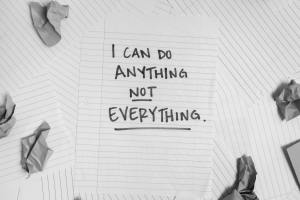
    Don’t even try to do everything

    Because they’re fully editable, you can add, remove, and adapt slides to fit your own teaching style or the particular needs of your students. Want more emphasis on a tricky theory? Less on a topic your class already knows? You’re in control. The presentations are ready to use straight away—but they can be as flexible as you need them to be.

    To get a feel for the style and structure, there’s a free sample presentation you can download and try in your next lesson. And the full bundle? Just $50 for hundreds of hours of preparation already done for you—available as an instant download, no delivery time, no waiting.

    In short, this is about saving your time, reducing your workload, and giving your students consistent, high-quality resources from day one.


    Visit this page to read more.

    A new course doesn’t mean you have to spend hundreds of hours of your own time preparing new teaching materials. Explore our whole site and read about all of the materials we have available.

  • The In Class Practicals

    One of the most exciting features of the new IB Diploma Psychology course is the emphasis on class practicals, which give both Standard Level (SL) and Higher Level (HL) students a chance to engage directly with psychological research methods. These activities are more than just experiments, they are designed to support critical discussion of each research approach, helping students build practical understanding while making connections to real-world contexts.

    Class practicals are embedded into each of the course’s four contexts: Health and Well-being, Learning and Cognition, Human Development, and Human Relationships. Each context is linked with a specific research method:

    • In Health and Well-being: Interview.
    • In Learning and Cognition: Experiment.
    • In Human Development: Observation.
    • In Human Relationships: Survey/Questionnaire.
    Interview

    Each Context in the Subject Guide includes a list of suggested class practicals, but these are examples only and teachers are encouraged to tailor the activities to their own students and their local setting. For instance, under the Health and Well-being context, students could conduct focus group interviews on how peers manage stress, or investigate student perceptions of mindfulness practices after a class activity. Other examples include semi-structured interviews with professionals such as school counsellors or fitness coaches, or interviews exploring links between social media use and self-esteem, or exercise habits and mood.

    Importantly, Tom Coster’s Textbook includes dedicated guidance for the In Class Practicals in each context, helping both teachers and students make the most of these learning opportunities.

    The In Class Practical is not just a learning activity — it is also formally assessed in Paper 2, Section A, where students respond to four structured questions related to one of the 4 Practicals they completed. These questions test students’ understanding of methodology, concepts like bias or ethics, and the ability to design or compare research approaches.

    In short, In Class Practicals bring psychology to life, giving students the opportunity to be researchers themselves and fostering deeper, more critical engagement with the subject.

    Here is a free downloadable document describing how to complete the In-Class Practical for an interview. It includes summary notes that students would use to prepare for Paper 2 Section A.