Tag: sleep

  • Earlier bedtimes leads to better cognition

    Every year, I tell my students that sleep is just as important as revision and study habits when it comes to academic performance. And now, a compelling new study from the University of Cambridge and Fudan University gives us even more reason to double down on that message.

    In a study involving over 3,000 teenagers, researchers discovered that those who:

    • Went to bed earlier,
    • Slept longer,
    • And had lower sleeping heart rates,

    scored significantly higher on a range of cognitive tests, including reading, vocabulary, and problem solving.

    Even more striking? The actual difference in sleep duration between groups was minimal—just 15 minutes between the lowest and highest scoring groups—yet this small variation had a surprisingly large impact on brain performance and function.

    Brain scans revealed that teens with the best sleep habits not only performed better but also had larger brain volumes and more efficient brain function.

    Despite these findings, even the best-sleeping teens in the study didn’t reach the 8–10 hours per night recommended by the American Academy of Sleep Medicine. The healthiest group averaged just seven hours and 25 minutes of sleep.

    Why? Teenagers face a biological shift toward later bedtimes during adolescence. Add in screen use, homework, social media, and caffeine—and you’ve got a generation of students consistently underslept.

    We’re not powerless. In fact, this is where we shine. As Psychology teachers, we can…

    1. Teach the Science of Sleep

    Incorporate sleep research into your lessons on cognitive development, memory, and mental health. Use this new study to show how even small changes in sleep patterns make a real difference.

    2. Debunk Myths

    Help students understand that “catching up” on weekends (aka social jet lag) doesn’t undo the damage of sleep loss during the week. Emphasize consistency.

    3. Promote Simple, Practical Changes

    Share strategies backed by experts:

    • Encourage regular exercise to improve sleep quality.
    • Urge students to limit screens an hour before bedtime.
    • Support healthy bedtime routines, such as winding down with a book, journaling, or light stretching.

    4. Embed Sleep into Pastoral Care

    Work with your school’s wellbeing or pastoral team to create sleep hygiene workshops, or add sleep content into personal and social education. Oxford’s Teensleep project is a great resource for ideas and activities.

    5. Make Sleep “Cool”

    Reframe sleep as a performance enhancer. Better memory. Sharper thinking. Bigger brains. It’s the one lifestyle change that benefits everything from academics to mental health—and it doesn’t cost a thing.


    Professor Barbara Sahakian, who co-led the study, put it best: “It’s the sleep driving the better cognitive abilities… Small differences in sleep amounts accrue over time to make a big difference in outcomes.”

    Let’s empower our students to make those small changes—because every extra minute of quality sleep could mean a stronger brain, clearer thinking, and greater wellbeing.


  • A real-world issue for the in-class practicals

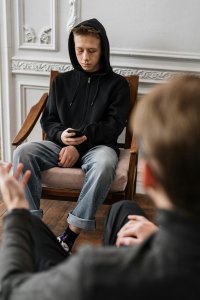
    The new IB Diploma Psychology course requires students to take part in four teacher-guided in-class practicals: an interview, an experiment, an observation, and a survey/questionnaire. We’re looking for issues that feel real and relevant to our students, and few topics are more urgent right now than the mental health crisis among young people.

    A recent UN-commissioned study by Jean Twenge and David Blanchflower has revealed a shocking reversal of the traditional “U-shaped” wellbeing curve. Happiness no longer dips in midlife—it now rises steadily with age, while young people are reporting record-low levels of life satisfaction. In six major English-speaking countries (UK, US, Ireland, Australia, Canada, and New Zealand), wellbeing among teenagers has plummeted—especially for young women.

    Teenager wellbeing

    One clear suspect? Smartphones and social media.

    This trend didn’t start with COVID-19. It dates back to around 2013 and has only worsened. Young people are reportedly more isolated, less socially engaged, and more exposed to cyberbullying and body shaming.

    This is exactly the kind of real-world phenomenon that DP Psychology students could—and should—investigate through in-class practicals. Imagine students designing ethical, small-scale studies examining screen time, social media use, and indicators of wellbeing among peers. It’s relevant, measurable, and personally meaningful to them.

    But maybe there are other possibilities, such as a shortage of good quality sleep. Diet? The mass media? The topsy-turvy economy and jobs market? Or maybe the teenage years were never really the greatest time of our life.

    We may not solve a global crisis in one classroom, but maybe we will start asking the right questions.

    Smartphones? Lack of sleep? Mass media? Music? Exams? Or maybe it’s ‘just a phase’

    Note that our Textbook includes a detailed section including examples of the In Class Practicals.


  • Sleep – the overlooked health treatment

    Sleep – the overlooked health treatment

    As psychology teachers, we’re often at the front and centre of mental health discussions – with students and also with colleagues. We teach our students about the biological, cognitive, and social explanations of disorders, the effectiveness of SSRIs, and the transformative power of CBT. And yet, one of the simplest and most effective interventions remains woefully underemphasized: adequate sleep.

    There is a mountain of credible, published research highlighting just how significant sleep is to emotional regulation. We have compelling evidence showing that poor sleep isn’t just a symptom of anxiety or depression, it is often the primary cause.

    The relationship between sleep and mental health is bidirectional, creating a vicious cycle: insufficient sleep heightens emotional reactivity, disrupts rational thought processes, and increases vulnerability to stress, making individuals more prone to anxiety and depression.

    One night of sleep deprivation leads to a significant spike in anxiety and low mood the following morning. Chronic, ie longer term, sleeplessness makes everyday events feel more negative, reinforcing a bleak outlook on life. Research shows that individuals suffering from insomnia are at twice the risk of developing anxiety or depression compared to those who sleep well.

    The evidence is compelling. Sleep deprivation impairs the prefrontal cortex, the brain’s emotional regulator, weakening its connection to the amygdala, which governs fear and emotional responses. This disruption makes individuals more emotionally volatile, prone to misperceiving neutral events as negative, and more likely to spiral into stress and mood disorders.

    As educators, we must recognize the immense potential of sleep education as a preventative mental health strategy. A CAS project that focuses on sleep awareness could help students (and colleagues) track their sleep, analyze its effects on mood and cognitive function, and share findings with peers.

    Getting sufficient sleep is not about school starting later or school providing quiet spaces for rest. It’s about teaching students, their parents, and colleagues that the simplest treatment (and prevention) strategy relating to the most common mental health issues of anxiety and depression is getting sufficient sleep. In general we all need 8-9 hours of sleep, so we must go to bed more than 8-9 hours before the required wake-up time because we need about half an hour to ‘fall asleep’. We all need to be in bed, light off and phone off around half an hour before the sleep time.

    Ultimately, if there is one piece of mental health advice we can give our students—and even our colleagues—it is this: Prioritize sleep because it is the foundation of emotional resilience, cognitive function, and overall well-being.

    I seldom see anxious cats.