Tag: high school

  • Why Research Studies Still Matter in Teaching Psychology


    One of the quiet revolutions in teaching IB Psychology is this: our students no longer need to memorise outlines of 200 or more studies, each with two strengths and two limitations. That’s worth celebrating. It makes our subject lighter, more engaging, and far more relevant. Students can now focus on developing critical thinking, connecting concepts, and applying their knowledge rather than playing flashcard games with endless lists of studies.

    But let’s not forget: research is the scientific foundation of psychology.

    Would you teach ethics in psychology without telling your students about Little Albert and the white rat, Zimbardo’s appalling Stanford Prison Study, or Milgram’s not-so-appalling obedience experiments? Of course not. These are the stories that not only illustrate concepts but also bring to life the ethical debates that shape our subject.

    Would we introduce social identity theory without Sherif’s Robbers Cave study? Could we possibly explain observational learning without Albert Bandura’s endlessly punched Bobo doll? And when we turn to methods, what better way to anchor quasi-experiments and neuroplasticity than Eleanor Maguire’s London taxi drivers, or to illuminate the case study method than Henri Molaison, whose memory loss is legendary?

    The point is simple: research gives psychology its credibility.

    Yes, assessment criteria don’t explicitly require studies by name. Students aren’t graded on whether they remember that it was 22 boys in Sherif’s camp or 72 children in Bandura’s playroom. But to teach any of the IB Psychology concepts with integrity, we must draw upon the research that produced them. Without robust studies and their conclusions, our discipline risks floating away into abstraction, detached from the science that grounds it.

    So let’s celebrate freedom from rote memorisation, but let’s also celebrate the research itself. Studies are not an add-on; they are the very evidence that makes psychology worth studying.


  • A New School Year – Wherever You Are

    Whether you’re in your very first year of teaching IBDP Psychology or your thirtieth, in some ways it doesn’t matter. You’re standing in front of a new set of students. Fresh faces, fresh questions, and—if we’re honest—fresh challenges.

    Same but different.

    Maybe you’re teaching in the same school you once sat in as a student yourself, or maybe you’re on the other side of the globe—Morocco, Mauritius, Oman, Albania. Again, that’s not really the point. Because teaching, at its heart, is about guiding and supporting your students, wherever you happen to be.

    Yes, I know… the year will kick off with a few staff meetings. Some will be useful. Others… well, let’s just say “less so.” If you find yourself in one of those, you could quietly plan a lesson or even play a quick game of chess from the back row. (Not that I’m encouraging mischief, of course.)

    Your first lessons aren’t about ploughing through the syllabus—they’re about setting the tone. Letting students (and their parents) know they’re in safe, well-prepared hands.

    You might kick off with an introduction to the experimental method—perhaps demonstrating the Stroop Effect to show how something as simple as reading a word can become surprisingly tricky when colour and meaning clash.

    Or you might spark a discussion about human behaviour:

    • Why are some people passionately in favour of immigration to the UK, while others are equally passionately opposed?
    • Why do some students show up every single day, while others are unfazed by missing lessons?
    • Why are some people shy while others brim with confidence?

    Or perhaps you want to open with ethical considerations—just a quick, engaging chat about Zimbardo’s prison study or Watson and Rayner’s famous “Little Albert” experiment. You could even take your students into the playground to observe younger children for prosocial behaviours—psychology in action from day one.

    Whatever you choose, choose something that excites you. That enthusiasm is contagious.

    And, you know, take very good care of yourself.

    So here’s to the start of your year—new students, new questions, new discoveries. Wherever you are in the world, whatever your teaching style, we’re wishing you all the very best.

    —Tom


  • Estonia, mobile phones and students.

    Newsflash: Estonia’s Minister of Education and Research, Kristina Kallas, emphasized Estonia’s proactive and open approach to digital tools in education during a speech at the Education World Forum in London. Unlike many European countries that are cautious about screen time and mobile phone use in schools, Estonia encourages the use of smartphones for learning. Schools set their own rules, and students—particularly those aged 16 and up who are eligible to vote online—are expected to use their phones as tools for both civic participation and education. Kallas notes the absence of problems related to mobile use, crediting Estonia’s digitally fluent society and schools’ autonomy.

    Kallas highlighted Estonia’s long-standing digital investment, starting with the 1997 Tiigrihüpe (Tiger Leap) programme, which brought internet access to all schools. Now, the country is embracing AI and smartphone technology as the next evolution in education. Kallas predicts the decline of traditional homework essays and rote learning, pushing instead for a focus on oral assessment and the development of high-level cognitive skills. She frames this shift as essential in keeping pace with the capabilities of AI, warning that if humans don’t evolve cognitively, technology may overtake them.

    Yes. The most powerful learning tool ever, so let’s teach students how to make the best use of them. Teaching… it’s what we do.

    As teachers, we’ve all been part of the debate: are mobile phones a distraction or a tool in the classroom? Estonia’s Minister of Education, Kristina Kallas, offered a refreshing perspective this week that challenges many of our assumptions. In Estonia, mobile phones are not banned in schools—they’re embraced. Why? Because they reflect the real world students are living in, and Estonia sees them as integral to learning and civic life. Sixteen-year-olds vote online using their phones. It would be illogical, Kallas argues, to deny them the same access in a classroom setting.

    This approach got me thinking. In IB Psychology, we ask students to critically evaluate, think metacognitively, and link psychological theory to the real world. What better way to model that than by integrating the very tools students already use to explore and interact with that world? Estonia isn’t ignoring the risks—phones aren’t used during breaks, and younger students face tighter limits—but they are trusting teachers and schools to manage these decisions locally.

    The most provocative idea Kallas raised is that AI may render essays and rote learning obsolete. That’s a bold claim. But if AI can generate knowledge quickly and accurately, then the role of education must shift towards helping students think better—to question, synthesise, communicate, and reflect. Isn’t that what we’re already trying to do in the IB?

    Rather than fight the tide, maybe we should, like Estonia, ride it. But there’s no maybe about it. We should. We must!Our job, our responsibility, is to help students use them correctly, with integrity and responsibilty and respect.


  • Exciting times; exciting news

    We’re thrilled to announce that most of our books are now available! Whether you prefer eBooks or print editions, you can now access our resources in the format that suits you best. Just follow the links to Amazon.

    We live in happy times

    But that’s not all—we’ve got even more coming your way! By the end of this week, our Free Worksheets page will go live, giving you access to around 200 materials to support your learning. These worksheets will be a great companion to our books, helping you reinforce key concepts and practice essential skills.

    And for those looking for a complete teaching package, we have something special planned. This weekend, we will be releasing a full set of PowerPoint presentations for the entire course, including the assessments. These presentations will provide structured, ready-to-use content, making it easier than ever to teach the course.


  • Illeism: The ancient trick to help you think more wisely

    This article is reposted from BBC.com

    https://www.bbc.com/worklife/article/20230411-illeism-the-ancient-trick-to-help-you-think-more-wisely

    It’s hard to reason through problems, but there are ways to be more objective and less biased in your thinking.

    As a writer specialising in psychology, I’ve come across hundreds of evidence-based tips for better thinking. Few have proven as useful to me as the ancient strategy of illeism.

    Put simply, illeism is the practice of talking about oneself in the third person, rather than the first person. The rhetorical device is often used by politicians to try to give their words an air of objectivity. In his account of the Gallic War, for example, the emperor Julius Caesar wrote “Caesar avenged the public” rather than “I avenged the public”. The small linguistic switch seems intended to make the statement feel a little more like historical fact, recorded by an impartial observer

    To the modern ear, illeism can sound a little silly or pompous – and we may even deride famous people who choose to talk in this way. Yet recent psychological research suggests that illeism can bring some real cognitive benefits. If we are trying to make a difficult decision, speaking about ourselves in the third person can help to neutralise the emotions that could lead our thinking astray, allowing us to find a wiser solution to our problem.

    Solomon’s paradox

    To understand these benefits of illeism, we must first examine the ways that scientists measure the wisdom of someone’s reasoning.

    The scientific study of wisdom has been spear-headed by Igor Grossmann at the University of Waterloo in Canada. Grossmann first drew on the work of numerous philosophers to decide on a series of “metacognitive components” – including intellectual humility, acknowledgement of others’ viewpoints and search for compromise – that are commonly considered to be essential for wise decision making. First used by Julius Ceaser, Illeism is a tool that will clear your mind from indecision

    In one of his first studies, Grossmann asked participants to think out loud about their responses to various dilemmas – such as personal problems posed to the Dear Abby “agony aunt” column – while independent psychologists rated their spoken responses according to these criteria. Grossmann found that these tests of wise reasoning were better than IQ tests at predicting people’s overall life satisfaction and the quality of their social relationships. This suggested the studies were capturing something unique about their reasoning skills.

    Grossmann’s later studies revealed that the wisdom of people’s reasoning can depend on the context. In particular, he found that their wise reasoning scores tended to be much higher when considering other people’s situations than their own personal dilemmas. Grossmann called this “Solomon’s Paradox” after the ancient Biblical king, who was famous for advising others wisely, while making a series of disastrous personal decisions that ultimately left his kingdom in chaos.

    The problem seems to be that when making personal choices, we become too immersed in our emotions, which cloud our thinking and prevent us from putting our issues in perspective. If I have received negative feedback from a colleague, for example, my feeling of embarrassment might lead me to become overly self-defensive. I might therefore dismiss their opinions without considering whether their advice could be helpful in the long-term. 

    How to be wise

    Could illeism resolve Solomon’s paradox? The idea makes intuitive sense: by switching to the third person, our descriptions of the situation will start to sound as if we are talking about someone else rather than ourselves. This sense of detachment would allow us to see the bigger picture, rather than getting caught up in our own feelings. 

    And that is exactly what Grossmann found in a study with Ethan Kross at the University of Michigan in Ann Arbor. They showed that people employing illeism to talk about their problems showed greater intellectual humility, capacity to recognise others’ perspectives, and willingness to reach compromise – increasing their overall wise reasoning scores. 

    The latest studies show that the regular use of illeism can bring about lasting benefits to our thinking.

    Working with Abigail Sholer, Anna Dorfman and colleagues, Grossmann asked participants to keep a daily diary for one month in which they described a situation they had just experienced. Half were told to write their entries in the third person, while the other half were told to write in the first person. At the start and end of the study, the team also tested the subjects’ general wise reasoning. As hoped, the researchers found that, over the course of the intervention, the participants who had been encouraged to use illeism in their diaries saw a rise in their wise-reasoning scores over the course of the month.

    By encouraging us to put our problems in perspective, the use of illeism may also help us to have a more balanced response to daily stresses. People who had completed the diary in the third person reported more positive emotions after challenging events, rather than dwelling solely on the sadness, frustration or disappointment.

    Based on these findings, I now apply illeism to all decisions, small and big. Whether I’m facing trials at work, conflict with my friends, or strife in the family, I find that a few moments contemplating my problems from a third-person perspective helps me to see the issue more clearly. 

    David Robson is a science writer and author of The Expectation Effect: How Your Mindset Can Transform Your Life, published by Canongate (UK) and Henry Holt (USA). He is @d_a_robson on Twitter.


  • The Student’s Notesbook

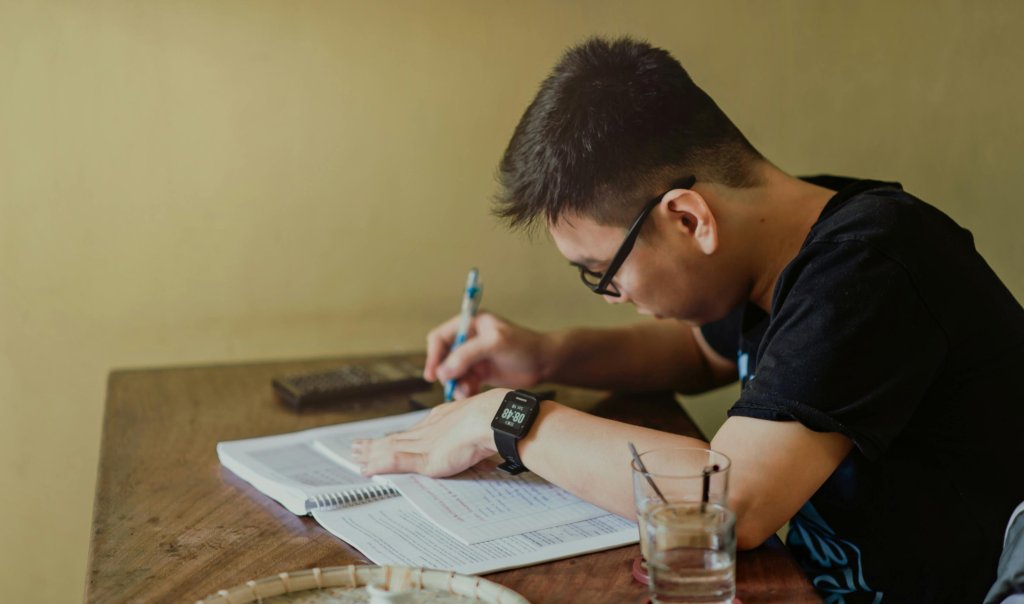
    In an era dominated by digital tools and pre-packaged resources, the value of students creating personalized, handwritten class notes cannot be overstated. For teachers, encouraging this practice is one of the most impactful ways to deepen learning, foster cognitive engagement, and build emotional investment in the material.

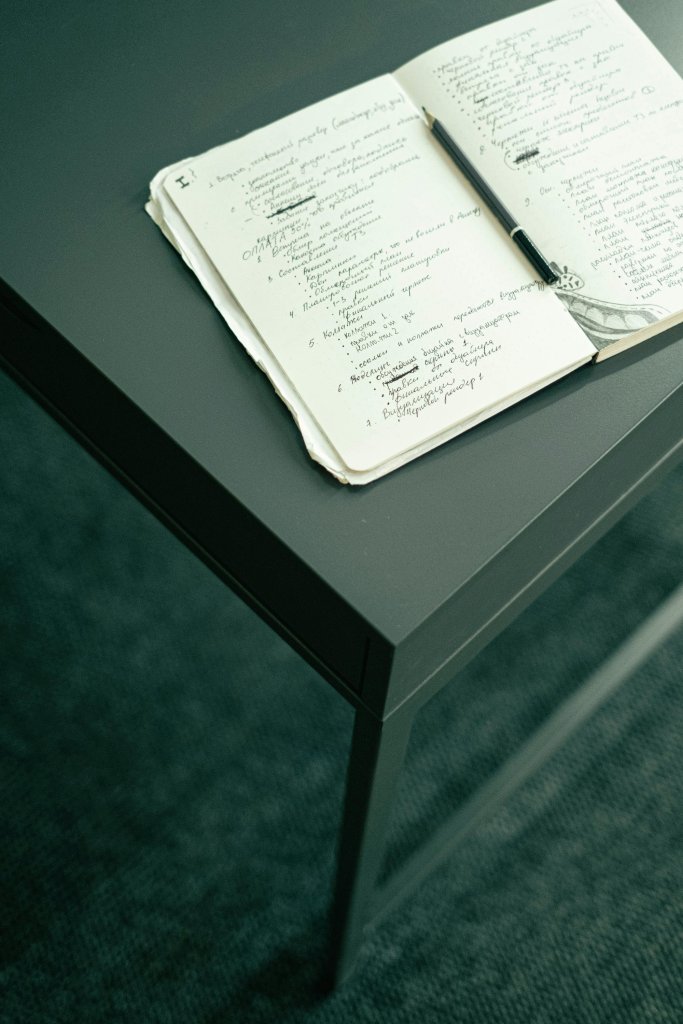
    Students craft their own personalised unique notesbook and as they do, they slowly and steadily convert the written material in knowledge and understanding.

    When students craft their own notes, based on a teacher’s structured outline, they engage in active processing of the content. By supplementing the notes with their own observations, questions (and the teacher’s answers), diagrams, mnemonics, and personal clarifications, they go beyond passive absorption. This process transforms abstract ideas into meaningful, memorable constructs. Highlighting key points, underlining critical concepts, and using bullet points to organize information allow students to internalize knowledge and make it their own.

    This personalized approach also fosters emotional investment. When students spend time and care curating their notes, they take ownership of their learning. Their notes are no longer a generic resource but a unique, tailored study tool—a reflection of their effort and understanding. The act of handwriting itself adds another layer of engagement, as research consistently shows that writing by hand improves memory retention and deepens focus.

    Moreover, personalized notes serve as a powerful cognitive anchor. The time spent organizing and refining this material encourages attention to detail, creating mental connections that aid comprehension and recall. Diagrams and mnemonics make abstract ideas more accessible, while questions and answers reinforce clarity.

    As teachers, we have the opportunity to guide students toward this invaluable practice. By emphasizing the importance of personal engagement, cognitive effort, and attention to detail, we empower them to take control of their learning journey—and create tools that will serve them well throughout the course and beyond.

    It’s all about the time and cognitive effort and the emotional connection.

  • What I Think Makes Good Teaching

    Good teaching starts with a well-qualified teacher, naturally. But qualifications alone aren’t enough. For me, great teaching also depends on a healthy dose of self-confidence, which comes from knowing your subject inside and out and having planned lessons that are engaging, relevant, and well-structured. When you’ve put the work into preparation, confidence follows—and that confidence can make all the difference in the classroom.

    Confidence comes from careful planning and preparation as much as from self-belief.

    Another essential? Students who show up. Regular attendance is the bedrock of progress, and while life happens—visas, weddings, funerals, even pandemics—students who are there for (almost) every lesson give themselves the best chance to succeed.

    In terms of tools, I don’t need a flashy setup. A whiteboard, projector, and laptop are all I ask for. These basics let me bring the lesson to life with PowerPoint slides, the occasional YouTube video, and of course, whatever ends up scribbled (er… written carefully and neatly) on the white board during class discussions.

    One thing I emphasize with my students is the importance of creating personalized class notes. I’m a firm believer in hardback notebooks, rulers, highlighters, boxes, lines, and diagrams. There’s something uniquely effective about the tactile process of writing and organizing notes by hand—it helps students make the material their own.

    To keep the learning process on track, I use multiple-choice tests to quickly gauge how well students have grasped the content or a concept. These aren’t for grades—they’re to answer one question: Can we move on, or do I need to reteach something?

    Finally, a good textbook is invaluable. Students can use it to reinforce what we learn in class or catch up if life interrupts their learning. Real life has a way of doing that, and having a reliable resource at home makes all the difference in staying on course.

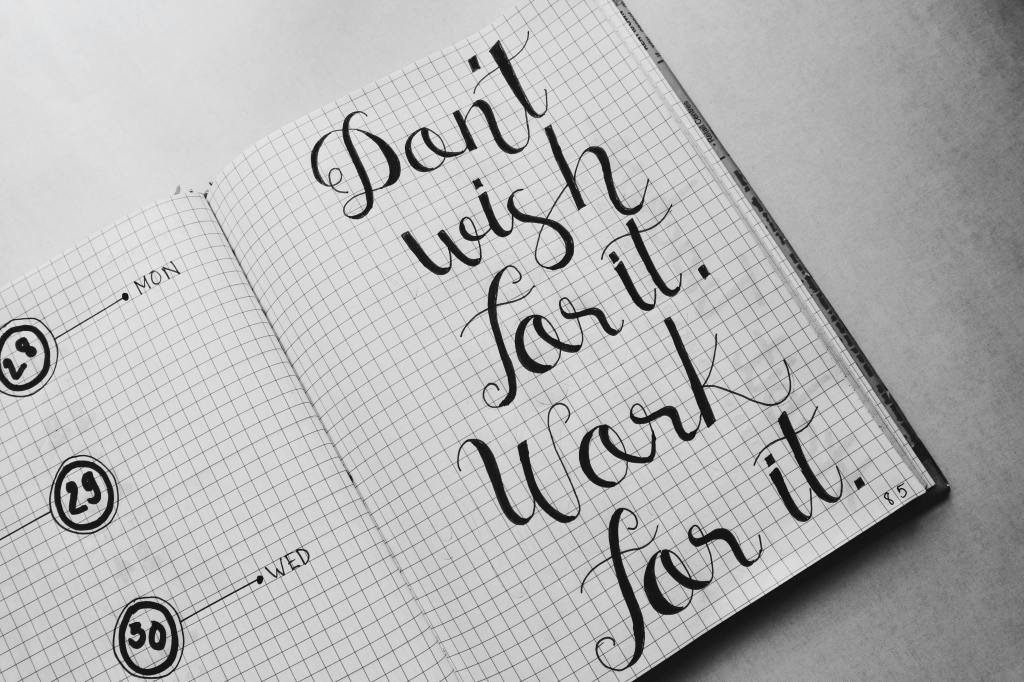
    So, for me, good teaching is about balance: confidence, preparation, flexibility, and keeping things practical and straightforward. It’s not about perfection—it’s about making sure the students learn. It doesn’t happen because of luck or wishing or hoping. Good teaching comes from hard work.