Tag: DP Psychology

  • Worksheets – free to download and use

    There are 1-2 page worksheets available for every element of the course on the website, each designed to take approximately 40-50 minutes to complete. These worksheets are free to download and use, and teachers are encouraged to either edit them to suit their specific lesson needs or use them as they are.

    Worksheets are an effective tool for reinforcing and consolidating learning. After delivering content through PowerPoints, discussions, and Q&A sessions, worksheets provide students the opportunity to engage actively with the material, solidify their understanding, and apply what they’ve learned in a structured way.

    In my experience, worksheets work best when completed collaboratively in pairs or groups of three. This setup fosters discussion and peer teaching, as students explain concepts to one another and debate their answers. This process not only deepens their understanding but also builds critical thinking and communication skills. Collaborative work can make even challenging tasks more accessible, as students combine their strengths and perspectives.

    A practical tip: print the worksheets, but collect them at the end of the session. This way, you can reuse them in the future, saving both time and resources. Laminating frequently used worksheets is also a great idea for durability.


  • Illeism: The ancient trick to help you think more wisely

    This article is reposted from BBC.com

    https://www.bbc.com/worklife/article/20230411-illeism-the-ancient-trick-to-help-you-think-more-wisely

    It’s hard to reason through problems, but there are ways to be more objective and less biased in your thinking.

    As a writer specialising in psychology, I’ve come across hundreds of evidence-based tips for better thinking. Few have proven as useful to me as the ancient strategy of illeism.

    Put simply, illeism is the practice of talking about oneself in the third person, rather than the first person. The rhetorical device is often used by politicians to try to give their words an air of objectivity. In his account of the Gallic War, for example, the emperor Julius Caesar wrote “Caesar avenged the public” rather than “I avenged the public”. The small linguistic switch seems intended to make the statement feel a little more like historical fact, recorded by an impartial observer

    To the modern ear, illeism can sound a little silly or pompous – and we may even deride famous people who choose to talk in this way. Yet recent psychological research suggests that illeism can bring some real cognitive benefits. If we are trying to make a difficult decision, speaking about ourselves in the third person can help to neutralise the emotions that could lead our thinking astray, allowing us to find a wiser solution to our problem.

    Solomon’s paradox

    To understand these benefits of illeism, we must first examine the ways that scientists measure the wisdom of someone’s reasoning.

    The scientific study of wisdom has been spear-headed by Igor Grossmann at the University of Waterloo in Canada. Grossmann first drew on the work of numerous philosophers to decide on a series of “metacognitive components” – including intellectual humility, acknowledgement of others’ viewpoints and search for compromise – that are commonly considered to be essential for wise decision making. First used by Julius Ceaser, Illeism is a tool that will clear your mind from indecision

    In one of his first studies, Grossmann asked participants to think out loud about their responses to various dilemmas – such as personal problems posed to the Dear Abby “agony aunt” column – while independent psychologists rated their spoken responses according to these criteria. Grossmann found that these tests of wise reasoning were better than IQ tests at predicting people’s overall life satisfaction and the quality of their social relationships. This suggested the studies were capturing something unique about their reasoning skills.

    Grossmann’s later studies revealed that the wisdom of people’s reasoning can depend on the context. In particular, he found that their wise reasoning scores tended to be much higher when considering other people’s situations than their own personal dilemmas. Grossmann called this “Solomon’s Paradox” after the ancient Biblical king, who was famous for advising others wisely, while making a series of disastrous personal decisions that ultimately left his kingdom in chaos.

    The problem seems to be that when making personal choices, we become too immersed in our emotions, which cloud our thinking and prevent us from putting our issues in perspective. If I have received negative feedback from a colleague, for example, my feeling of embarrassment might lead me to become overly self-defensive. I might therefore dismiss their opinions without considering whether their advice could be helpful in the long-term. 

    How to be wise

    Could illeism resolve Solomon’s paradox? The idea makes intuitive sense: by switching to the third person, our descriptions of the situation will start to sound as if we are talking about someone else rather than ourselves. This sense of detachment would allow us to see the bigger picture, rather than getting caught up in our own feelings. 

    And that is exactly what Grossmann found in a study with Ethan Kross at the University of Michigan in Ann Arbor. They showed that people employing illeism to talk about their problems showed greater intellectual humility, capacity to recognise others’ perspectives, and willingness to reach compromise – increasing their overall wise reasoning scores. 

    The latest studies show that the regular use of illeism can bring about lasting benefits to our thinking.

    Working with Abigail Sholer, Anna Dorfman and colleagues, Grossmann asked participants to keep a daily diary for one month in which they described a situation they had just experienced. Half were told to write their entries in the third person, while the other half were told to write in the first person. At the start and end of the study, the team also tested the subjects’ general wise reasoning. As hoped, the researchers found that, over the course of the intervention, the participants who had been encouraged to use illeism in their diaries saw a rise in their wise-reasoning scores over the course of the month.

    By encouraging us to put our problems in perspective, the use of illeism may also help us to have a more balanced response to daily stresses. People who had completed the diary in the third person reported more positive emotions after challenging events, rather than dwelling solely on the sadness, frustration or disappointment.

    Based on these findings, I now apply illeism to all decisions, small and big. Whether I’m facing trials at work, conflict with my friends, or strife in the family, I find that a few moments contemplating my problems from a third-person perspective helps me to see the issue more clearly. 

    David Robson is a science writer and author of The Expectation Effect: How Your Mindset Can Transform Your Life, published by Canongate (UK) and Henry Holt (USA). He is @d_a_robson on Twitter.


  • The Student’s Notesbook

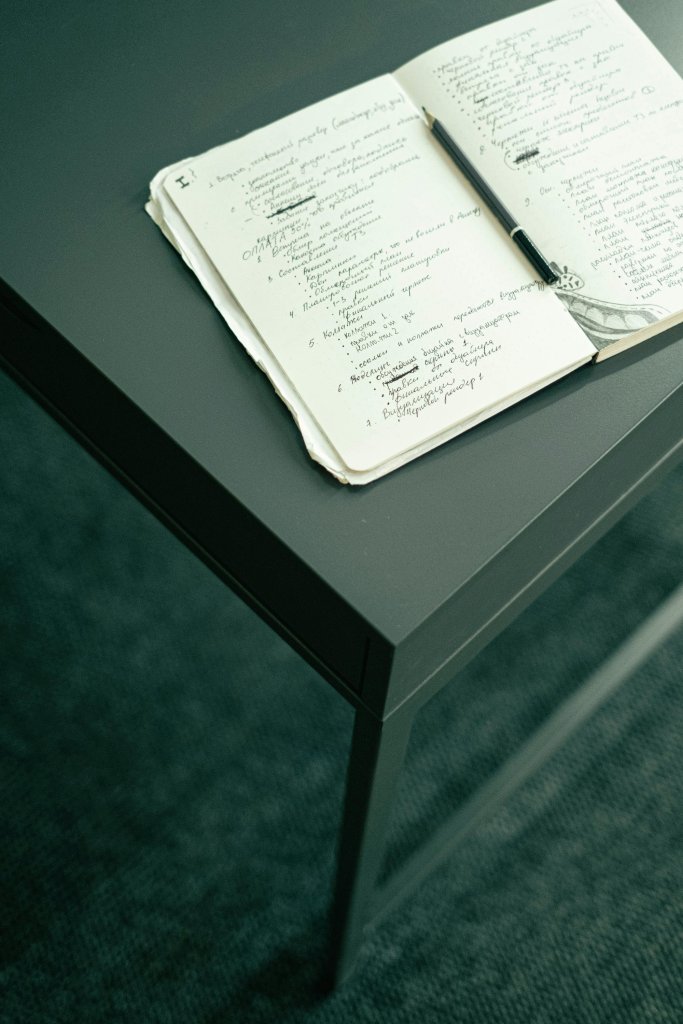
    In an era dominated by digital tools and pre-packaged resources, the value of students creating personalized, handwritten class notes cannot be overstated. For teachers, encouraging this practice is one of the most impactful ways to deepen learning, foster cognitive engagement, and build emotional investment in the material.

    Students craft their own personalised unique notesbook and as they do, they slowly and steadily convert the written material in knowledge and understanding.

    When students craft their own notes, based on a teacher’s structured outline, they engage in active processing of the content. By supplementing the notes with their own observations, questions (and the teacher’s answers), diagrams, mnemonics, and personal clarifications, they go beyond passive absorption. This process transforms abstract ideas into meaningful, memorable constructs. Highlighting key points, underlining critical concepts, and using bullet points to organize information allow students to internalize knowledge and make it their own.

    This personalized approach also fosters emotional investment. When students spend time and care curating their notes, they take ownership of their learning. Their notes are no longer a generic resource but a unique, tailored study tool—a reflection of their effort and understanding. The act of handwriting itself adds another layer of engagement, as research consistently shows that writing by hand improves memory retention and deepens focus.

    Moreover, personalized notes serve as a powerful cognitive anchor. The time spent organizing and refining this material encourages attention to detail, creating mental connections that aid comprehension and recall. Diagrams and mnemonics make abstract ideas more accessible, while questions and answers reinforce clarity.

    As teachers, we have the opportunity to guide students toward this invaluable practice. By emphasizing the importance of personal engagement, cognitive effort, and attention to detail, we empower them to take control of their learning journey—and create tools that will serve them well throughout the course and beyond.

    It’s all about the time and cognitive effort and the emotional connection.

  • School Should Be Stimulating, Not Entertaining: A Teacher’s Perspective

    In today’s world of social media and instant gratification, there’s a growing pressure on teachers to make learning “fun” and “entertaining.” While the intent may be to engage students, this mindset can undermine the very essence of education. As high school teachers, our role is not to be circus clowns juggling concepts for laughs and applause but to inspire and educate young minds in meaningful, stimulating, and world-relevant ways.

    We’re teachers, not clowns. We teach, we inspire, and we present interesting learning opportunities.

    The idea that every lesson must be entertaining confuses education with amusement. True learning happens when students are challenged, intrigued, and encouraged to think critically—not when they’re passively entertained. Stimulating lessons spark curiosity, connect students to real-world applications, and encourage them to grapple with complex ideas. This approach builds resilience and a genuine love for learning, traits that will serve them far beyond high school.

    Teaching in a stimulating way doesn’t mean being dry or boring. It means connecting material to students’ lives and futures. It’s about showing them how Newton’s laws shape the world around them, how Shakespeare’s themes resonate today, or how historical events echo in current societal structures. Engaging students with thought-provoking questions, hands-on activities, and meaningful discussions makes lessons compelling without resorting to gimmicks or theatrics.

    As educators, we are mentors and inspirers, not entertainers. Our job is to prepare students for the challenges of the world, not to cater to short attention spans. By fostering an environment where intellectual curiosity thrives, we empower students to find joy in learning itself—a joy far deeper than fleeting fun.

    Let’s refocus on what truly matters in education: inspiring students to think, question, and grow. That’s the legacy we leave—not laughter from a fleeting joke, but the spark of a mind ignited.


  • What I Think Makes Good Teaching

    Good teaching starts with a well-qualified teacher, naturally. But qualifications alone aren’t enough. For me, great teaching also depends on a healthy dose of self-confidence, which comes from knowing your subject inside and out and having planned lessons that are engaging, relevant, and well-structured. When you’ve put the work into preparation, confidence follows—and that confidence can make all the difference in the classroom.

    Confidence comes from careful planning and preparation as much as from self-belief.

    Another essential? Students who show up. Regular attendance is the bedrock of progress, and while life happens—visas, weddings, funerals, even pandemics—students who are there for (almost) every lesson give themselves the best chance to succeed.

    In terms of tools, I don’t need a flashy setup. A whiteboard, projector, and laptop are all I ask for. These basics let me bring the lesson to life with PowerPoint slides, the occasional YouTube video, and of course, whatever ends up scribbled (er… written carefully and neatly) on the white board during class discussions.

    One thing I emphasize with my students is the importance of creating personalized class notes. I’m a firm believer in hardback notebooks, rulers, highlighters, boxes, lines, and diagrams. There’s something uniquely effective about the tactile process of writing and organizing notes by hand—it helps students make the material their own.

    To keep the learning process on track, I use multiple-choice tests to quickly gauge how well students have grasped the content or a concept. These aren’t for grades—they’re to answer one question: Can we move on, or do I need to reteach something?

    Finally, a good textbook is invaluable. Students can use it to reinforce what we learn in class or catch up if life interrupts their learning. Real life has a way of doing that, and having a reliable resource at home makes all the difference in staying on course.

    So, for me, good teaching is about balance: confidence, preparation, flexibility, and keeping things practical and straightforward. It’s not about perfection—it’s about making sure the students learn. It doesn’t happen because of luck or wishing or hoping. Good teaching comes from hard work.


  • The New IB Diploma Psychology Course: A Teacher’s Perspective

    As an IB Psychology teacher, I’ve had the chance to take a closer look at the new IB Diploma Psychology course that’s set to launch in February 2025 (with first assessments in 2027), and I have to say, I’m feeling positive about the changes. It feels like the course has been reimagined in a way that prioritizes real learning, i.e. understanding, over rote memorization, and as someone who’s passionate about helping students truly understand psychology, this is a welcome shift.

    Grounded in Research-Based Content

    One of the biggest strengths of the new course is how it keeps the focus on research-based content. Students will still engage with the key theories and studies that define psychology, but now these are presented within a conceptual framework. It’s less about cramming isolated facts and more about making connections—something that’s been missing in traditional approaches to teaching psychology.

    The structure—organized around concepts, content, and contexts—gives both teachers and students a clear path forward. It encourages us to look at psychological principles as part of a bigger picture rather than as standalone pieces of trivia. For me, that’s a huge improvement because it reflects how psychology works in the real world.

    Real-world Learning Through Contexts and Practicals

    What really stands out is the integration of class practicals into each context. These aren’t just busywork—they’re carefully designed activities that mirror the methods psychologists actually use. Whether it’s an experiment, an observation, or qualitative research, students get a chance to engage directly with the approaches they’re learning about.

    As a teacher, I find this particularly exciting because it gives students a chance to see the how and why behind the studies we discuss. It’s a great way to bring the subject to life and to show them that psychology isn’t just about theories—it’s about investigation, critical thinking, and drawing evidence-based conclusions.

    Internal Assessment with Real Purpose

    The way the Internal Assessment (IA) has been revamped is another highlight. Instead of feeling like an isolated task, the IA now builds directly on the class practicals. Students will create a research proposal based on one of the four methods they’ve worked with in class, which means they’ll be using what they’ve learned in a meaningful way.

    This kind of scaffolding is so important because it gives students confidence in their abilities. They’ve already had hands-on experience with the methods, so when it comes time to tackle the IA, they’re not starting from scratch. For me, this makes the IA feel less like an assessment and more like a natural progression of their learning.

    A Step Away from Rote Learning

    One of the things I appreciate most about the changes is the clear effort to move away from rote learning. Instead of focusing on memorizing a long list of studies or key terms, the new course encourages students to engage with the basic concepts of psychology and see how they apply in different contexts. It’s a shift that feels both practical and necessary, especially in a subject like psychology where understanding is so much more valuable than simple recall.

    What It Means for Us as Teachers

    For those of us teaching the course, there’s definitely some work to do in getting familiar with the new structure and approach. The Diploma Programme Psychology: Third Curriculum Review Report and the guide will be key resources, and I’d recommend spending time with them early. But the changes feel manageable, and more importantly, they feel worthwhile.

    This new course strikes a balance between structure and flexibility, research and application, concepts and content. It’s grounded in what psychology is really about, and it gives students tools they can use far beyond the classroom. As a teacher, I’m genuinely looking forward to helping my students navigate this updated course and seeing how it transforms their understanding of the subject. If the goal was to make IB Psychology more engaging, relevant, and practical, I think they’ve done a pretty good job.


  • What is ‘The Collection’?

    As most IB Diploma Psychology teachers will know, a new Subject Guide will be published in mid-February, 2025. ‘The Collection’ is a set of books / teaching materials created to meet teachers’ every need for this new course:

    • IB Diploma Psychology – Subject outlines
    • IB Diploma Psychology – The Textbook
    • IB Diploma Psychology – The complete set of Powerpoint presentations
    • IB Diploma Psychology – Homework revision questions
    • IB Diploma Psychology – The internal assessment
    • IB Diploma Psychology – Ten mock examinations with model answers
    • IB Diploma Psychology – 70 multiple choice tests
    • IB Diploma Psychology – The extended essay
    • IB Diploma Psychology – The glossary of psychology vocabulary
    • IB Diploma Psychology – The 150 essential research studies
    • IB Diploma Psychology – Success at high school and college

    A new Subject Guide means a lot of very time-consuming work for DP teachers on top of their already-full schedules. Tom Coster has created The Collection to save DP Psychology teachers’ time (and summer vacations).

    The Textbook – covers the entire syllabus and also has sections on the Examinations and the Internal Assessment. Available in print or eBook format from Amazon.

    The complete set of powerpoint presentations – covering every aspect of the new syllabus including the assessments. These presentations are closely aligned with The Textbook. These are straightforward .ppt files so they can be edited by teachers using Windows or Apple computers.

    Homework revision questions – a complete set of homework writing tasks that students can work on independently through the 2 year course or teachers can set these as regular homework writing activities – perfect for exam revision.

    The Internal Assessment – a book (print or eBook, from Amazon) that describes in detail the IA requirements, gives advice from an experienced moderator’s perspective, and presents 16 high-quality examples of the Internal Assessment activity.

    It’s all here. Everything, and I mean EVERYTHING, the IBDP teacher needs to start teaching the new Subject Guide.

    Ten mock examinations with model answers – a book (print or eBook, from Amazon) with TEN complete examinations (Papers 1 and 2 for the SL & HL students and Paper 3 for the HLs). AND there are model/high-scoring answers for all questions in all 10 examinations

    70 multiple choice tests – multiple choice tests (30 questions in each) assessing knowledge and understanding of every aspect of the new course. MCQ tests mean whole topics can be assessed quickly and thoroughly answering the question, ‘have the students learnt the previous topic and so can we move on to the next topic now?’

    Subject Outlines Whenever a new course is created, teachers must submit a new Subject Outline to their DP Coordinator detailing the hours for each topic, how TOK, CAS and International mindedness will be integrated… Tom Coster has created two FREE (downloadable) Curse Outlines with different approaches to teaching the course. Download them both, read them, choose the one that’s right for you and your students, edit it to suit you and your school – and submit to your DPC – job done!

    The Extended Essay – the Extended Essay Syllabus has also been updated for Septemebr 2025, and this book tells it all – requirements, assessment criteria, how to manage the research and writing process. The book includes 100 possible research questions each with a suggested essay outline. And there’s an example of a complete and high-scoring essay.

    The glossary of psychology vocabulary – the new syllabus requires students to be fluent in ‘psychology’, which means to know and be able to use psychology-specific vocabulary. This book contains about 1000 psychology terms, designed in subjects/topics so that as student’s learn the Biological approach, they can also learn the Biological approach’s vocabulary.

    150 essential research studies – outlines of the 150 most essential research studies in psychology, with each outline including a brief critical thinking section. Psychological knowledge is based on scientific research. Students should know and refer to research when discussing theories and claims about behavior.

    How to succeed at high school and college – a detailed and practical, step-by-step guide on how to excel in high school and college. From attending every lesson to creating and curating a comprehensive set of class notes to preparing for and writing exams… this is THE book that we all wish we had when we started high school. No-nonsense, simple, clear advice.

    Click on the links to find these books on Amazon and use Amazon’s Look Inside feature to see more about each book.