We’re receiving very positive feedback for our comprehensive PowerPoint slides, covering the entire course, including the internal assessment and examinations. Designed to be 100% editable, teachers can add, delete, or modify slides to fit their teaching style and students’ needs.
At just $50 for the complete set, these slides are not only a huge time-saver but also exceptional value for money. Streamline your lesson planning and deliver engaging, structured lessons with ease.
Hofstede’s Cultural Dimensions are interesting when we consider the Russia-Ukraine-USA situation.
Can IBDP help achieve a more peaceful world, as the mission statement says?
Both Russia and Ukraine share high power distance (acceptance of strong leadership) and high uncertainty avoidance (a preference for stability and control). But Russia is more long-term oriented, which means it emphasizes strategic dominance, while Ukraine is more collectivist, meaning it values community and national identity.
The U.S., by contrast, is highly individualistic, low in uncertainty avoidance, and indulgent. These traits influence its foreign policy toward promoting democracy, personal freedoms, and economic growth.
This fundamental cultural difference means the U.S. often supports Ukraine’s sovereignty while rejecting Russia’s authoritarian, power-driven approach.
Hofstede’s framework helps explain the cultural differences between Ukraine and Russia that are driving the conflict and the challenges in finding a resolution. Russia’s high power distance and long-term strategic thinking make it resistant to compromise. Russia views control over Ukraine as essential to its geopolitical security. Meanwhile, Ukraine’s collectivist and high uncertainty avoidance culture fuels its strong national identity and resistance to external control and its desire to join Europe and NATO.
The U.S.’s individualism and low uncertainty avoidance drive its support for Ukraine’s sovereignty, which fuels the tension between Ukraine and Russia.
A path toward peace requires acknowledging these cultural differences—balancing Ukraine’s desire for independence with Russia’s security concerns while leveraging the U.S.’s preference for diplomacy and pragmatic solutions.
Peace can be achieved by addressing the core cultural and geopolitical needs of each side. For Russia, security guarantees, such as Ukraine’s neutrality (no NATO membership) or regional autonomy agreements, could reduce its strategic fears. For Ukraine, sovereignty and economic stability must be protected, possibly through international security assurances and reconstruction aid. For the U.S. and allies, diplomacy should focus on pragmatic solutions rather than ideological confrontations, ensuring Ukraine’s independence without escalating Russia’s insecurity.
Hofstede’s cultural dimensions framework is lacking an important dimension. To what extent can each if these parties to the conflict be trusted to stick to any peace agreement?
Understanding conflict is important for peace in Ukraine. Two elements of the IBDP Psychology course would help both Ukraine and Russia achieve peace – if that’s what they want.
Peace tnrough IBDP Psychology
If peace is the goal, Sherif et al. (1957)’s The Robbers Cave Study and Henri Tajfel’s Social Identity Theory offer hope.
In the Robbers Cave Study, Sherif divided teenage boys at a summer camp into two competing groups. Initially, they bonded in their own groups. When competition was introduced, hostility erupted between the groups. Tbe conflict was resolved when the boys were given superordinate goals – to fix a leaking water tank. Working together, the mete act of required cooperation against a shared problem, turned the rival groups into allies.
Henri Tajfel’s Social Identity Theory (SIT) explains how people categorize themselves into groups, leading to an “us vs. them” state – emphasis on the ‘versus’. The perceived difference triggers conflict. But SIT also shows that group identities can be reshaped. When people see themselves as part of a larger, inclusive group, intergroup conflict decreases, cooperation is possible and peace between previously warring groups can occur.
Applying this knowledge about human behavior can lead to peace in Ukraine and Russia. It’s about creating shared goals and identities. The Orthodox church leaders in Russia and Ukraine could play a role here. Instead of reinforcing divisions, the church leaders could highlight common interests: we are more alike than different. Economic leaders such as the IMF could show that both countries, working together through a Free Trade Agreement could achieve economic growth and, more importantly, economic development.
Of course, this presupposes that both Ukraine and Russia want peace.
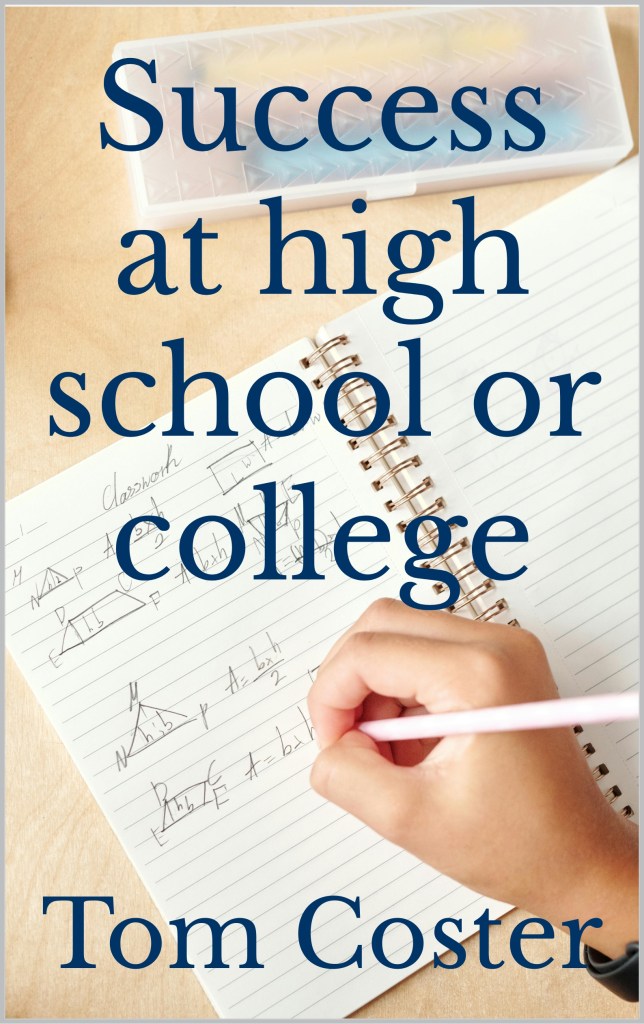
Success in high school or college isn’t about being the smartest person in the room—it’s about using the right strategies to maximize your learning. Success at high school or college is your step-by-step guide to thriving in education, whether you’re aiming for top grades or simply want to get the most out of your studies.
Packed with practical advice, this book covers everything from attending every class and participating actively to mastering time management and building strong relationships with teachers. Each chapter provides actionable tips to help you stay motivated, organized, and confident in your academic journey.
Whether you’re struggling to keep up or looking to reach new heights, this book gives you the tools to take control of your education—and your future. Don’t leave success to chance—start building the habits that will set you apart today!
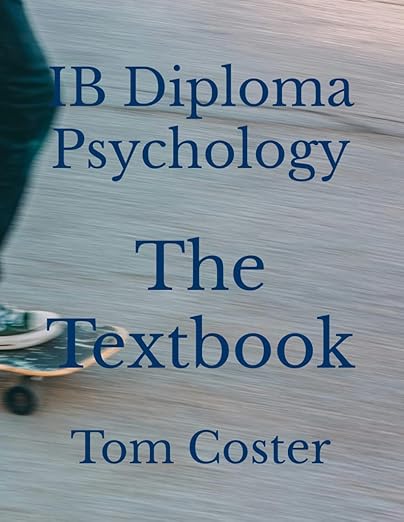
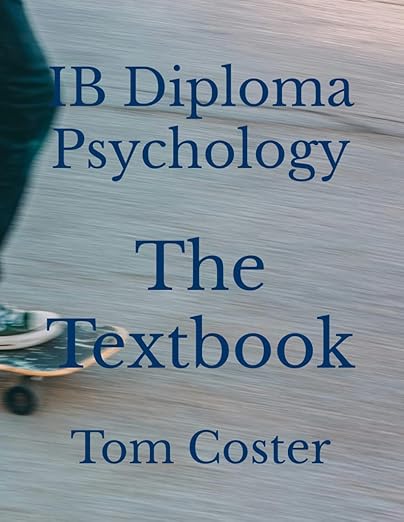
If you’re looking for a clear, concise, and affordable IB Psychology textbook, IBDP Psychology – The Textbook is the perfect choice. It features a plain and simple layout, straightforward language, and excellent value compared to big corporate publishers. Available in print and eBook formats, it’s an essential resource for both students and teachers.
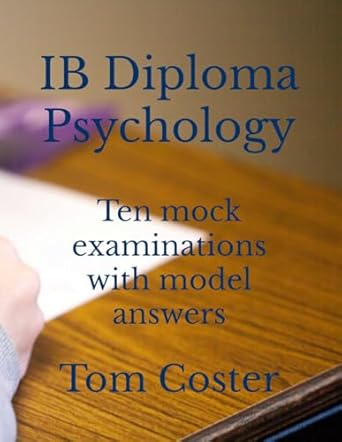
But that’s not all—there’s also a set of TEN mock exams (Papers 1, 2, and 3 for SL and HL), each with complete, high-scoring model answers to help students master exam technique.
And have you seen the COMPLETE set of PowerPoint presentations? They cover the entire course and they’re fully editable, so you can customize them to suit your own preference.
As psychology teachers, we’re often at the front and centre of mental health discussions – with students and also with colleagues. We teach our students about the biological, cognitive, and social explanations of disorders, the effectiveness of SSRIs, and the transformative power of CBT. And yet, one of the simplest and most effective interventions remains woefully underemphasized: adequate sleep.
There is a mountain of credible, published research highlighting just how significant sleep is to emotional regulation. We have compelling evidence showing that poor sleep isn’t just a symptom of anxiety or depression, it is often the primary cause.
The relationship between sleep and mental health is bidirectional, creating a vicious cycle: insufficient sleep heightens emotional reactivity, disrupts rational thought processes, and increases vulnerability to stress, making individuals more prone to anxiety and depression.
One night of sleep deprivation leads to a significant spike in anxiety and low mood the following morning. Chronic, ie longer term, sleeplessness makes everyday events feel more negative, reinforcing a bleak outlook on life. Research shows that individuals suffering from insomnia are at twice the risk of developing anxiety or depression compared to those who sleep well.
The evidence is compelling. Sleep deprivation impairs the prefrontal cortex, the brain’s emotional regulator, weakening its connection to the amygdala, which governs fear and emotional responses. This disruption makes individuals more emotionally volatile, prone to misperceiving neutral events as negative, and more likely to spiral into stress and mood disorders.
As educators, we must recognize the immense potential of sleep education as a preventative mental health strategy. A CAS project that focuses on sleep awareness could help students (and colleagues) track their sleep, analyze its effects on mood and cognitive function, and share findings with peers.
Getting sufficient sleep is not about school starting later or school providing quiet spaces for rest. It’s about teaching students, their parents, and colleagues that the simplest treatment (and prevention) strategy relating to the most common mental health issues of anxiety and depression is getting sufficient sleep. In general we all need 8-9 hours of sleep, so we must go to bed more than 8-9 hours before the required wake-up time because we need about half an hour to ‘fall asleep’. We all need to be in bed, light off and phone off around half an hour before the sleep time.
Ultimately, if there is one piece of mental health advice we can give our students—and even our colleagues—it is this: Prioritize sleep because it is the foundation of emotional resilience, cognitive function, and overall well-being.
Preparing students for the IB Diploma Psychology exam can be a challenge, but IB Diploma Psychology: Ten Mock Examinations by Tom Coster is the essential resource to ensure success. This book provides ten meticulously designed mock exams that mirror the structure, difficulty, and content of the real IB assessments, offering students the most authentic practice experience possible.
Teachers will appreciate how this resource aligns with the IB Psychology Subject Guide and Teacher Support Material, making it a perfect companion for classroom revision. With realistic time allocations, model answers, and success strategies, students gain valuable insights into exam techniques, structuring high-quality responses, and integrating research evidence effectively.
By using this book, teachers can provide their students with practical, targeted preparation, helping them approach the exams with confidence. With comprehensive syllabus coverage and expert guidance, this resource is the key to maximizing student achievement in IB Psychology.
Looking for the perfect study companion? The Textbook is designed to make learning easier, clearer, and more affordable. Available in both print and eBook formats, our eBook never expires and can be accessed on your phone, tablet, or laptop—so you can study anytime, anywhere.
With a straightforward Concepts, Content, and Context layout, The Textbook presents information in a way that’s easy to follow. It includes everything you need: diagrams, chapter summaries, a dedicated section on Internal Assessment, and a full guide to the examinations. No unnecessary complexity—just clear explanations in plain language.
But The Textbook is more than just a textbook—it’s the centrepiece of a complete collection of teaching and learning resources. This includes Homework Revision Questions, specialised books on the IA and the exams, a Book of Essential Research Studies, and a Vocabulary Book to strengthen key concepts.
Best of all, The Textbook costs significantly less than those from big publishers, making it an accessible choice for students and schools alike. Whether you’re studying at home or on the go, this is the complete textbook you can rely on.
IB Diploma Psychology – Homework revision questions is designed to be the perfect companion to the IB Diploma Psychology course, helping students build strong, well-organized responses while reinforcing key concepts. By integrating structured practice with the course content, it encourages gradual, steady learning—the most effective way to truly understand the new IBDP Psychology syllabus.
I will be using this book for regular homework tasks, where students write structured responses that can be peer-marked or self-assessed using provided mark schemes. Homework seems to work best when it is regular – supporting every lesson – perhaps even think of it as practice. The homework ensures continuous engagement with the syllabus, while also developing the habit of clear, well-constructed writing and neat presentation—crucial skills for an exam that is still written with pens and paper.
Research shows that slow and steady learning works best. By routinely summarizing and applying class lessons, students strengthen their understanding over time, rather than cramming at the last minute. The IB exams don’t test rote memorization but rather how well students apply psychological concepts to new contexts. Regular, structured homework ensures they develop this skill naturally, making exam preparation manageable and stress-free.
By using this workbook throughout the two-year course, students will gradually master the subject, ensuring they are confident, prepared, and capable of tackling any exam question that comes their way.
We’re excited to announce that free worksheets are now available for every learning objective in the new IBDP Psychology course! These worksheets are structured in the same order as the Subject Guide, ensuring seamless integration into your lesson plans—although you’re free to use them in whatever order best suits your teaching style.
Each worksheet is designed to take 40-50 minutes to complete and works well when 2-3 students collaborate, fostering discussion and deeper understanding. They can also serve as homework assignments or substitute lesson activities when teachers are away. The worksheets are fully editable, allowing you to adapt them to your specific classroom needs, or you can simply use them as they are.
These resources are completely free to download and use, but if you find them helpful, I have a small request—please consider purchasing a copy of Succeeding at High School or College, or even better, recommending it to your students. Your support helps make the creation of high-quality resources like these possible!
Click here to access the worksheets and start using them in your IBDP Psychology classes today!





 Tom Coster - Psychology