Living Psychology presents four fictional but realistic stories that bring psychological theory to life, enabling students to develop psychology literacy by exploring concepts not as dry textbook definitions but as experiences within complex, emotional human stories where characters navigate trauma, displacement, cultural adaptation, development, and the universal challenges of understanding ourselves and others.

Textbooks often present psychology as fragmented lists: Here’s a definition. Here’s an explanation. Here’s an example. Students memorise Social Identity Theory without feeling the visceral anxiety of being one of an outgroup. They learn about acculturation strategies without experiencing the identity conflicts that refugees face. They understand PTSD conceptually but don’t witness a traumatized brain rebuilding itself through CBT.
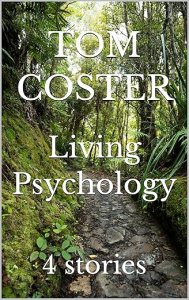
Living Psychology changes this. Four Stories, One Comprehensive Course
Leo’s Journey: Lost and Found

Leo’s journey through the Remutaka forest in ‘Lost and Found’ explores post-traumatic stress disorder, substance use, and recovery through the lens of a teenager who becomes lost during a CAS fieldtrip and must confront both external wilderness and internal struggles with family trauma and alcohol dependence. Students encounter neuroplasticity not as a vocabulary term but as Leo’s brain gradually rewires itself through therapeutic intervention and environmental challenge.
Anya and Nikita: Moscow Mind Games

‘Moscow Mind Games’ follows Dr Anya Pavlova and Dr Nikita Vygotsky as they solve intricate psychological puzzles around Moscow to rescue kidnapped PhD students, teaching the cognitive approach to psychology through their investigation of perception, memory, problem-solving, decision-making, and cognitive biases in high-stakes situations. The story demonstrates how Schema Theory, System 1 and System 2 thinking, confirmation bias, and heuristics operate in real-time decision-making under pressure.
The Haddad Family: Rosa damascena

The Haddad family’s harrowing escape from war-torn Damascus in ‘Rosa damascena’ traces their transformation from Syrian rose cultivators to German refugees, examining acculturation strategies, social identity, cultural adaptation, and the psychological costs of displacement as they navigate dangerous border crossings, adopt orphaned twins, and ultimately face impossible choices about belonging and home. Students witness Berry’s acculturation framework not as a 2×2 grid but as agonising decisions between maintaining heritage and adopting new cultural practices.
Generation Zero: The Tipping Point

‘The Tipping Point’ addresses Europe’s demographic crisis through genetically optimised Gen0 children raised in specialised institutes, comprehensively covering research methodology and human development as researchers document attachment formation, brain maturation, enculturation, and identity development from infancy through early adulthood using experiments, observations, case studies, and multiple analytical approaches. This story integrates research methods naturally. Students see why longitudinal studies are necessary, understand ethical considerations viscerally, and recognise how different methodologies reveal different aspects of development.
Because students learn differently
Each story in Living Psychology mirrors how the examination expects students to think: recognizing that understanding behaviour requires synthesising biological, cognitive, and sociocultural explanations; applying multiple Concepts simultaneously; considering how Contexts like development, culture, and relationships shape outcomes; and evaluating how research methods and their limitations affect our psychological knowledge.
Successful DP Psychology students need psychological literacy, recognising that human behaviour is complex, multicausal, and context-dependent. Living Psychology builds this literacy through narrative immersion, then supports it with comprehensive study materials available free on the Tom Coster website, creating a complete learning ecosystem that prepares students not just to pass examinations but to genuinely understand human behaviour.
Theory comes alive. Stories create understanding.
Psychology becomes real.
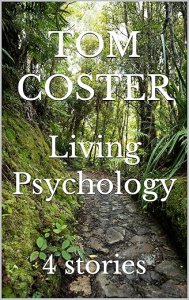
Living Psychology is available from Amazon as either a paperback or an eBook.
Extensive supporting materials, including vocabulary lists, chapter outlines, applications of concepts/contexts/content and engaging questions are freely available here

 Tom Coster - Psychology
Leave a comment