An often-neglected aspect of teaching IBDP Psychology helping students develop fluency with subject-specific terminology. Words like validity, reliability, etiology, synaptic gap, neurotransmitter, and operant conditioning aren’t just vocabulary, they’re the precise tools we use to communicate complex ideas about behavior.
The assessment criteria make this explicit: ‘There is accurate and precise use of psychological terminology’ and ‘Psychological terminology relevant to the research methods is used effectively’. These aren’t minor criteria, they directly affect student grades in all assessment components. When students write about ‘proof’ instead of evidence, or ‘sadness’ instead of depression, they’re not just being imprecise; they’re failing to demonstrate the precise and accurate vocabulary that examiners expect.
Teaching terminology effectively means more than providing definitions. Students must understand when and how to use these terms. Does this theory apply to all cultures or is it ‘culture-bound’? Is this a hormone or a neurotransmitter? Understanding these distinctions demonstrates genuine psychological literacy, not just memorization.
The payoff extends beyond exam scores. Students who master the subject’s vocabulary think more precisely about behavior, communicate more effectively in their internal assessment and extended essays, and develop the academic foundation necessary for university level psychology study.
IB Diploma Psychology – The Glossary of Psychology Vocabulary (by Tom Coster) is an essential companion for every IB Diploma Psychology student, providing a clear and concise collection of key terms and concepts tailored to the IB Psychology syllabus.
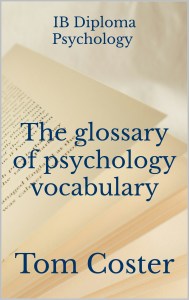
Designed to support your journey into the field, this glossary will enhance your understanding of human thought, emotion, and behavior, while helping you master the specialized vocabulary required for academic success and real-world application.
 Tom Coster - Psychology
Leave a comment